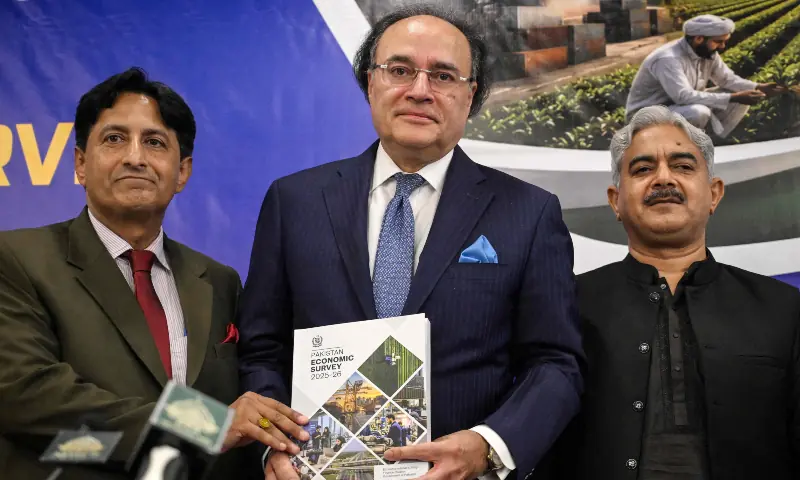
New Delhi: Every June, Pakistan’s Ministry of Finance issues two pivotal documents in close succession. The Economic Survey provides an analysis of the country’s past economic performance, while the Federal Budget outlines the government’s future economic strategies. When examined individually, each document may appear optimistic. But when read together, they reveal a fundamental contradiction in Pakistan’s current economic situation.
The nation has achieved stabilisation without transformation, satisfied its creditors without adequately serving its citizens, and its most lauded fiscal accomplishment is deteriorating, even before it is fully realised.The Pakistan Economic Survey 2025-26 presents a narrative of recovery from crisis. GDP growth has increased to 3.7 percent from the previous fiscal’s 3.18 percent. Inflation, which reached a catastrophic 28-38 percent in FY2023, averaged at 6.2 percent over the first 10 months of the financial year. The current account, traditionally in deficit, recorded a surplus of USD 72 million in the first three quarters. Foreign exchange reserves have reached multi-year highs. A primary surplus of PKR 4091.5 billion, representing 3.2 percent of GDP for July-March FY2026, is highlighted as a historic achievement. Pakistan’s financial year begins on 1 July and ends on 30 June.