Get the latest news and updates from Dawn
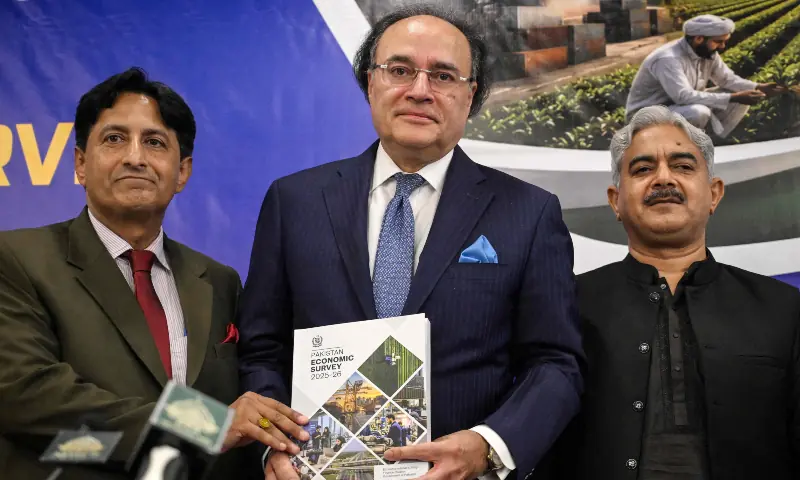
The Pakistan Economic Survey arrives each June in two registers. The first is the press conference: growth is back, inflation has been beaten. The second is the statistical annex, which records, without adjectives, what actually happened—and this year it describes a stabilisation, real, hard-won, and worth defending. Except that it has so far fixed none of the things that made stabilisation necessary in the first place.
We have been here before—in 2000, in 2016, in 2019; the difference this time should be what we do next. Four root problems run through the tables: a tax system that collects too little and distorts what it touches; an exchange rate we manage for comfort rather than competitiveness; an industrial policy that keeps backing the wrong horses; and a fiscal federalism model that has quietly broken. The Survey documents all four.
The machine, in two paragraphs
Take one object and keep it in view: a Faisalabad textile exporter’s invoice. The price on it is in dollars. Almost everything behind it is paid in rupees (this refers to the gas, wages, taxes withheld along the way, the cotton). The rate at which those rupees convert decides whether the shirt behind the invoice is competitive in Hamburg or priced out by one stitched in Ho Chi Minh City. When the rupee holds still while our costs rise faster than our competitors’ costs, that shirt becomes more expensive without anyone announcing anything. Most of what this article describes, taxes, interest rates, subsidies, transfers between Islamabad and the provinces, eventually lands somewhere on that invoice.