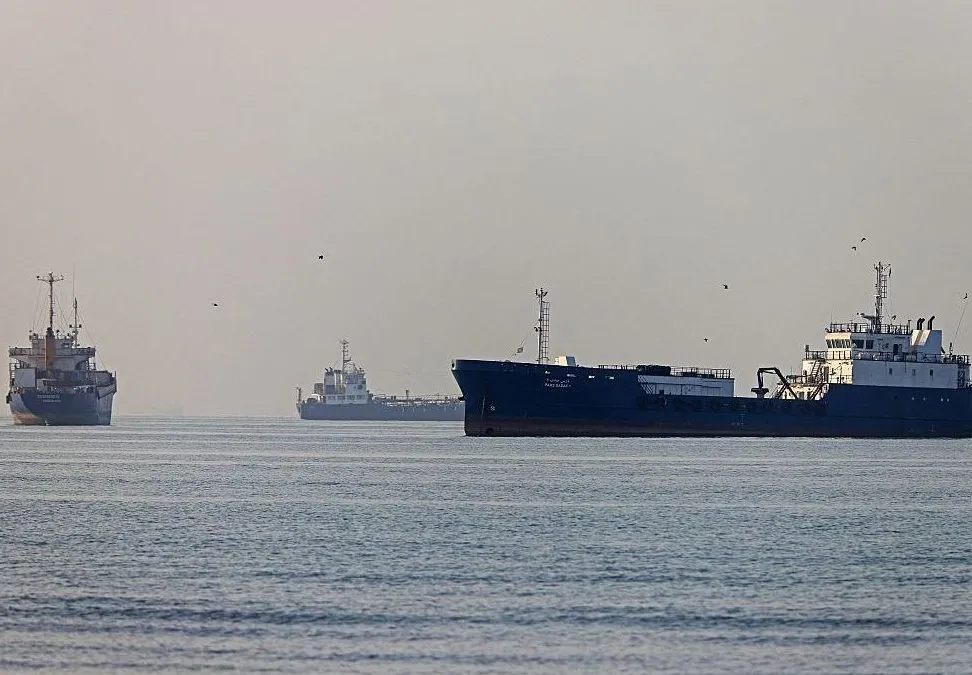
Skip to Content Subscribe Our Offers My Account Manage My Subscriptions FAQ Newsletters Canada Canadian True Crime Canadian Politics Health World Israel & Middle East Financial Post NP Comment Longreads Puzzmo Diversions Comics NP News Quiz New York Times Crossword Horoscopes Life Eating & Drinking Style Sponsored Play for Ontario Travel Travel Canada Travel USA Travel International Cruises Travel Essentials Culture Books Celebrity Movies Music Theatre Television Business Essentials Advice Lives Told Tails Told Shopping Buy Canadian Home Living Outdoor Living Kitchen & Dining Tech Style & Beauty Personal Care Entertainment & Hobbies Gift Guide Travel Guide Amazon Prime Day Deals Savings National Post Store More Sports Hockey Baseball Basketball Football Soccer Golf Tennis Driving Vehicle Research Reviews News Gear Guide Obituaries Place an Obituary Place an In Memoriam Classifieds Place an Ad Celebrations Working Business Ads Archives Healthing Epaper Manage Print Subscription Profile Settings My Subscriptions Saved Articles My Offers Newsletters Customer Service FAQ Newsletters Canada World Financial Post NP Comment Longreads Puzzmo Diversions Life Shopping Epaper Manage Print Subscription HomeNewsWorldIsrael & Middle EastIran spreads competing peace deal drafts as U.S. maintains its timelineAt least three versions include similar elements, but diverge in key respects, making it hard to assess how much either side benefitsAuthor of the article: You can save this article by registering for free here. Or sign-in if you have an account.In this picture obtained from Iran's ISNA news agency on June 1, 2026, vessels sail at Suru Beach in Bandar Abbas along the Strait of Hormuz. Iran has pushed differing versions of a peace deal with the U.S. as the Trump administration maintains a Sunday timeliness to resolve the conflict. Photo by AMIRHOSSEIN KHORGOOEI /Photographer: AMIRHOSSEIN KHORGOIran circulated competing versions of a proposed interim agreement with the U.S., even as President Donald Trump stuck to his Sunday timeline to sign a deal.Enjoy the latest local, national and international news.Exclusive articles by Conrad Black, Barbara Kay and others. Plus, special edition NP Platformed and First Reading newsletters and virtual events.Unlimited online access to National Post.National Post ePaper, an electronic replica of the print edition to view on any device, share and comment on.Daily puzzles including the New York Times Crossword.Support local journalism.Enjoy the latest local, national and international news.Exclusive articles by Conrad Black, Barbara Kay and others. Plus, special edition NP Platformed and First Reading newsletters and virtual events.Unlimited online access to National Post.National Post ePaper, an electronic replica of the print edition to view on any device, share and comment on.Daily puzzles including the New York Times Crossword.Support local journalism.Create an account or sign in to continue with your reading experience.Access articles from across Canada with one account.Share your thoughts and join the conversation in the comments.Enjoy additional articles per month.Get email updates from your favourite authors.Create an account or sign in to continue with your reading experience.Access articles from across Canada with one accountShare your thoughts and join the conversation in the commentsEnjoy additional articles per monthGet email updates from your favourite authorsSign In or Create an AccountorAll of the competing texts — there were at least three — include similar elements around reopening the vital Strait of Hormuz waterway, giving Iran sanctions relief and opening the door to longer-term negotiations around its nuclear program.But they diverge in key respects, making it hard to assess how much of a win the deal will be for either side. A major discrepancy hinged on how much financial relief Iran would get immediately or in the future — a concern for Iran hawks in the U.S. who don’t want Trump to give away too much.Columnist Jesse Kline keeps you up to date with what’s happening in Israel and the effects of antisemitism on life here in Canada. Friday mornings.By signing up you consent to receive the above newsletter from Postmedia Network Inc.A welcome email is on its way. If you don't see it, please check your junk folder.The next issue of Channel Israel will soon be in your inbox.We encountered an issue signing you up. Please try againThe White House declined to comment even with time running out for an agreement to be signed by Sunday — Trump’s 80th birthday — as the president had promised. On Sunday, Fox News cited Trump as saying a deal would be signed in two to three hours.At one point earlier in the day, the likelihood of a signing appeared to grow more remote after Israel’s military hit the Lebanese capital, saying it was targeting Hezbollah after the Iranian-backed group fired more projectiles into northern Israel. Iran later vowed that a response was on the way. In a subsequent social media post, Trump said that Israel should stop attacking Lebanon.“We are very close to a Deal that will bring peace to the region, including to Lebanon, and all sides should stand down,” Trump wrote on social media. “This could be the beginning of a long and beautiful peace — Let’s not blow it!”JUST NOW: President Trump expressed disappointment following Israeli airstrikes in Lebanon."This morning's attack on Beirut should not have happened, particularly on a special day," President Trump said. "There should be no more attacks by Israel anywhere in Lebanon, but there… pic.twitter.com/MycqqklLU5— Donald J Trump Posts TruthSocial (@TruthTrumpPost) June 14, 2026The competing drafts only exacerbated days of confusion around the prospects for a deal to end the fighting that began with U.S. and Israeli missile attacks against Iran on February 28. That campaign has killed thousands of people, roiled the Middle East and spiked the price of oil.Trump has said many times over the weeks of the conflict that the two sides were close to a deal. That claim was given credence this time by similar statements from Iranian officials and Pakistani mediators that a deal was near. But Iran also didn’t like the symbolism of signing the deal on Trump’s birthday.The differing versions have several things in common. The Strait of Hormuz would reopen quickly and Iran would get sanctions relief to sell oil. A deal would start the clock ticking on weeks of negotiations around the future of Iran’s nuclear program.But they differ in important ways. A version of the text seen by Bloomberg News suggests the U.S. and “regional partners” create a program for the reconstruction and economic development of Iran with minimum funding of US$300 billion, if a final deal is reached. Iran’s nuclear program will be the subject of the later talks, according to the draft.Reuters, citing an unidentified Iranian official, reported that a draft of the MOU includes the U.S. allowing the release of $25 billion of frozen assets. The version seen by Bloomberg contained no such stipulation.And on Friday, Iran’s semi-official Mehr news agency said any final negotiations wouldn’t begin until half of Iran’s frozen funds are released, oil sanctions are suspended, and the naval blockade is lifted.Reconciling the competing claims was made more difficult by the fact that the Trump administration, while talking about timing of a deal, has so far declined to give many details about what it would look like. Crucially, it’s not clear whether Iran will demand tolls from ships crossing the strait, and the various versions didn’t mention the issue.That reflects the challenge faced by the U.S. president — he is eager to bring the war to an end yet has been unwilling so far to agree to Iranian demands — such as sanctions relief, releasing frozen Iranian funds, and a promise not to attack again — that Iran hawks at home have argued would mark a major victory for Tehran.A senior U.S. official, speaking to reporters on Friday, said the deal would reopen the Strait of Hormuz and send the U.S. and Iran into negotiations on bigger issues around the country’s nuclear program. It would involve a sequence of steps that would see Iran receive rewards as it meets certain U.S. demands.Here’s an abbreviated version of the 14 points in the latest Persian-language draft:Iran and the U.S., along with their allies in the conflict, by signing this memorandum of understanding, declare the immediate and permanent cessation of this war on all fronts, including in Lebanon. They commit from now on not to initiate any war against each other, and to refrain from the threat or use of force against each other. The final agreement will confirm the permanent cessation of the war and the remaining provisions of this clause.Iran and the U.S. will respect each other’s sovereignty and territorial integrity and refrain from interfering in each other’s internal affairs.Iran and the U.S. will hold negotiations and reach a final agreement within 60 days, a timeframe which may be extended with the agreement of both parties.Immediately after signing this MoU, the U.S. will begin lifting its maritime blockade and will bring shipping to full capacity within a maximum of 30 days. The U.S. also commits to withdrawing its forces from the Persian Gulf region within 30 days of a final agreement.Iran will immediately make arrangements to restart the transit of commercial ships from the Persian Gulf to the Sea of Oman and vice versa, and to return to pre-war numbers within 30 days, taking into account the necessity of removing technical obstacles and mines.The U.S. and its regional partners commit to creating a program for the reconstruction and economic development of Iran with at least $300 billion in funding. The mechanism for this program will be part of the final agreement.The U.S. agrees all types of sanctions Iran faces, including United Nations Security Council resolutions and IAEA Board of Governors resolutions, and all U.S. unilateral primary and secondary sanctions, will be terminated within a mutually agreed timeline as part of the final agreement.Iran reiterates it will never produce nuclear weapons. Iran and the U.S. will discuss the future of the Islamic Republic’s enrichment and its enriched-material stockpiles, as well as all other nuclear-related matters, including Iran’s nuclear needs. A framework for this, based on the outcome of the discussions, will be added to the final agreement.Iran and the U.S. will maintain the status quo until the final agreement: Iran maintains its current nuclear program status and the U.S. does not impose new sanctions on Iran and does not strengthen its forces in the region.The U.S. commits to issuing Treasury Department waivers for the export of Iran’s crude oil, petrochemical products and their derivatives, and all related services — including banking transactions, insurance and transportation — immediately after the signing of this MoU, and until the termination of sanctions.The U.S. commits to releasing and making fully usable the restricted or frozen funds and assets of Iran, in accordance with the progress of negotiations toward the final agreement. These funds will be usable for payment to any final beneficiary designated by Iran’s central bank. The US commits to issuing all necessary approval and licenses for this.Iran and the U.S.will create a mechanism to monitor the implementation of the final agreement.After this MoU, and after ensuring the commencement and implementation of clauses 4, 5, 10, and 11, Iran and the U.S. will begin final-agreement negotiations, exclusively regarding the remaining clauses.The final agreement will be confirmed by a binding UN Security Council resolution.— With assistance from Michael Nienaber, Josh Wingrove, Margaret Collins, Mirette Magdy and Fiona MacDonald.Our website is the place for the latest breaking news, exclusive scoops, longreads and provocative commentary. Please bookmark nationalpost.com and sign up for our daily newsletter, Posted, here. Join the Conversation This website uses cookies to personalize your content (including ads), and allows us to analyze our traffic. Read more about cookies here. By continuing to use our site, you agree to our Terms of Use and Privacy Policy.
Iran spreads competing peace deal drafts as U.S. maintains its timeline
Iran has pushed differing versions of a peace deal with the U.S. as the Trump administration maintains a Sunday timeliness to resolve the conflict.
TL;DRAI
Iran circulated competing peace-deal drafts with diverging sanctions relief terms while Trump pursues Sunday signing deadline. Deal uncertainty impacts oil prices affecting data-center energy costs and enterprise supply-chain dependencies for tech hardware.
1,933 words~9 min read