[Excerpted from THE QUANTUM COLLAPSE CHRONICLES — not science fiction, but a grounded forecast of what may come when quantum computation dismantles the cryptographic foundations of our digital civilization. These articles explore the collapse of computational trust and the brutal reconstruction of the world that follows.]
The history of human civilization is often defined by sudden, violent shifts in the nature of power. We speak of the fall of empires, the industrial revolutions, and the splitting of the atom. But in the mid-2030s, the world experienced a collapse that was not made of steel or stone, but of mathematics. It was a quiet, clinical, and utterly devastating unraveling of the digital fabric that held modern society together.
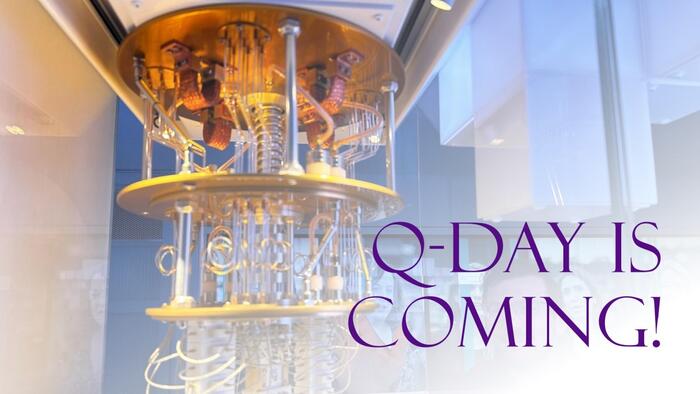
To understand The Quantum Collapse, one must look past the headlines of the era and into the humming, sub-Kelvin depths of the dilution refrigerators that changed everything. This is the story of how the transition from probabilistic experimentation to deterministic computation rendered the world's secrets transparent and its economies obsolete.
The Death of Noise: The Rise of Dr. Aris Thorne
For the first three decades of the 21st century, quantum computing was a game of chance. Scientists operated in the era of Noisy Intermediate-Scale Quantum (NISQ) devices—machines so temperamental and prone to error that every calculation was a desperate struggle against environmental noise. In those days, a single stray photon or a microscopic fluctuation in temperature could collapse a delicate superposition, turning a groundbreaking calculation into useless digital static.