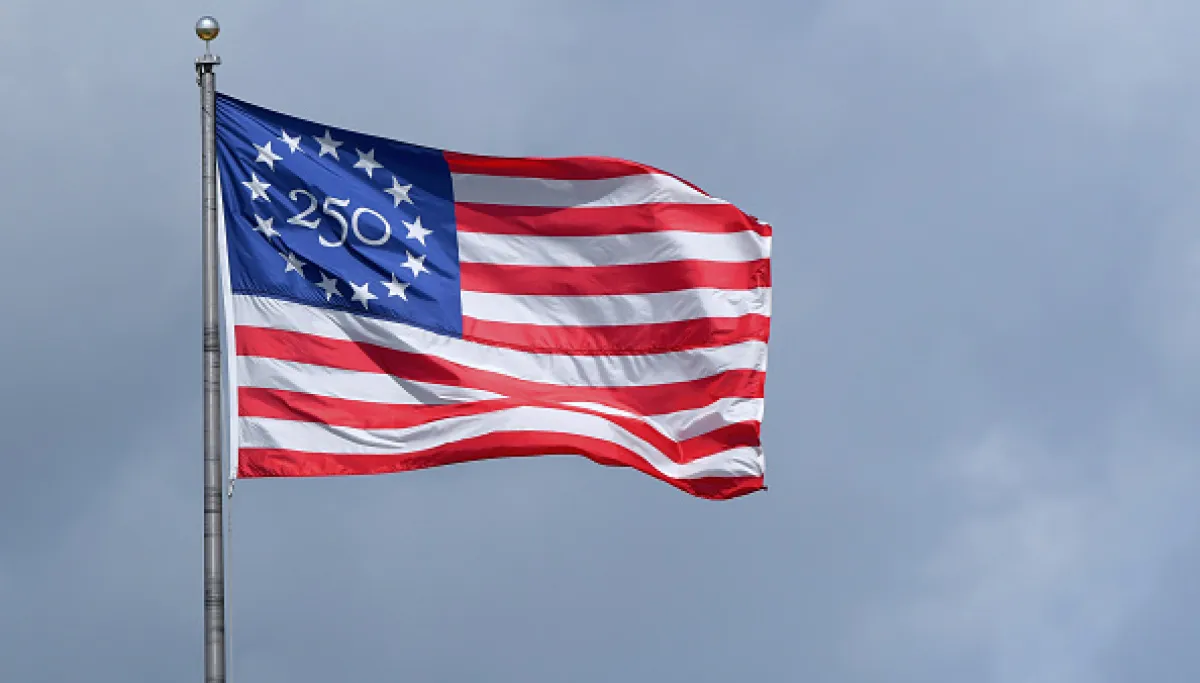
Deep within Scotland’s Edinburgh Castle, inside the ancient fortress’s prison vaults, is the oldest depiction of the “Stars and Stripes” outside the United States. The carving on a wooden door dates to the American Revolutionary War, when prisoners-of-war were either locked in ships or sent to prisons overseas by the Royal Navy.The anonymous POW’s fate is uncertain, but more than likely, he sacrificed his life, fortune, and sacred honor, much like the thousands of Americans who succumbed to disease and malnutrition during the war. At the time, the Stars and Stripes was still relatively new. On June 14, 1777, the Continental Congress enacted the Flag Act, resolving, “That the flag of the thirteen United States be thirteen stripes, alternate red and white; that the union be thirteen stars, white in a blue field, representing a new constellation.” It has appeared similarly ever since — aside from additional stars in the “new constellation.”
Yet, even in its infancy, the flag already elicited feelings of patriotism, independence, and hope. To the prisoner, locked in the Scottish prison, the Stars and Stripes he carved symbolized the pursuit of liberty and the birth of a new nation, which he may not have seen realized.