This company has crafted the American flag for most major moments since the Civil War. For those who stitch the stars and stripes, its meaning is personal.Show Caption
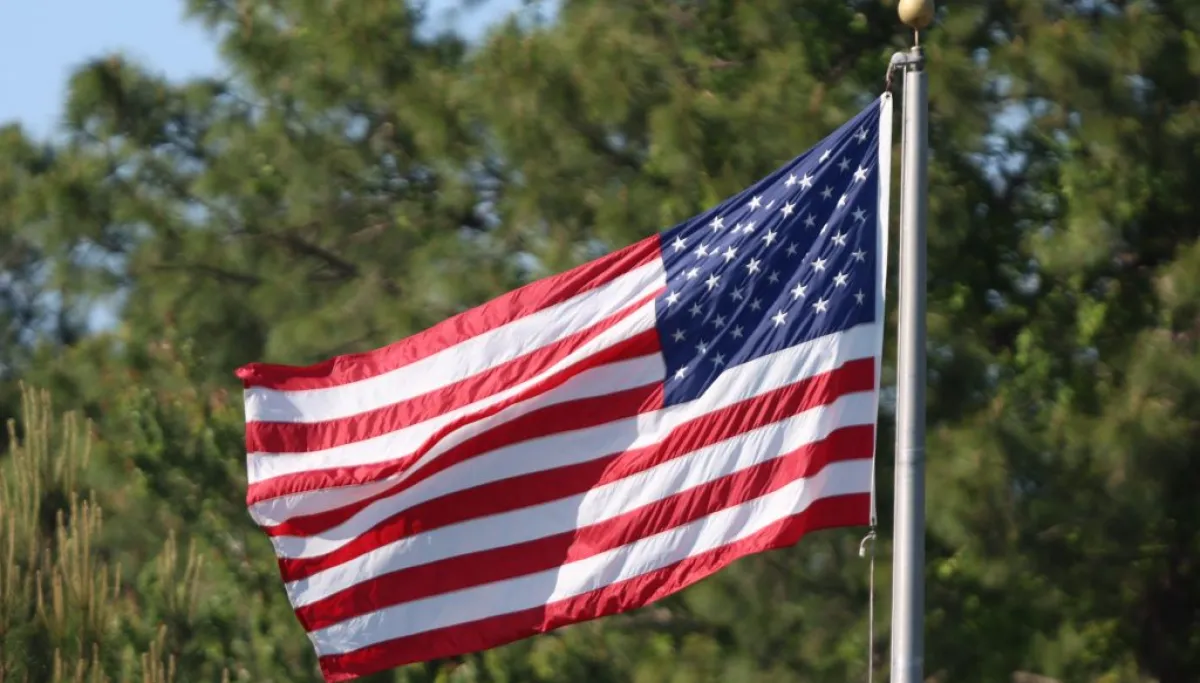
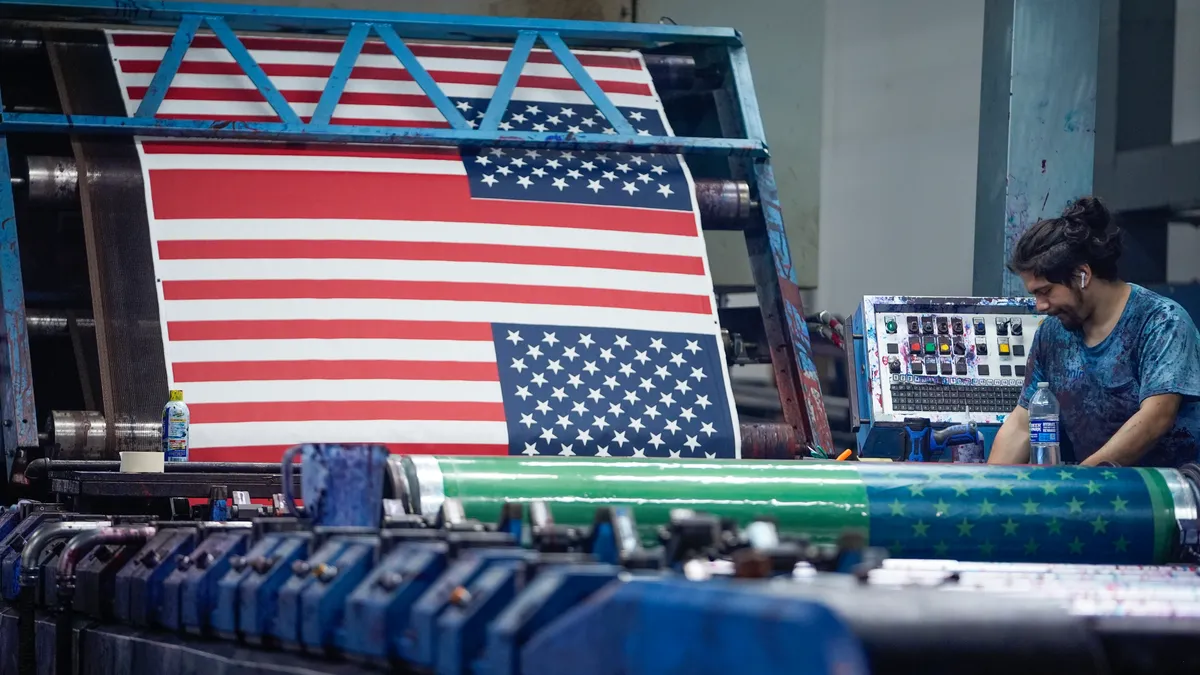
SOUTH BOSTON, Va. – Inside this cavernous warehouse off U.S. Route 58, thin strips of red and white cotton cascade over nearly every surface.The strips are piled high in plastic bins, sprawled over tables and fed underneath bobbing needles. The whirr of dozens of sewing machines working at once fills the stark, concrete room.Here, at this 200,000-square-foot factory, seamstresses work eight and sometimes 12 hours a day, weaving together the American flag.Their company, Annin Flagmakers, bills itself as the oldest and largest manufacturer of the Star-Spangled Banner in the United States. It is one of few companies still making the flag in America.Since its founding in 1847, Annin’s flags have marked the country’s highest highs and lowest lows. Its flags hung at President Abraham Lincoln’s inauguration and draped his coffin. They flew atop Mount Suribachi after the Battle of Iwo Jima and rocketed to the moon aboard Apollo 11.As political disagreements have splintered the nation, Americans of every political persuasion have raised the flag to display pride or protest. They’ve brandished it at campaign rallies, burned it in dissent and laid it next to the graves of fallen soldiers.Once a unifying symbol, the flag has come to represent political alienation for some.Rioters who stormed the U.S. Capitol on Jan. 6, 2021, waved Old Glory as they broke windows and busted doors to prevent the transition of power. Demonstrators protesting President Donald Trump at "No Kings" rallies have sought to reclaim the emblem to show their allegiance to the country’s founding principles.Yet, the workers who stitch together American flags say they don’t worry much about how people will use them once they are shipped out the door. Each holds a different anddeeply personal relationship with the symbol.Most believe it represents freedom. Just don’t ask what freedom means to them.There’s one rule on the factory floor, said 31-year-old Amber Davis: "Leave politics, money and religion at the door."Broad stripesWearing jeans, pajama pants and T-shirts, Davis and a group of three other young women pushed the fabric of blue handheld flags through sewing machines.They were part of an order for America250, the nonpartisan group tasked by Congress with planning this year’s milestone commemoration. The organization is distributing hundreds of thousands of handheld flags at sporting events and community celebrations as part of an initiative called "America Waves."Employees at Annin will touch every single one. For them, the run-up to the Fourth of July is a dizzying sprint. It’s their busiest season of the year.Davis has worked at the factory for about a decade. Over that time, Davis said, she has sewn all types of symbols – Ukrainian, Iranian, and Confederate flags. Annin ceased production of the Confederate flag in 2015, citing its representation of hatred and division.The American flag has never been among those Davis shudders to make."No matter what’s going on in the world, this is our job," Davis said. "We’ve seen them all."When Melonie Bullock, 32, began working at Annin a few months ago, she said she felt like she was stitching herself into history. The first time she sewed together the blue and red edges of the country’s flag, she was overcome with a strange sense of connection."The flag has a different meaning for everyone," the Waynesboro, North Carolina, native said. For her, it’s a reminder of her mother, a military veteran."It goes back to family; it goes back to her strength," she said. "Sewing the flag, I feel like I still get to pay respect to my mom."Nearby, 26-year-old Marilisa Nunez said she considered something else meaningful every time the stars and stripes cross her desk. "A better life," Nunez said. Her parents emigrated to the United States from Mexico. Because of their sacrifices, she has spent her days gabbing with colleagues and evenings playing Minecraft with her boyfriend.O’er the rampartsAs she reached for a piece of fabric, Sandy Doss nodded along to the music blaring from her headphones. The job at Annin was a second chance. A year earlier, the mother of two said she had been in prison.Gazing at the flag in front of her, Doss smiled. She felt a wave of pride."You’re driving down the road, and you see a flag, and you’re like, 'Oh, I probably made that,'" Doss said. "You feel accomplished 'cause you had a hand in that."In recent years, Annin’s flags have flown at highway service stations, high schools, the White House and in outer space. An Annin flag was aboard the Artemis II mission in April. It took astronauts the farthest distance from Earth humans have traveled.Sales of the flag have ebbed through changes in domestic politics. Demand dipped during the Great Depression and Vietnam War and rose amid the patriotic fervor of World War II and the bicentennial. Presidential elections are almost always met with a spike in new orders.Joan Snead, 62, said she doesn’t care much whether people are buying the flag or not, so long as she’s still able to stitch it. Being patriotic means she’s "not picky.""I don’t want nobody telling me when I can cook, when I can’t cook, when I can go somewhere, when I can’t go somewhere," Snead said.Talika Chappell, 55, sang gospel songs as she maneuvered long stripes of red and white stripes onto her desk. In all her years working at Annin, she said, she hadn’t thought much about what the flag meant to her. She cared only that the women who worked under her didn’t drag it on the floor.When she thought about being American, Chappell pictured herself sitting on the couch and eating a large pot of crab legs as her seven grandchildren played on the floor. Recently, she gifted an Annin flag to a neighbor who owns a restaurant."I want to give you a flag that I put my hands all over," she remembered telling him.The flag was still thereNear the front of the warehouse, workers man an ink-splattered machine as it stamps 13 crisp stripes and a field of stars onto 3-feet by 5-feet pieces of white fabric.After each print, the machine washes the leftover pigment from its gears, turning the once distinctly red and blue dyes into an oozing purple liquid. Watch the rhythm of the churn for too long, and the chemical scent might make you lightheaded.Or, for Mark Layne, sentimental.Annin's operations director has strode past this scene every workday for more than two decades.On one spring morning, as Layne watched the machine spool the finished flags, he reflected on a trip he'd recently taken with his grandchildren to the 9/11 Memorial & Museum in New York City.Layne stared for a long time at the reflection pools there. As they walked away, his grandson spotted a handheld American flag stuck in a crevice next to one of the 2,983 names etched in bronze.It was an Annin flag.Tears welled in Layne’s eyes as he recounted the story. Voice cracking, he said it moved him to know his work helped someone remember a person they loved and lost."We come to work because we have to eat. We need to have a roof over our heads," Layne said. "But what a glorious thing to be able to make."Karissa Waddick covers America's 250th anniversary for USA TODAY. She can be reached at kwaddick@usatoday.com.