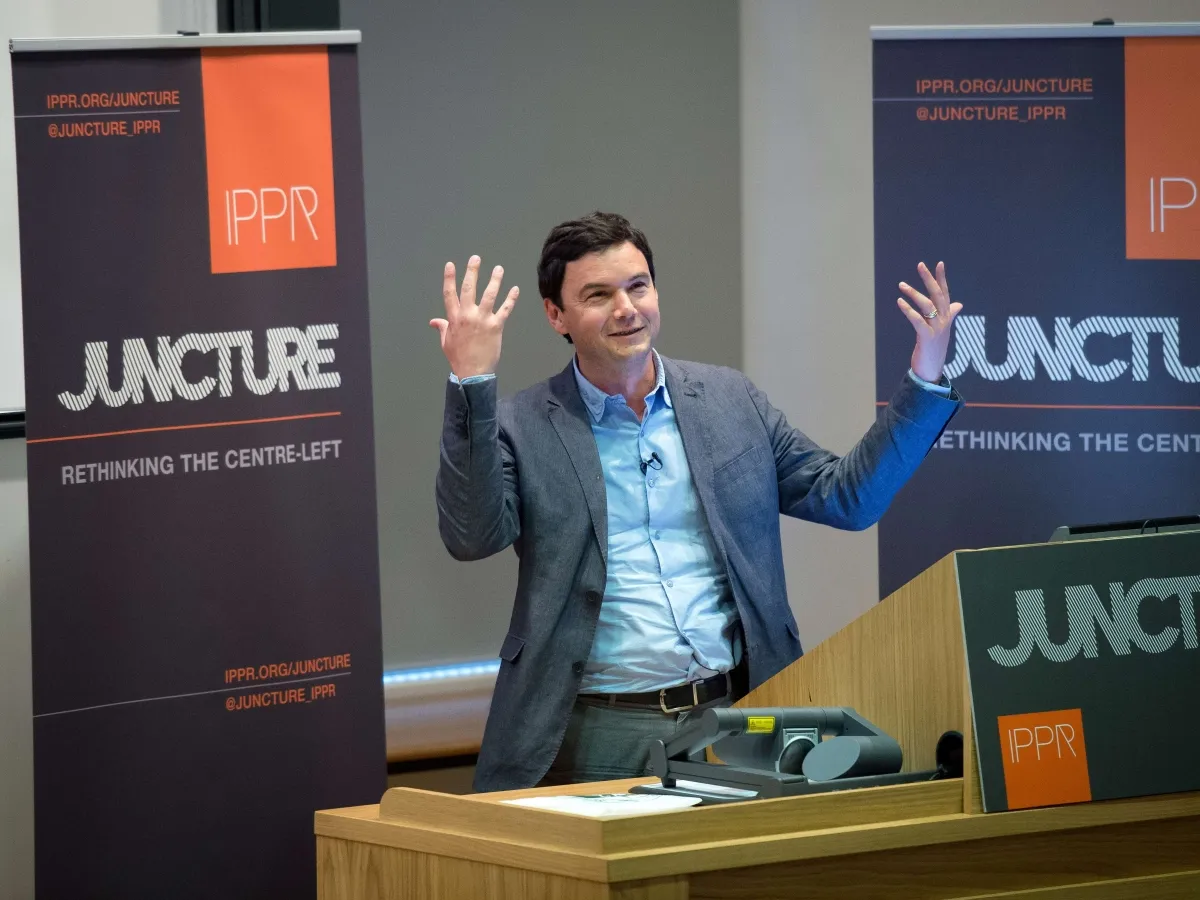
Skip to Content Subscribe Our Offers My Account Manage My Subscriptions FAQ Newsletters Canada Canadian True Crime Canadian Politics Health World Israel & Middle East Financial Post NP Comment Longreads Puzzmo Diversions Comics NP News Quiz New York Times Crossword Horoscopes Life Eating & Drinking Style Sponsored Play for Ontario Travel Travel Canada Travel USA Travel International Cruises Travel Essentials Culture Books Celebrity Movies Music Theatre Television Business Essentials Advice Lives Told Tails Told Shopping Buy Canadian Home Living Outdoor Living Kitchen & Dining Tech Style & Beauty Personal Care Entertainment & Hobbies Gift Guide Travel Guide Amazon Prime Day Deals Savings National Post Store More Sports Hockey Baseball Basketball Football Soccer Golf Tennis Driving Vehicle Research Reviews News Gear Guide Obituaries Place an Obituary Place an In Memoriam Classifieds Place an Ad Celebrations Working Business Ads Archives Healthing Epaper Manage Print Subscription Profile Settings My Subscriptions Saved Articles My Offers Newsletters Customer Service FAQ Newsletters Canada World Financial Post NP Comment Longreads Puzzmo Diversions Life Shopping Epaper Manage Print Subscription HomeNP CommentJ.D. Tuccille: Thomas Piketty's diabolical plan to impoverish every country on Earth in the name of 'global justice'Economist cited in Carney's book 'Value(s)' calls for caps on economic growth, 90 per cent tax rates and forced reductions in meat productionLast updated 18 minutes ago You can save this article by registering for free here. Or sign-in if you have an account.French economist Thomas Piketty speaks to students and guests during a presentation at King's College, central London, on April 30, 2014. Photo by LEON NEAL/AFP/Getty ImagesCelebrity economist Thomas Piketty won fame with a claim that, in market economies, capital accumulates in the hands of the already wealthy, leading to increased inequality. The message found a receptive audience among people eager to believe economic success isn’t earned. Canada’s Prime Minister Mark Carney cited Piketty in his own 2021 book-length argument that economic activity should be managed by people like Carney.Enjoy the latest local, national and international news.Exclusive articles by Conrad Black, Barbara Kay and others. Plus, special edition NP Platformed and First Reading newsletters and virtual events.Unlimited online access to National Post.National Post ePaper, an electronic replica of the print edition to view on any device, share and comment on.Daily puzzles including the New York Times Crossword.Support local journalism.Enjoy the latest local, national and international news.Exclusive articles by Conrad Black, Barbara Kay and others. Plus, special edition NP Platformed and First Reading newsletters and virtual events.Unlimited online access to National Post.National Post ePaper, an electronic replica of the print edition to view on any device, share and comment on.Daily puzzles including the New York Times Crossword.Support local journalism.Create an account or sign in to continue with your reading experience.Access articles from across Canada with one account.Share your thoughts and join the conversation in the comments.Enjoy additional articles per month.Get email updates from your favourite authors.Create an account or sign in to continue with your reading experience.Access articles from across Canada with one accountShare your thoughts and join the conversation in the commentsEnjoy additional articles per monthGet email updates from your favourite authorsSign In or Create an AccountorAnd now Piketty is back seeking new fans with a scheme for top-down central planning of the world’s economy. He is the co-director of the new Global Justice Report from the World Inequality Lab.This newsletter from NP Comment tackles the topics you care about. (Subscriber-exclusive edition on Fridays)By signing up you consent to receive the above newsletter from Postmedia Network Inc.We encountered an issue signing you up. Please try againIntroducing the project, Piketty posted on X, “The world today is characterized by large-scale inequalities. And a climate crisis is looming over us. We urgently need a new vision for global progress in the 21st Century. One that grounds human development and equality in planetary habitability.”Piketty shoehorns an impressive number of buzz phrases into a few lines. He includes concerns about equality and inequality, climate change and progress that should send thrills through college campuses. But Piketty has a talent for tapping into the moment. In this case, at a time when Freedom House’s annual report finds that “Global freedom declined for the 20th consecutive year in 2025,” the economist and his colleagues propose authoritarian policies for shaping the entire planet to their liking.In his post, Piketty asks, “What would it take to achieve high prosperity and equality while remaining within planetary boundaries?” He answers that “energy transition” (meaning moving away from power sources that produce carbon) is necessary, as well as “labour hour reductions, growth caps in rich countries, less material consumption, and changes in food habits.”The report itself asserts, “The compression of global inequality is not only compatible with deep decarbonization; it is a necessary condition for shared prosperity on a finite planet.”To fight climate change and battle inequality, Piketty and company want “full income convergence across countries by 2100.” This requires, in part, limiting growth to “around 0-0.5% in today’s richest regions (North America/Oceania, Europe).” They argue that near-zero growth in rich countries “does not mean that their living standards stagnate” because people will benefit from flattened incomes.“Accounting for the value of additional leisure time and the avoided costs of climate damage relative to high-growth and high-warming scenarios, even today’s richest countries will enjoy a substantial rise in comprehensive well-being indicators,” they conclude.In other words, people will learn to like what Piketty and company think they should like.Restricting economic growth in developed countries would require an enormous amount of government intervention, but the report isn’t shy about calling for just that. It proposes limiting the power of individual shareholders in companies with more than 100 employees.“In the event such a system were in place, it is unclear whether this should still be described as ‘private property,’ ” they concede. “Our own preference would be to move as far as possible towards worker-managed organizations and participatory governance, within a broader process of decommodifying the economy.” We’ll also be forced to produce and eat much less meat.Not that people would have much money for beef or corporate shares. The authors insist that a “global wealth tax on top wealth holders is crucial for kickstarting the sustainable growth path envisaged by the Global Justice Platform.” The wealth tax would apply to all assets, including housing. It would be set so high that top earners would find that “the only way to pay the tax will be to sell assets” which will inevitably reduce their wealth year by year. It would also, incidentally, discourage investment and innovation, but that’s compatible with the authors’ desire to discourage economic growth in developed countries.The wealth tax would be in addition to a global income tax operating “alongside national tax systems.” For top earners, “the effective tax rate is stable at 90%.” Not many people might be left at higher rates, though, if the report’s proposals for salary scales and other tools for “income convergence” are implemented.Piketty and company concede that their plan is likely to be met with “significant political resistance.” They hope to address this with cultural changes in “the value we place on sufficiency, free time and planetary habitability themselves, and the end of ‘classless ecology.’ ”If this sounds unlikely to convince free and prosperous people that they should hobble their lives to promote the Global Justice Platform, the authors consider that likelihood, too. The report contemplates some countries — specifically the U.S. and China — refusing to co-operate. They suggest imposing “adequate sanctions to non-participants, in proportion to the damages they impose on participating countries.” The recommended sanctions are substantial enough to constitute economic warfare.The Global Justice Report’s proposed centralization of world political and economic power with penalties for those who opt out are so draconian that they require significant justification. So, it’s worth pointing out that the “climate crisis” the plan seeks to avert assumes “expected temperature rise of 4.8 C to 4.9 C above pre-industrial levels by the end of the century.” But climate scientists recently ditched that scenario as implausible and now expect much less dire outcomes.Piketty’s proposals make the unchallenged assumption that income inequality is inherently bad. But Hoover Institution economist David R. Henderson argues that “Most of what is framed as a problem of inequality is better conceived as either a problem of poverty or a problem of unjustly acquired wealth.” Capping economic growth, he adds, hurts lower-income people more than it harms the wealthy.Worse, in the American Institute for Economic Research journal, Phil Magness and Vincent Geloso wrote that Piketty’s work on income inequality contained “multiple accounting errors, data discrepancies, and even historical mistakes in how they dealt with changes to the tax code.”Concluding a review of Piketty’s Capital in the Twenty-First Century, economist Deirdre McCloskey wrote: “His social theme is a narrow ethic of envy. His politics assumes that governments can do anything they propose to do. And his economics is flawed from start to finish.”Thomas Piketty and his colleagues want to change the world to suit their preferences. It’s unlikely that many of us would enjoy the transformation, and there’s no reason to let them make the attempt.National Post Join the Conversation This website uses cookies to personalize your content (including ads), and allows us to analyze our traffic. Read more about cookies here. By continuing to use our site, you agree to our Terms of Use and Privacy Policy.
J.D. Tuccille: Thomas Piketty's diabolical plan to impoverish every country on Earth in the name of 'global justice'
Economist cited in Carney's book 'Value(s)' calls for caps on economic growth, 90 per cent tax rates and forced reductions in meat production
TL;DRAI
Piketty's proposal caps growth at 0-0.5% in wealthy nations and imposes 90% tax rates for global income equality by 2100. Tech enterprises face constrained R&D budgets and innovation capacity under centralized economic governance affecting competitiveness.
1,553 words~7 min read