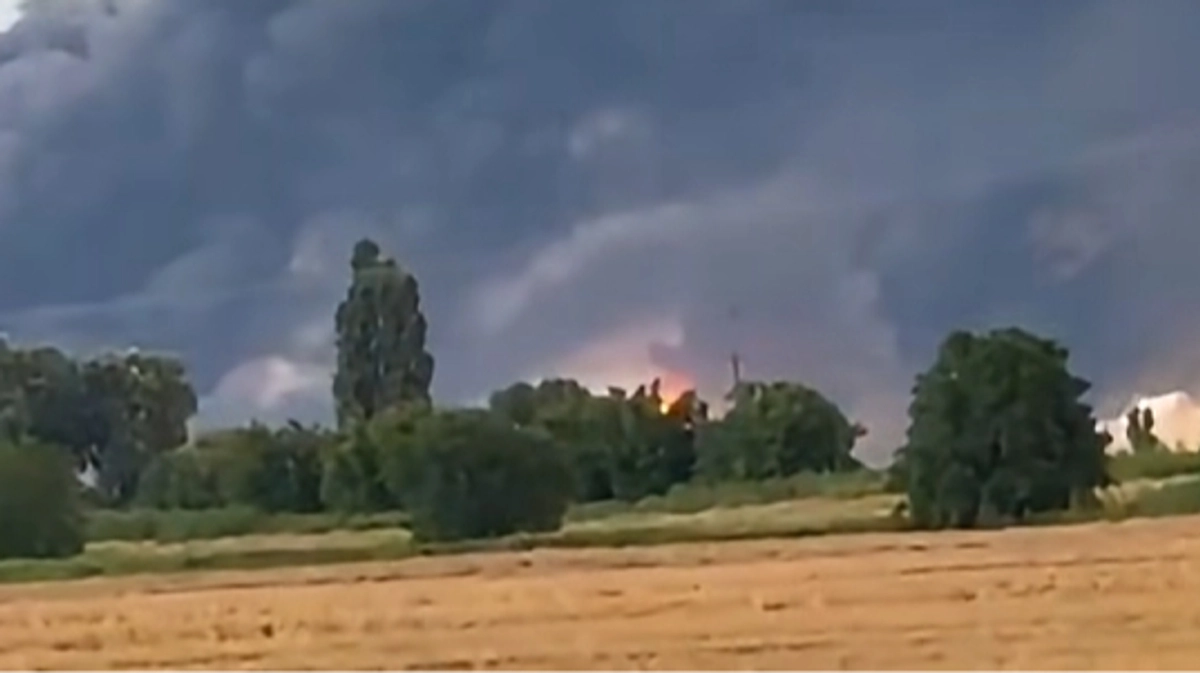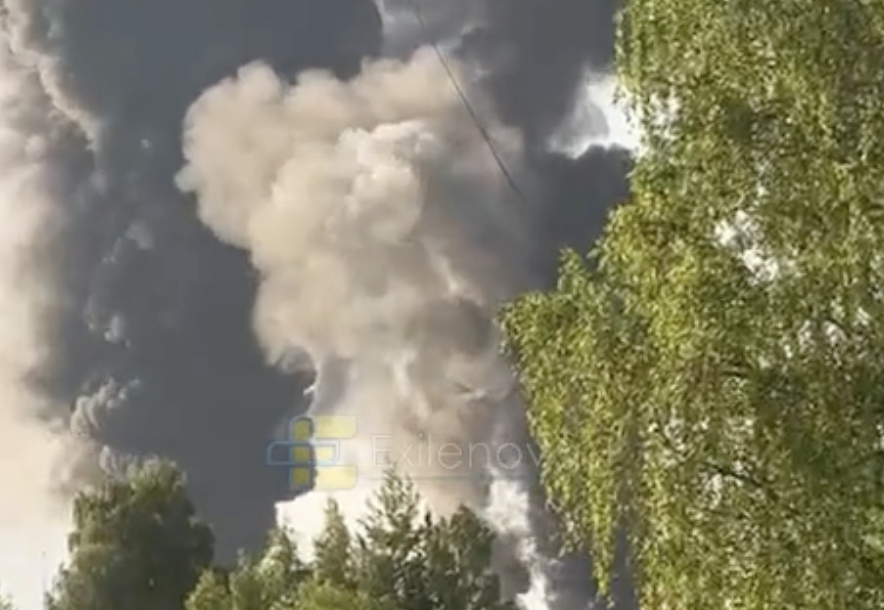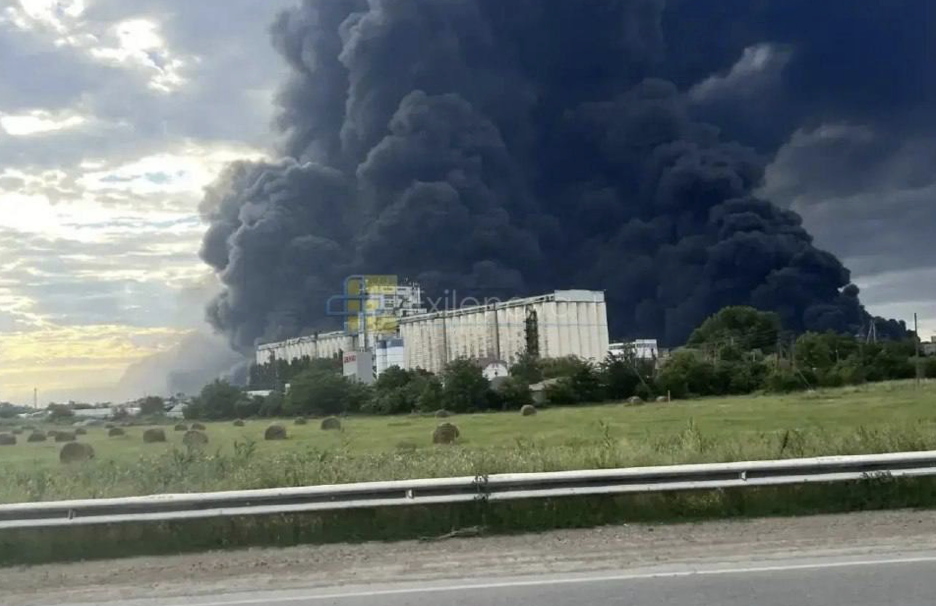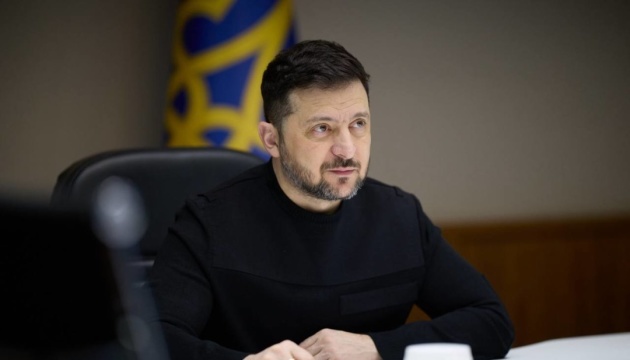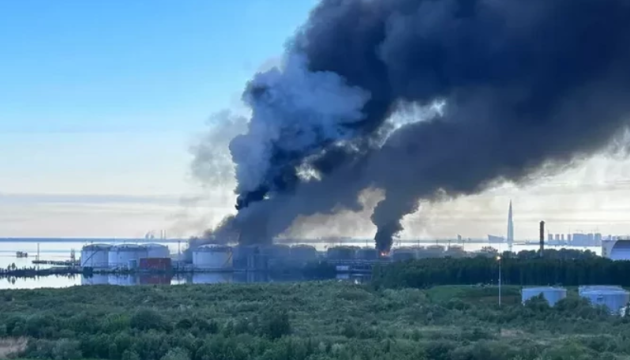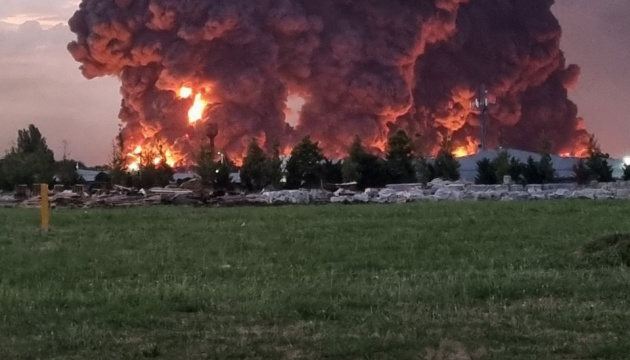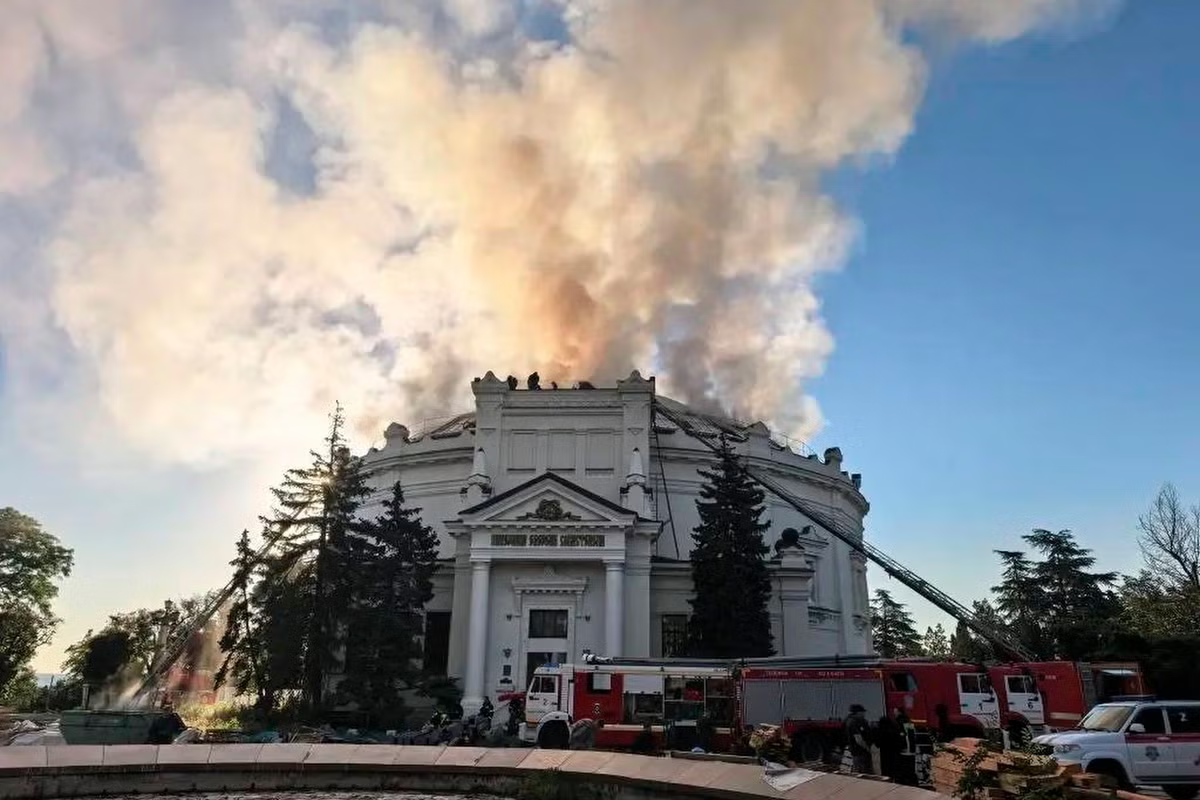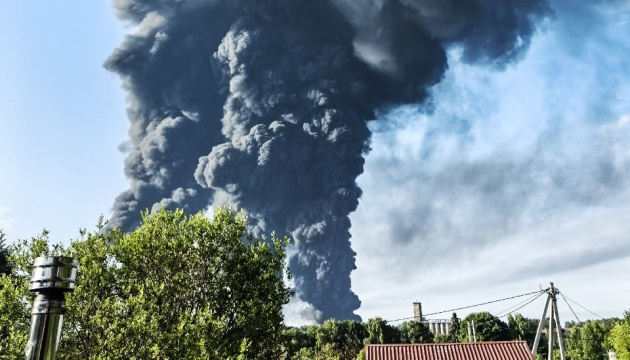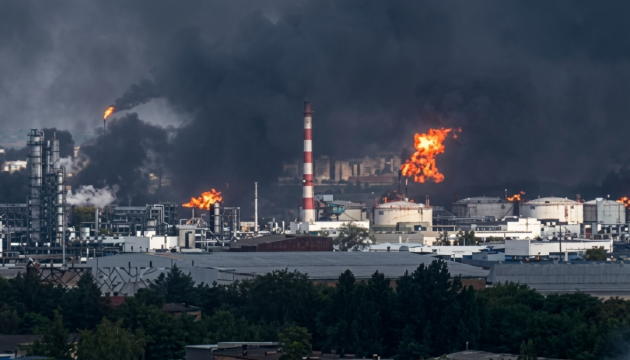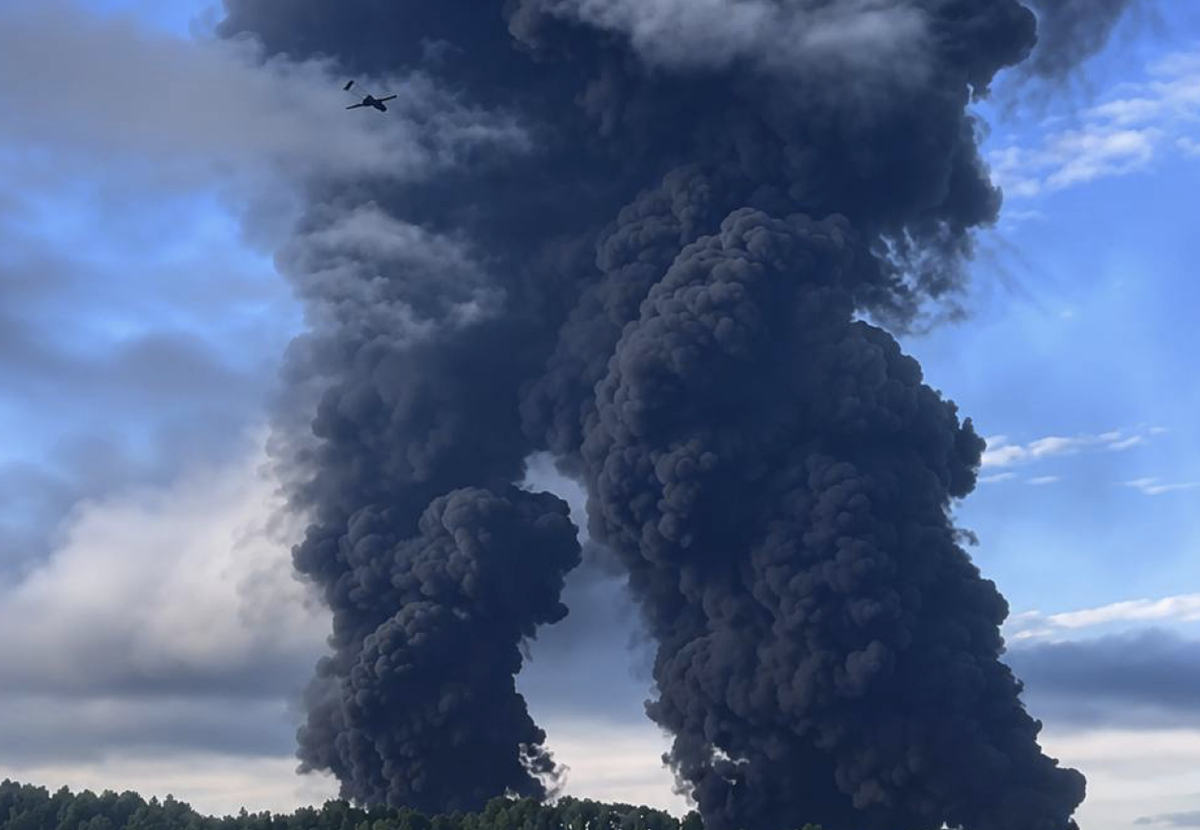
President Volodymyr Zelensky has confirmed on Telegram a wave of deep-strike drone operations targeting Russian military-industrial infrastructure overnight June 13-14. Executed by the Security Service of Ukraine (SBU), the strikes hit fuel and chemical assets hundreds of kilometers behind enemy lines.JOIN US ON TELEGRAMFollow our coverage of the war on the @Kyivpost_official. “Long-range sanctions” In a statement released on social media, President Zelensky praised the military’s expanding reach. “There are good results from our warriors in applying long-range sanctions against important targets on the territory of Russia and the temporarily occupied territories of Ukraine,” Zelensky wrote. “More than 700 kilometers from our state border.” The president detailed that the coordinated overnight assault achieved direct hits on two primary targets essential to the Russian war machine: the “Temp” oil depot and the “Azot” chemical plant. The widespread drone wave caused disruptions across Russia, triggering air raid alerts in 28 regions and forcing civil aviation authorities to restrict air traffic at six airports. Striking the “Temp” state reserve Operators from the SBU’s elite “Alpha” Special Operations Center guided loitering munitions into the Rosrezerv “Temp” oil depot, located in the city of Rybinsk (Yaroslavl region). Integrated directly into Russia’s state material reserve system, the “Temp” facility is a heavily guarded strategic asset used to stockpile massive quantities of gasoline, diesel fuel, and lubricants. It serves as a primary fuel artery for Russia’s northeastern regions and acts as a strategic staging ground for supplying the occupation army.
“Long-Range Sanctions”: Ukraine Strikes Strategic Russian Fuel and Explosives Hubs
President Volodymyr Zelensky confirmed that Ukrainian special forces struck the “Temp” state fuel reserve and the “Azot” chemical plant deep inside Russia.
TL;DRAI
SBU conducted drone strikes June 13-14 on Temp oil depot and Azot chemical plant 700+ km inside Russia, destroying fuel and ammunition supplies. The coordinated strike demonstrates autonomous weapons scalability and supply-chain attack strategies—key risk model for European tech infrastructure defense planning.
868 words~4 min read