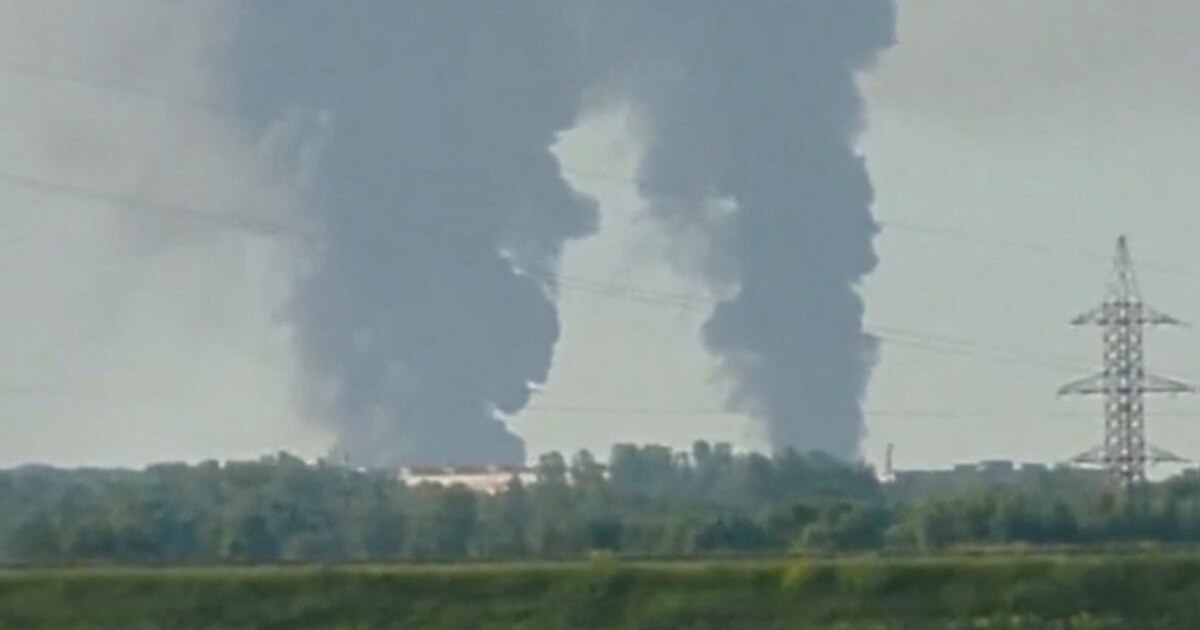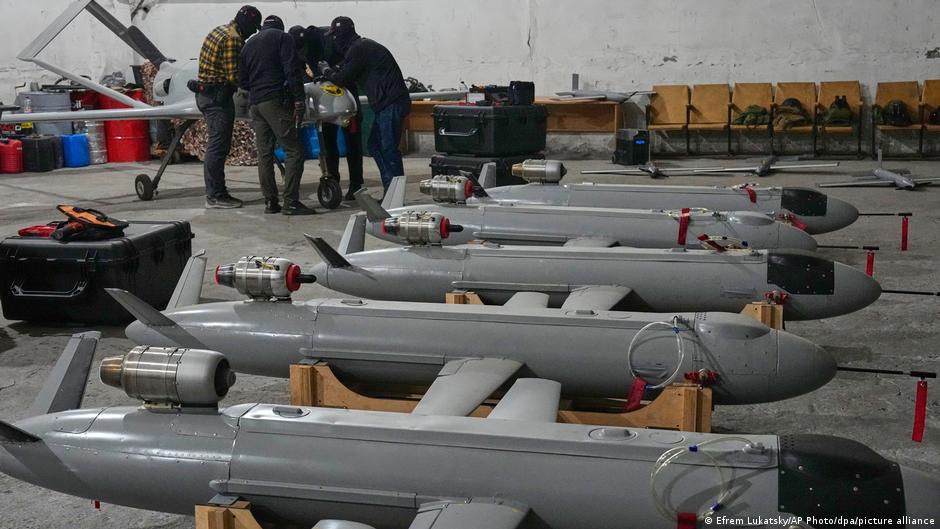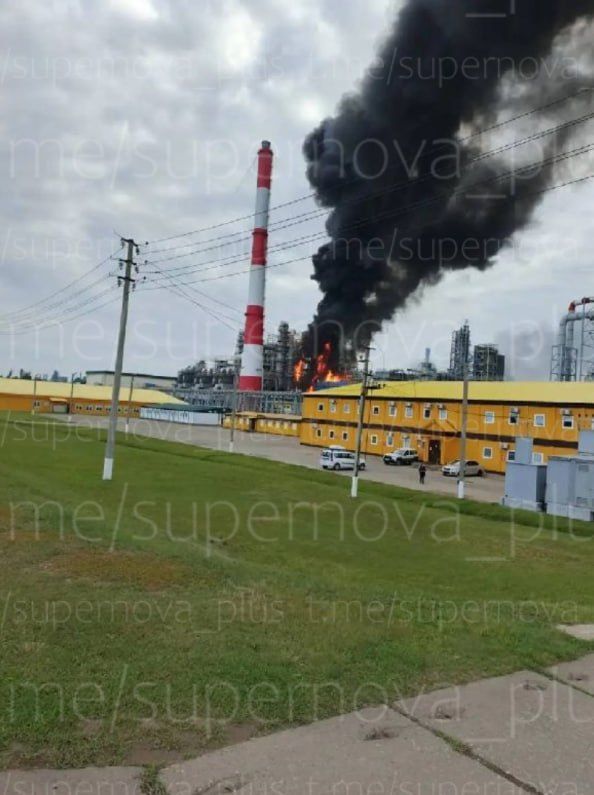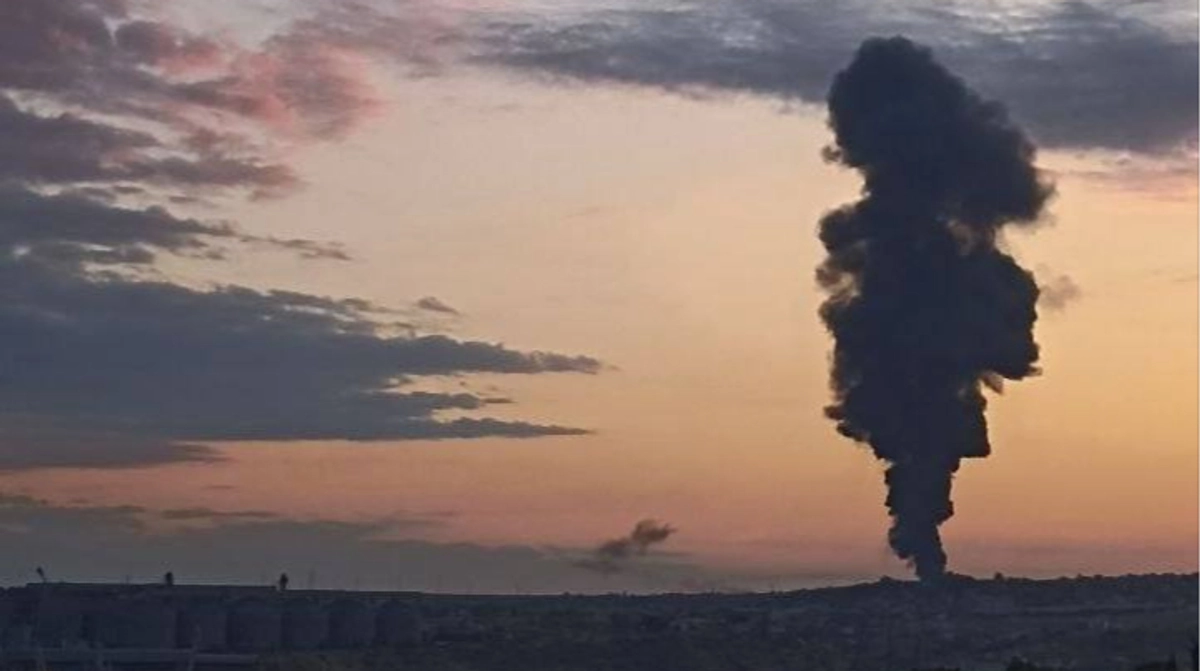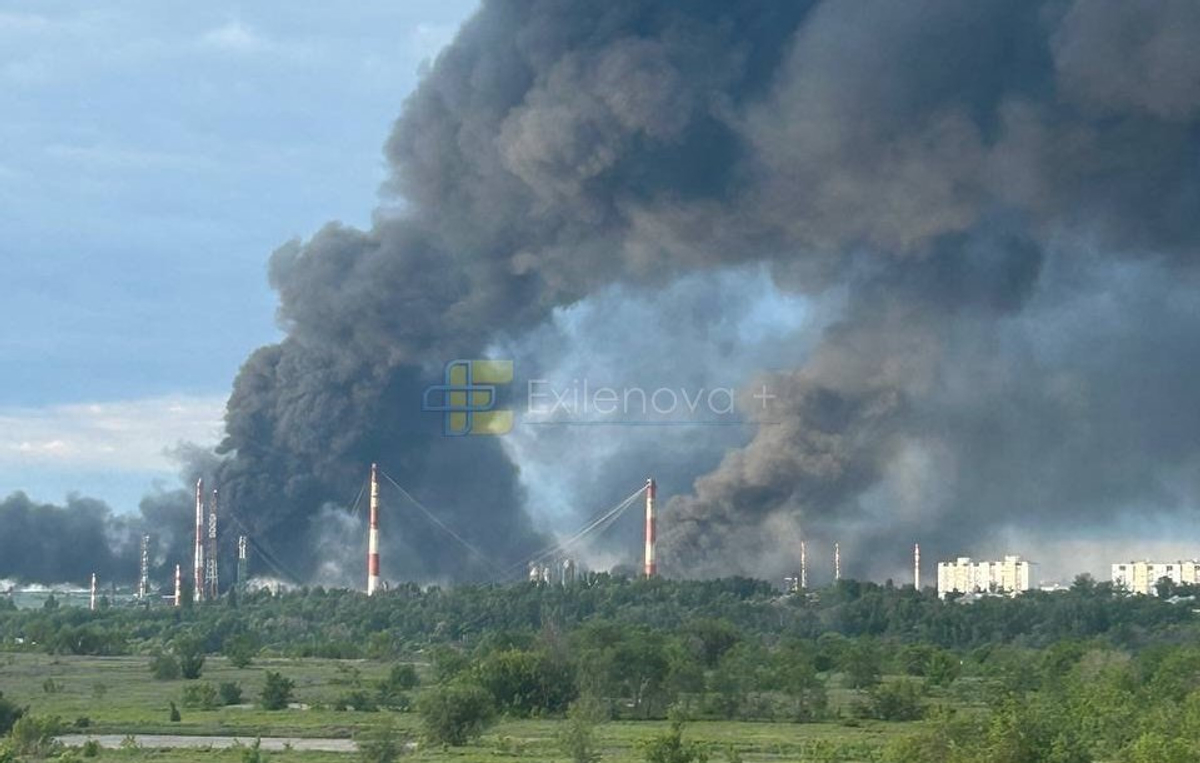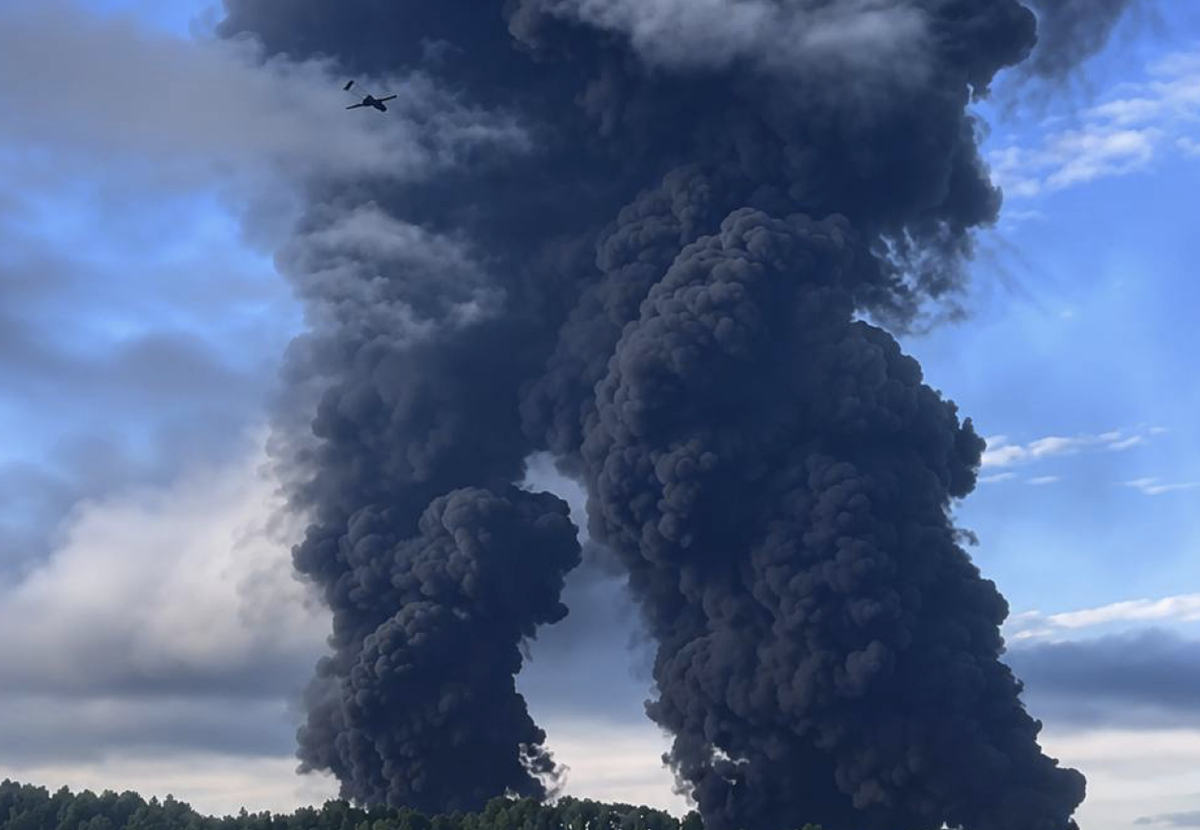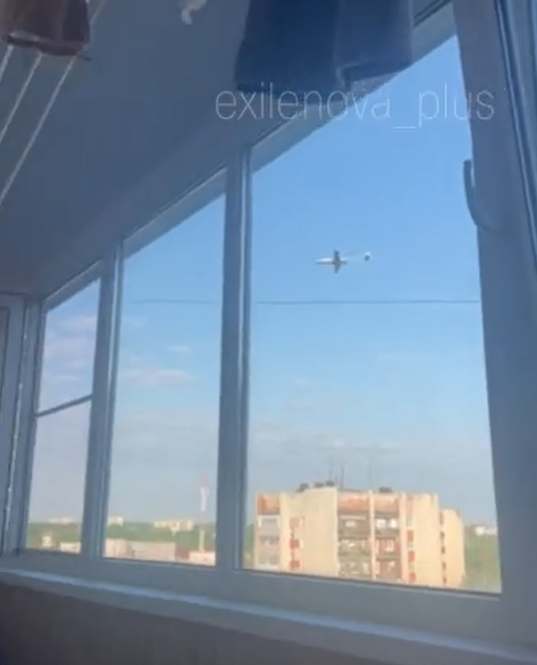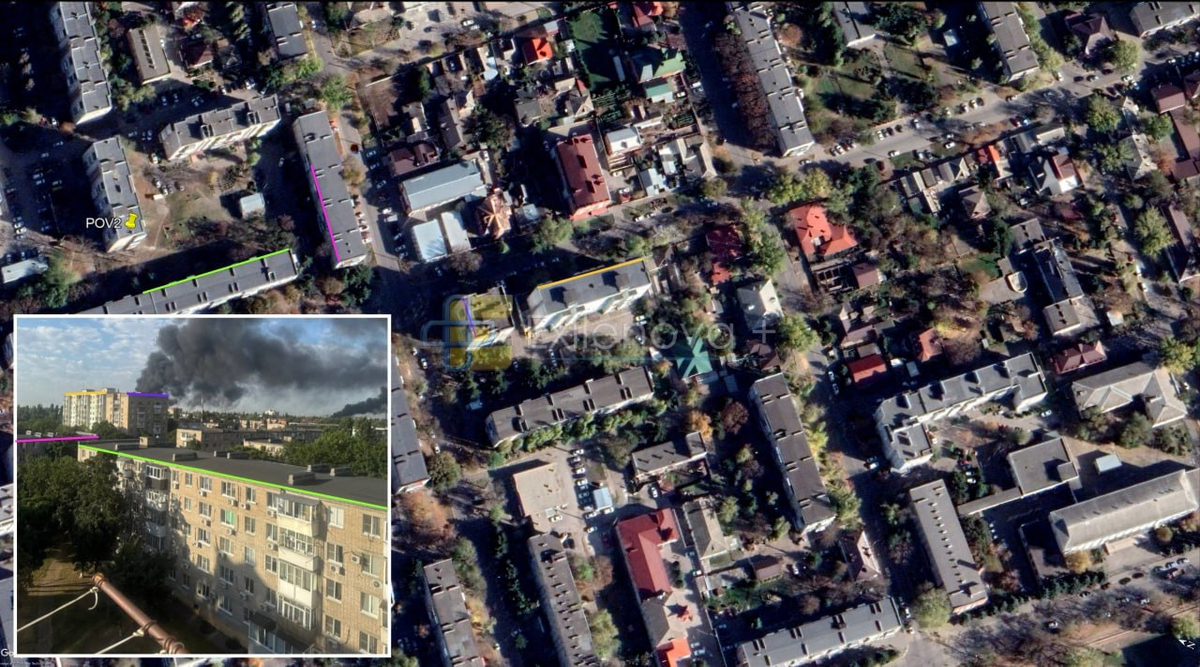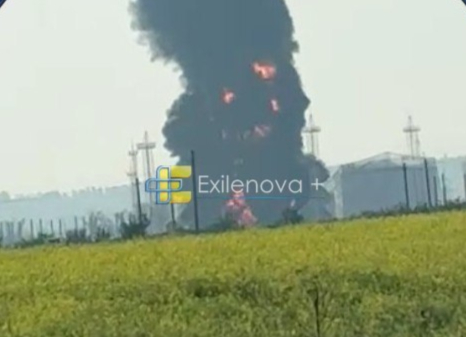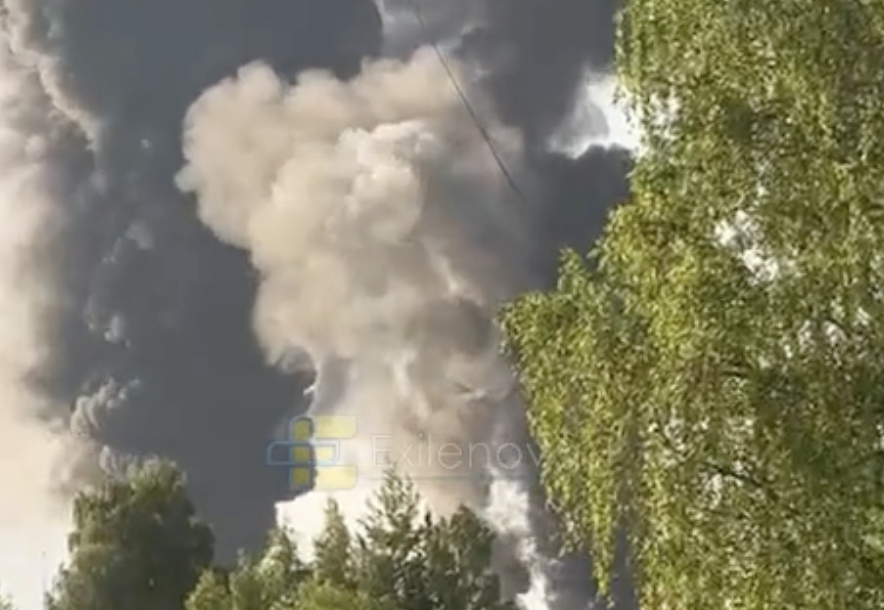
Ukrainian long-range strike drones executed a synchronized, multi-regional offensive Saturday night into Sunday morning, June 14, Exilenova+ and ASTRA Telegram channels reported. The operation compromised a massive chemical plant supplying Russia’s ammunition factories, while simultaneously crippling railway and fuel storage networks supporting the Kremlin’s wartime logistics.JOIN US ON TELEGRAMFollow our coverage of the war on the @Kyivpost_official. Striking the ammo supply chain The primary target of the operation was the Novomoskovsk Aktsionernaya Kompaniya “Azot” chemical complex, located in Russia’s Tula Oblast. Regional Governor Dmitry Milyaev acknowledged the strike, claiming that “drone fragments” fell onto the territory of an unspecified industrial enterprise in Novomoskovsk. However, independent open-source intelligence (OSINT) analysts from the ASTRA cross-referenced geolocation data from video footage of the blaze, confirming a fire at the Azot plant. Owned by the Eurochem holding company, Azot is the largest domestic producer of ammonia and nitrogen fertilizers in Russia. Investigative data reveals that between 2022 and 2024, Eurochem’s specialized nitrogen plants shipped at least 38,000 tons of acetic acid and nearly 5,000 tons of nitric acid directly to the Sverdlov State Explosives Plant in Dzerzhinsk. These chemical compounds are essential raw ingredients used to manufacture octogen (HMX) and hexogen (RDX) – the foundational high-explosive payloads packed into Russian heavy artillery shells.
Ukrainian Drones Attack Strategic Russian Chemical Plant and Rosrezerv Fuel Hubs
Ukrainian drone campaign triggered fires at the “Azot” explosives-supply chemical plant, a Smolensk railway depot, and a major Rosrezerv fuel storage facility.
571 words~3 min read