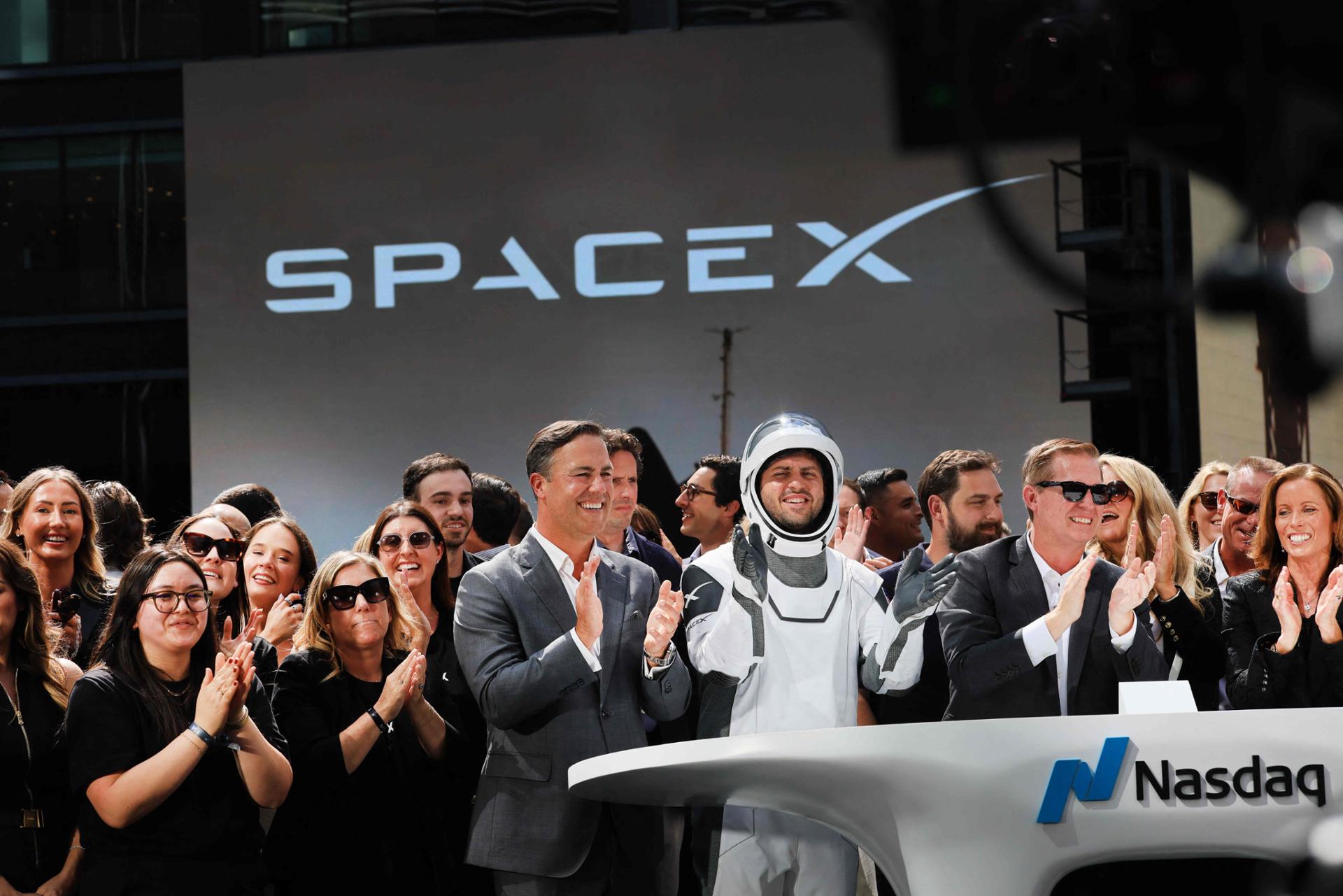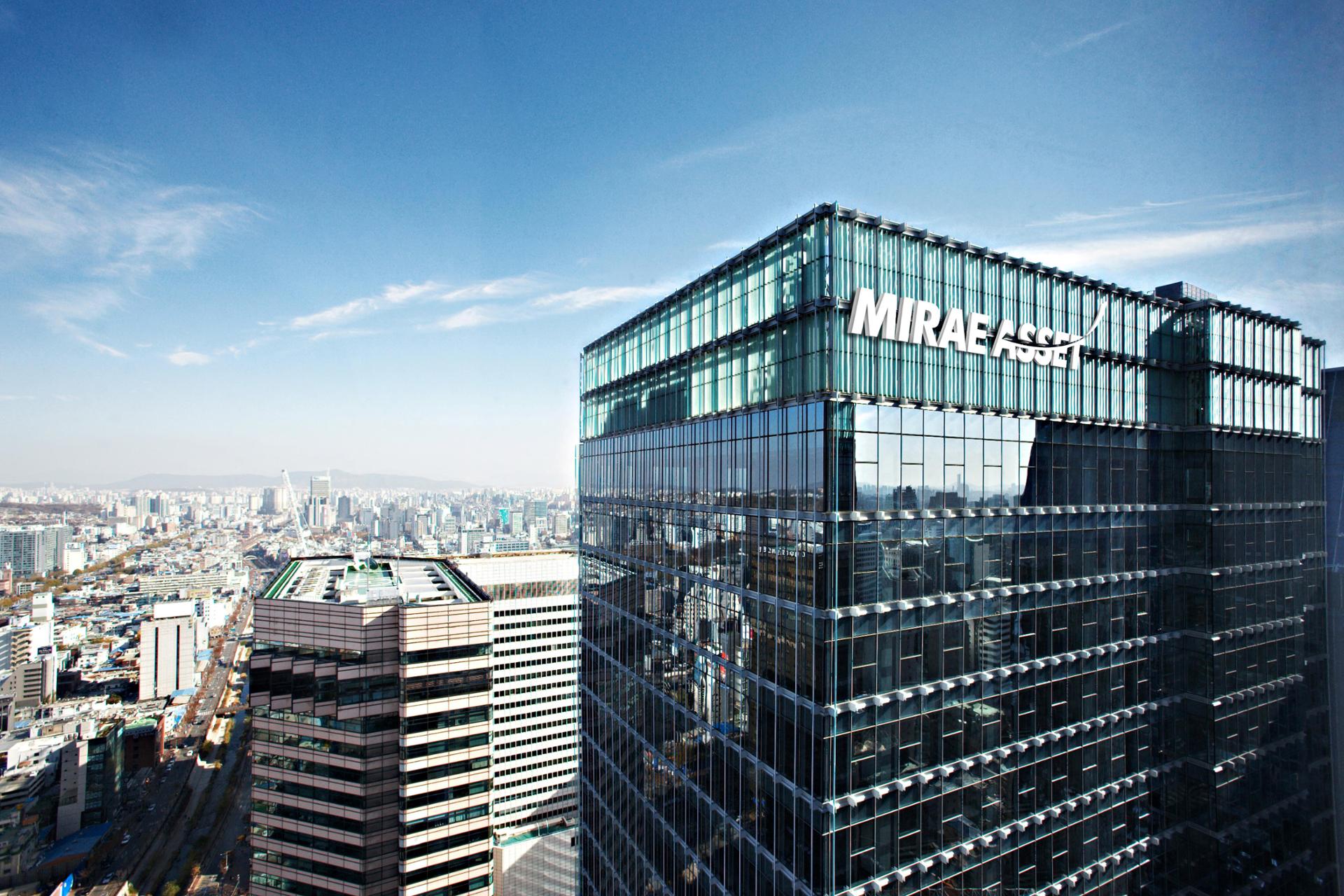
Mirae Asset fails to secure allocable shares, leaving asset managers empty-handed People watch the initial public offering ceremony of SpaceX outside the Nasdaq building in Times Square in New York City, Friday. (Xinhua-Yonhap) As SpaceX blasted into the public market in a record-setting debut Friday, South Korea missed the ride altogether after Mirae Asset Securities, the only domestic member of the underwriting syndicate, failed to secure any share allocation.The rocket-maker enjoyed a successful Nasdaq launch, closing at $161 per share on Friday, up 19 percent from its initial public offering price of $135. The gain pushed its market cap above $2.1 trillion by the close of trading.Korea, however, was largely left on the sidelines. Mirae Asset Securities, the only Korean participant in the underwriting syndicate, failed to receive any allocable shares, leaving domestic investors without direct exposure to the offering."Mirae Asset Securities received no allocable shares in the lead underwriter's final allocation process, leaving it unable to allot any stock to its clients," the brokerage said Saturday.Although a Wednesday filing with the US Securities and Exchange Commission showed that SpaceX had allocated 2.31 million Class A shares to Mirae Asset Securities, the brokerage said the figure did not represent a guaranteed allocation."(The figure in the SEC filing) refers to our underwriting commitment as a member of the syndicate and is distinct from the final allocation available for sale to investors," it said.Industry sources said Goldman Sachs, the lead left underwriter, likely reallocated shares to accommodate stronger-than-expected demand from institutional investors.Following the failed allocation, Mirae Asset Securities refunded subscription deposits in full to investors who had participated in the offering.Earlier this month, the brokerage’s $500 million offering of SpaceX shares sold out within minutes of subscriptions opening, highlighting strong demand among Korean investors.The offering was limited to registered professional investors, including asset managers who had planned to include the shares in their US space-focused exchange-traded funds.Local asset manager Korea Investment Management, which had intended to incorporate the stock in its Ace US Space Tech Active ETF at the IPO price of $135 using the allocations secured through Mirae Asset Securities, now faces a major overhaul of its plans.The asset manager said Saturday that the allocation failure reflected "the unique and often unpredictable nature" of the US IPO market.It added that it subsequently gained exposure to SpaceX through open-market purchases after trading began, though it did not disclose the size of its position.Mirae Asset Global Investments, an affiliate of Mirae Asset Securities, also failed to gain early exposure to SpaceX for its ETFs.The asset manager instead plans to add SpaceX to its Tiger US Space Tech ETF two trading days after the listing, in line with the passive fund's index-tracking methodology. Other space-themed ETFs are expected to incorporate the stock similarly.Shut out of the IPO, Korean retail investors and asset managers are expected to gain exposure to SpaceX through purchases in the secondary market."Given SpaceX's prominence in the aerospace sector, it would be difficult for asset managers not to include the stock in their ETFs, regardless of its valuation," an official at a local asset manager said."They are likely to continue increasing their weightings over time. The key concern, however, is profitability."Won pressure lingersAs Korea continues to seek more exposure to SpaceX, local financial markets are facing sustained capital outflow pressure.While the rally in chip stocks and the broader Korean stock market have cooled this month amid global investor interest in the SpaceX IPO, capital outflows may continue as the newly listed company's momentum remains strong."Given the sheer scale, SpaceX could continue to disrupt market liquidity in the near term," Samsung Securities analyst Kim Jong-min said, adding that local chip stocks could become targets for tactical profit-taking as postlisting purchases continue.The liquidity drain weighs on the Korean won as investors seek to convert the local currency into greenback to fund equity purchases.Reuters reported Wednesday that an estimated $1.5 billion in dollar demand generated by Korean participation in the SpaceX IPO had weighed on the won, helping push the currency to a 17-year low earlier this month.While the report said the dollar-buying demand tied to the IPO had reached its final stage, continued investor interest in SpaceX could sustain demand for dollars and keep pressure on the won.Authorities are believed to expect the won to eventually return to trading in line with economic fundamentals."The near-term outlook remains difficult to predict, but over time, supply and demand are likely to realign with the fundamentals," said a foreign exchange market official.
Korea misses out on SpaceX's blockbuster debut
As SpaceX blasted into the public market in a record-setting debut Friday, South Korea missed the ride altogether after Mirae Asset Securities, the only domesti
747 words~3 min read