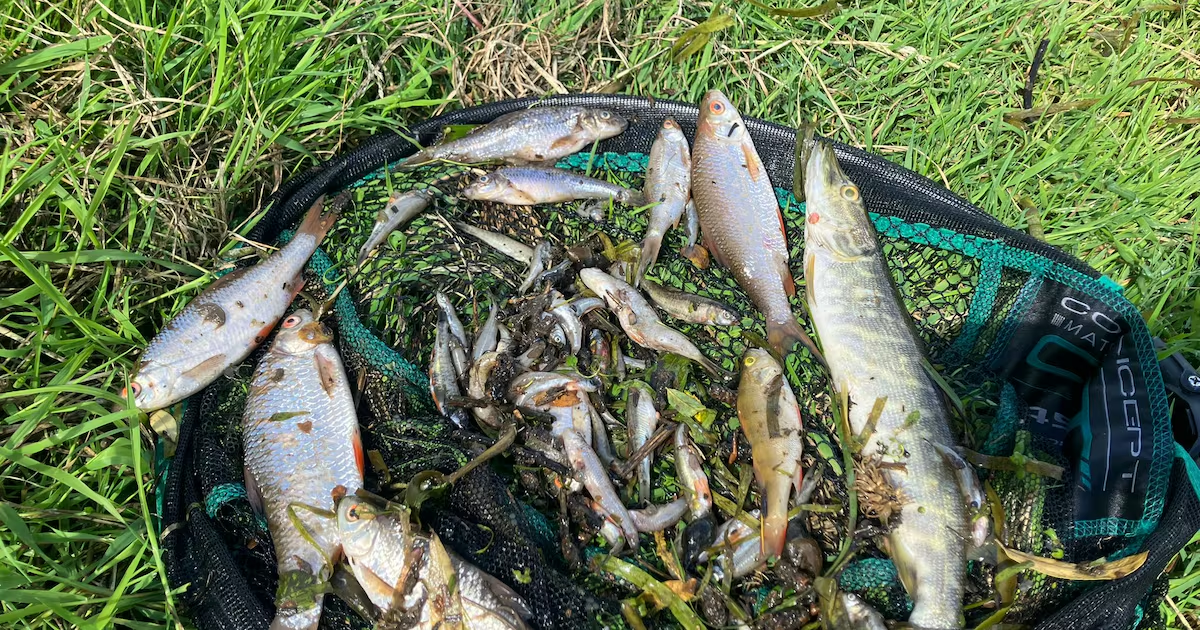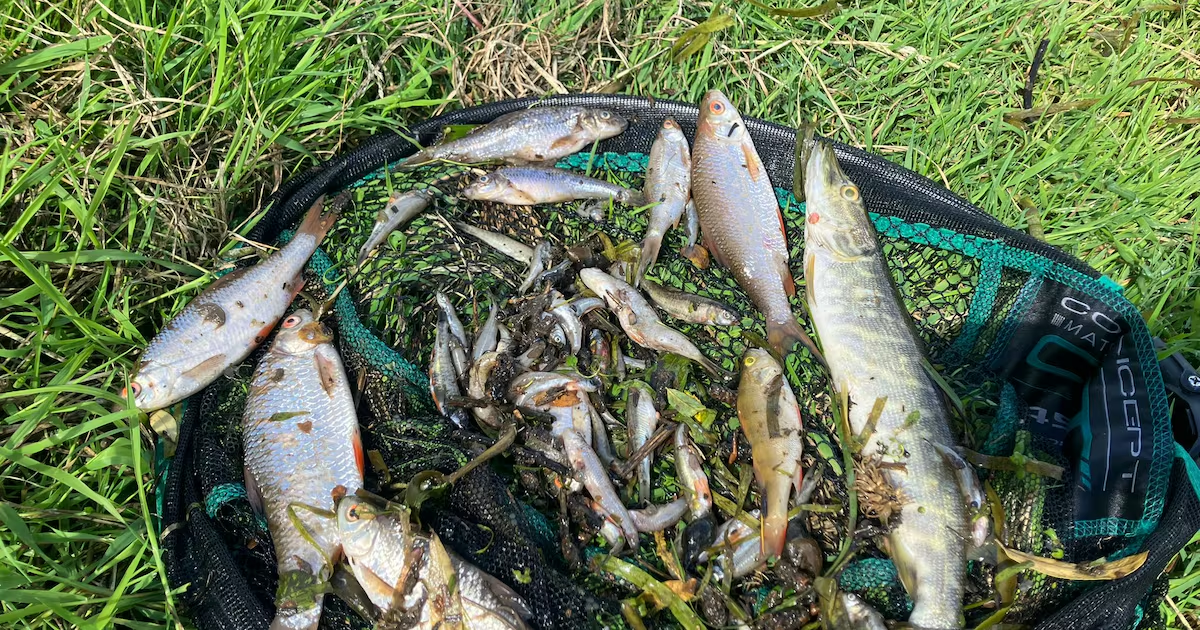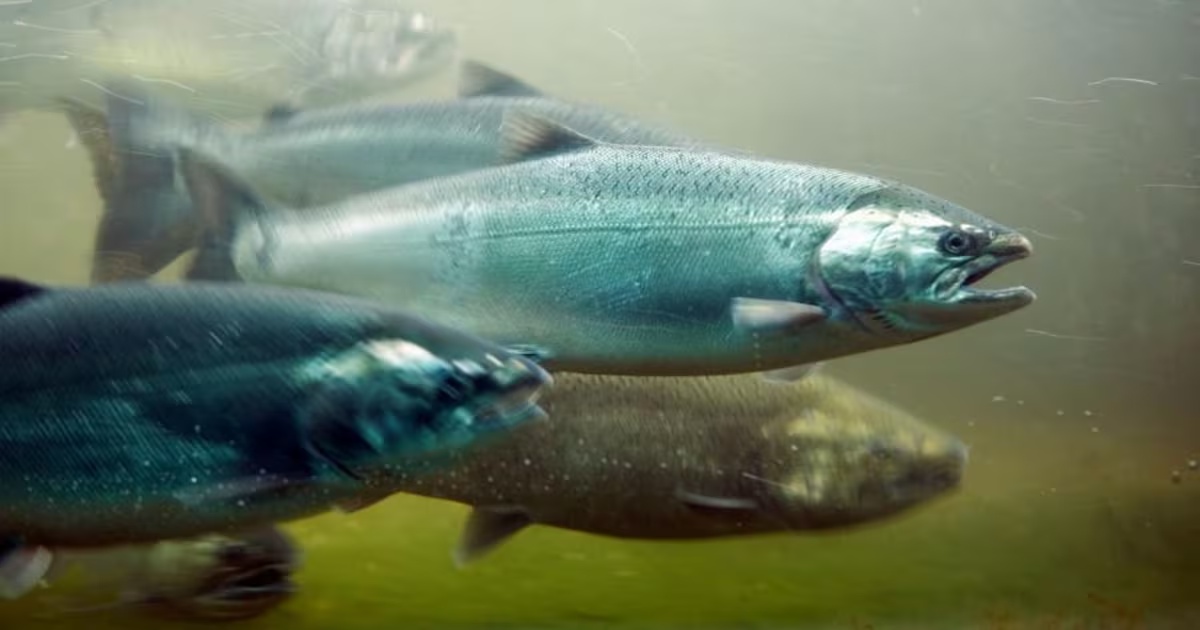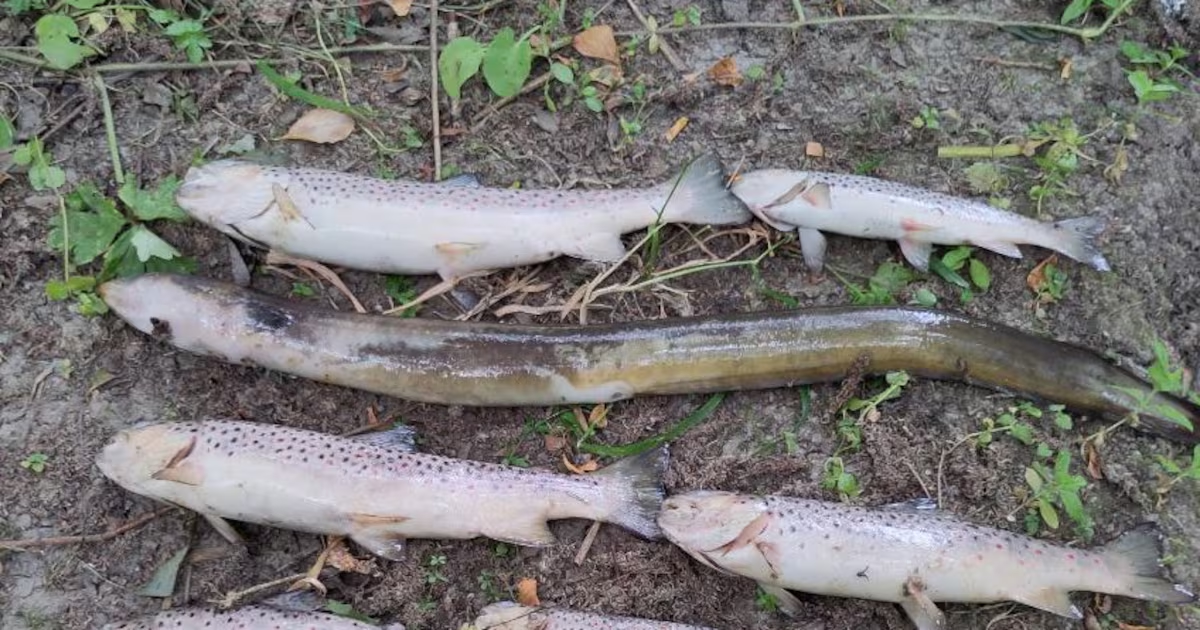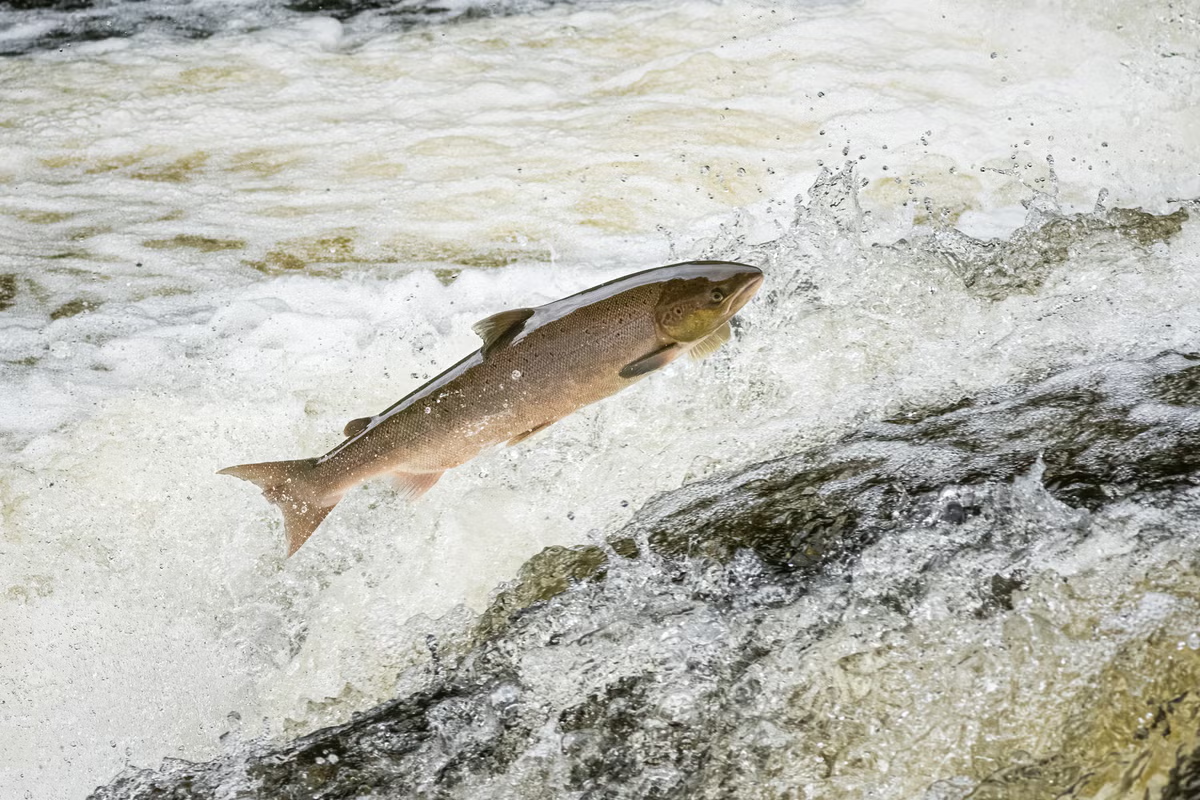
Another summer, another river kill. On June 2nd, drone footage taken by locals on Louth’s river Glyde showed 25km (15 miles) of pollution, its water strewn with dead fish including adult and juvenile Atlantic salmon and European eel. Tens of thousands of fish are dead.Inland Fisheries Ireland said the kill was “locally significant”. The description is staggering in its complacency. Wild salmon are on the verge of extinction – numbers returning to Irish rivers have collapsed by 90 per cent in just five decades. There is not one salmon to spare. The Irish State – its agencies, departments, judiciary, and politicians – urgently needs to understand this. What happened on the river Glyde is not a local incident. It is a national emergency.Wild salmon are dying at sea in record numbers, and rising ocean temperatures are causing havoc. What’s within the immediate control of the Government isn’t just to continue international efforts to slash emissions, it’s also what’s happening to our estuaries and rivers. The data tell the story: they’re filthy with pollution, clogged with man-made barriers, and wrecked by State-funded drainage schemes that channel them, pour herbicides along them, and cut vegetation that otherwise offers much-needed shade, especially during hot summers.For every wild salmon returning, there are probably 20 farmed salmon in a cage. It is the perfect symbol for what humans have done to the natural world. Not only have we diminished the wild thing, but we’ve replaced it with the captive. Wild bees have collapsed while honeybee hives have expanded; old woodlands cleared while monoculture plantations abound; native grasslands have vanished while fertilised pasture fields dominate. We might never see a wild salmon in a river, but what makes them so important to care about is that they’re a species that joins our world. Born in rivers and streams fed by rainwater from the mountains, they move into our estuaries and out to the open oceans to grow and feed before returning to the same river to breed. They connect wild mountains to the sea, their presence or absence a verdict on how humans value, treat and manage the world. Wild salmon are the measure; when they go missing, it signals that things are completely out of ecological whack.They need three things: cold, clean, free-flowing water. They aren’t fooled by expensive fish passes and thin buffer strips on farms – what’s needed is whole-river restoration, from source to estuary, across entire catchments. Wild salmon’s value is as an indicator: what’s good for them is good for everything else. A salmon river is a healthy river and surrounding landscape – and that’s the economic foundation of Ireland’s pharmaceutical, technology, food and drink, tourism and farming industries. Companies should be investing in restoration, with a focus on sending the strongest juvenile salmon to sea, as the way to secure their own economic future. Here are suggestions as to where their money – along with public money – could go.1. Remove barriers in our rivers as soon as possibleThe most immediate, proven and effective intervention Ireland can make is to remove the tens of thousands of concrete weirs, culverts, sluices and dams that block wild salmon from reaching their spawning grounds. We can’t afford expensive consultancy reports and fish passes; barriers need to be taken down urgently, within the next 12 months. It won’t just help fish, it also allows sediment to move freely. The evidence is compelling and consistent: removing barriers reduces flood risk, water pollution and water temperatures. [ Is there an Irish river I can drink from without vomiting?Opens in new window ]2. Tackle agricultural pollution Wild salmon cannot survive polluted waters. Our rivers and estuaries are saturated in nitrogen and phosphorous pollution, which the Environmental Protection Agency (EPA) says primarily comes from agriculture. The measures by the Department of Agriculture aren’t working – the EPA says there are no significant improvements – so the Government needs to find catchment-level solutions that work. Anything less is a reckless waste of public money. A recently published report by the directorate general for agriculture and rural development of the European Commission says that farm-level measures aren’t sufficient and that landscape-scale interventions are the only way forward. Concurrently, the Oireachtas needs to reform the laws to increase fines and introduce jail time for polluters.3. Address salmon farmingThe evidence linking open-net salmon farming with damage to wild salmon is substantial. This is relevant along Ireland’s west coast, where farms operate near pristine wild salmon rivers. The Government needs to establish exclusion zones along the west coast, and tell salmon farm companies that if they want a future in Ireland, they must invest in closed-pen technology.Members of the Dee and Glyde Fishing Development Association photographed evidence of dead fish in June this year from the river Glyde 4. End commercial or recreational fishing for wild salmon for a defined period Salmon are in crisis; every individual fish matters. In 2024, 11,217 wild salmon were killed under licence. Wild salmon, like curlew or corncrake, should now be untouchable – they are a species not to exploit, but to fully protect. Salmon anglers are now conservationists, and a wild salmon isn’t a trophy to be photographed for social media, it’s a patient. Inland Fisheries should fund them for their work.5. Stop State-sanctioned drainage works on rivers The 1945 Arterial Drainage Act means that public money funds the Office of Public Works’ regime of spraying, dredging, and channelisation of Irish rivers. It treats rivers as drainage infrastructure and destroys the assets they represent: clean water, flood regulation, biodiversity, tourism and the economic life that depends on all of them. The law is the problem. Change the law. 6. Establish a single, statutorily empowered river catchment authority Too many agencies and departments control water policy in Ireland, but don’t deliver on results. Too little accountability; too much public money wasted. We need one body – modelled on Revenue – with power to set binding targets and co-ordinate restoration that works.7. Commercial fisheries poset risks to migrating salmon through bycatch. Ireland needs to push for stronger, urgent international cooperation to address this, including possible seasonal exclusion zones or time-area closures during the critical times when young salmon migrate from rivers to sea, prioritising the key areas west and northwest of Ireland.The science is not in dispute, nor is the remedy. The question is whether politicians and the judiciary have the will to act before it’s too late. River kills will keep happening until someone in power decides that what dies in our waters matters more than the industry that caused the pollution in the first place. There is little time left. Not by 2030. Not after endless expensive reports. Now.
Wild salmon are on the verge of extinction. There is not one fish to spare
What happened on the river Glyde in June is not a local incident. It is a national emergency
1,113 words~5 min read