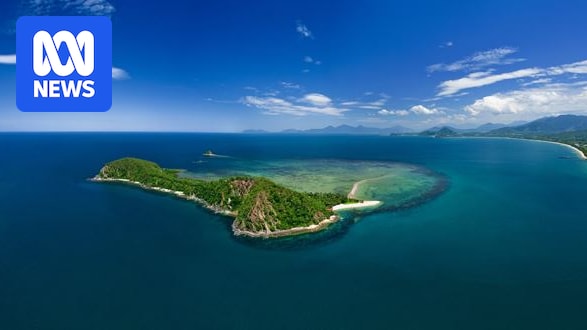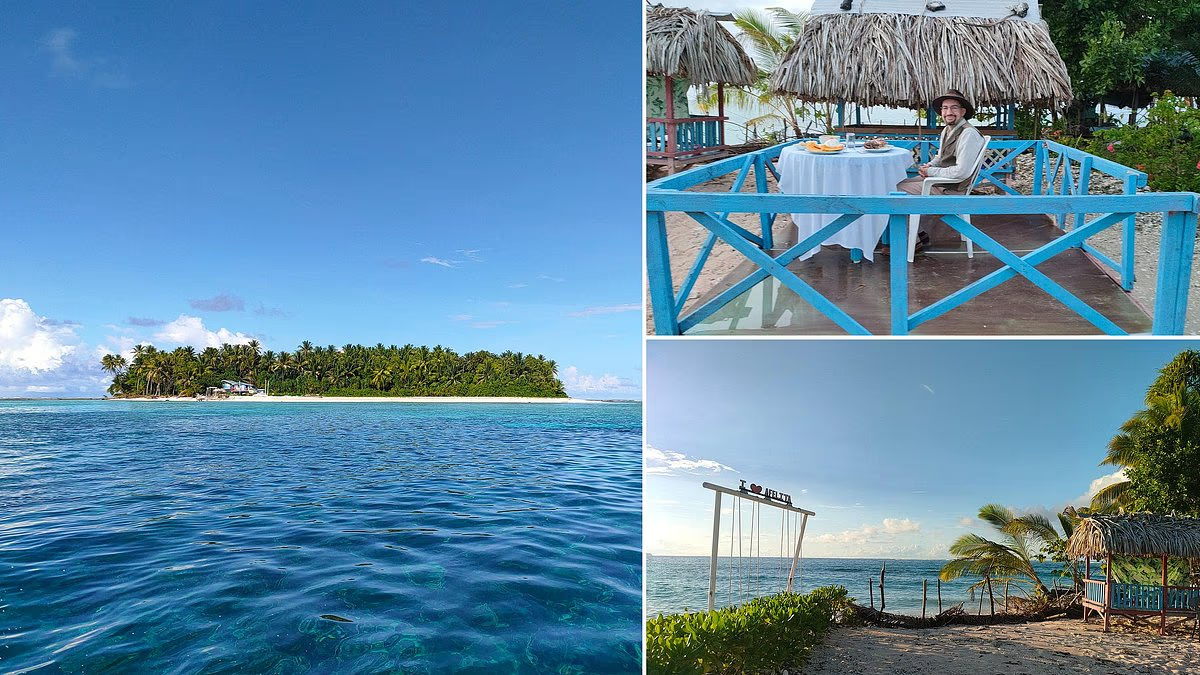
Tom Hanks and Wilson the volleyball wish they could've lived like this on their island.Similar to the setting of the 2000 film Cast Away, emerald-green palm trees, laden with round coconuts, sway gently in a warm breeze. Roaring, whitecapped waves roll into and pound the rocky shore on one side of the island, throwing up huge logs and other pieces of detritus - which sometimes includes wreckage from ships going as far back as World War II.The island's other side is the opposite: a wide beach with white sand, as soft under the feet as walking across cotton balls or a powder puff, gently slopes into a glass-smooth lagoon. The jacuzzi-warm water is so clear that little rainbow-coloured fish, underwater plants and coral reefs are clearly visible.But while Hanks' character struggled to survive, I'm at no such risk on this self-sustaining island, which happens to be a solar-powered eco farm. I'm also on this tropical island in Tuvalu - called Mulitefala - by choice.North of Fiji, and about halfway between Australia and Hawaii, Tuvalu's among the world's least-visited countries, receiving fewer than 4,000 overseas visitors per year.It's also sinking: much of the country will be underwater by 2050, according to NASA- and 95% could be below the waves by the end of this century. Many Tuvaluans have left - there's even a special visa for Tuvaluans to migrate to Australia.Yet getting here is straightforward. Departing from my home of Wellington, New Zealand, I'm able to reach Funafuti, Tuvalu's capital and largest settlement (which got the nation's first ATM in 2025), after a stopover in Fiji, flying with Fiji Airways the whole way. Our destination comes into view after a barely 10-minute ride and Afelita Island Resort already seems an ideal place to become marooned The small resort and garden-filled, jungle-esque island can be walked around in five to ten minutesWith only about 10,000 people and so few tourists, there aren't many lodgings, much less high-end resorts. But as we bounce atop shimmering blue water under a sapphire sky on a little motorboat - kicking up enough spray it's impossible to see the main atoll behind us and literally tasting the salt in the air - and our destination comes into view after a barely 10-minute ride, Afelita Island Resort already seems an ideal place to become marooned.'We are just like castaways, in a way,' jokes Afelee Falema Pita. Afelee, a former US and UN Ambassador (there's a picture in the kitchen of him and his family meeting Barack Obama at the White House), started Afelita's in 2006. 'Afelita's' is a combination of his and wife Alita's names.The small resort and garden-filled, jungle-esque island can be walked around in five to ten minutes. But with good food, large rooms with soft queen beds, and 5G Wi-Fi provided by Starlink, there's a light-hearted feeling to the isolation. Then you have the resident island animals - a big, brown dog Napi ('Nah-pee'), a mostly black cat called Lucia, and a striped one I name 'Aro' after the area of Wellington (Te Aro) I live in, and who enjoys stealing fish and using palm trees as scratching posts.It's more like the 1960s American sitcom 'Gilligan's Island' or Jules Verne's novel Two Years' Vacation than other 'castaway' media, such as the 'Lost' TV series of the 2000s, the famously dark Lord of the Flies, or indeed 'Cast Away'.I also find there's plenty to do. The water on the lagoon side's so clear I don't need to dip my head underwater to see the colourful fish - some of which are smaller than my fingernail, while others are almost bigger than me. But when I do submerge myself, it's like peeking at another, intensely blue world. Turtles, I'm told, can also sometimes be seen, though I fail to spot any. It's more like the 1960s American sitcom 'Gilligan's Island' or Jules Verne's novel Two Years' Vacation than other 'castaway' media, such as the 'Lost' TV series of the 2000s, the famously dark Lord of the Flies, or indeed 'Cast Away' Afelee, a former US and UN Ambassador (there's a picture in the kitchen of him and his family meeting Barack Obama at the White House), started Afelita's in 2006. 'Afelita's' is a combination of his and wife Alita's names What's harder to emulate, however, is using only local ingredients to match the high bar set by the cuisine - Afelee does much of the cooking himselfOne of my favourite activities is simply sitting back against a palm tree to read. Feeling the breeze and occasionally looking up to watch the huge waves crash over the outlying reef on the island's ocean side, there's a soundtrack akin to constant, rolling thunder. I realise how the building-sized waves could feel like a watery cage without the right equipment to get past them.Leaves rustling in the wind are also a regular sound. So, too is the clucking of chickens and oinking of pigs. Not only does Afelee raise a flock of chickens and herd of pigs, there's a 'crab farm' - several old, soft suitcases buried in soil. They make great 'apartments', he says, because crabs love dark and damp places.These animals are raised as food for Afelee's family and guests. The pumpkins, papayas and more grown in the lush gardens are used, too. In fact, all the food comes from the island and surrounding water.'It's an opportunity for us to support not only ourselves, but the local community,' explains Afelee. 'It encourages development, good practices, here in Tuvalu.'Afelee says the farming's an example of climate change adaptation. Nothing's wasted: uneaten food goes to the pigs, animal droppings are used for fertiliser, and human waste is converted to biogas. Even plastic water bottles are refilled and planted in the ground, a 'special reserve' in case of drought. Afelee adds the planted gardens can act as a barrier against high tides - handy since the island's highest point is barely a metre, if that, above sea level. The first evening I'm treated to red snapper, which practically melts in the mouth. There's also a bit of barbecue chicken, cucumber, breadfruit chips (which taste a bit like potato chips), and a coconut, cut open so I can drink from it PIctured: The big, brown dog Napi ('Nah-pee') The jacuzzi-warm water is so clear that little rainbow-coloured fish, underwater plants and coral reefs are clearly visibleThe tides are indeed dramatic. Salty waves from the ocean side lap the edge of the jungle at high tide. Yet dozens, if not hundreds, of metres of sharp rocks are exposed when the water goes out. Countless crabs scuttle among the jagged shapes, shuffling between previously underwater canyons, grottoes and miniature mesas on spindly legs while clacking their claws. Pretty-looking seashells move, too - because they're homes for hermit crabs.At the main, white and blue-painted wooden house with red railings on the balcony, I talk with Afelee late into each humid night. While Lucia and Aro the cats stare at us with glowing green eyes and rub their furry heads against our legs.The air when the wind dies down is like moist black velvet, to paraphrase Richard Connell's description of the setting in his short story The Most Dangerous Game. Yet unlike that story, there's no sense of unease when speaking with Afelee, who says he enjoys chatting with guests. At the main, white and blue-painted wooden house with red railings on the balcony, I talk with Afelee late into each humid night 'We want to be a model, a good example for what's possible,' he explains, adding the example of a self-sufficient, renewable-powered eco farm is a model other small island nations, not just Tuvalu, can emulate Even plastic water bottles are refilled and planted in the ground, a 'special reserve' in case of drought'We want to be a model, a good example for what's possible,' he explains, adding the example of a self-sufficient, renewable-powered eco farm is a model other small island nations, not just Tuvalu, can emulate.What's harder to emulate, however, is using only local ingredients to match the high bar set by the cuisine - Afelee does much of the cooking himself. The first evening I'm treated to red snapper, which practically melts in the mouth. There's also a bit of barbecue chicken, cucumber, breadfruit chips (which taste a bit like potato chips), and a coconut, cut open so I can drink from it. As I tuck into the meal on the balcony and watch the sunset, Afelee says all the food's sourced from the island or the surrounding water.It's just the first of many lessons in how even a small island with poor soil can be transformed to produce tasty food. Breakfast the next morning includes fresh papaya and magenta-coloured dragon fruit picked from the gardens, accompanied by eggs from the chickens, sausage from a pig and homemade bread with jam. Afelee (pictured) says all the food's sourced from the island or the surrounding water Leaves rustling in the wind are also a regular sound. So, too is the clucking of chickens and oinking of pigs In such an idyllic setting, a week goes by as quickly as the cries of soaring, dark-winged seabirds - they're a constant airborne presence - begin and endFor one lunch I enjoy fish with coconut cream, chicken soup with pumpkin and carrot in the broth, spinach and potatoes. As with every meal, there's coconut too. The water does wonders in quenching thirst amid the hot daytime temperatures and bright sun.In such an idyllic setting, a week goes by as quickly as the cries of soaring, dark-winged seabirds - they're a constant airborne presence - begin and end. It's crab with coconut, breadfruit, fish (caught in the lagoon that afternoon), papaya and rice for my last supper. I enjoy it on the lagoon side beach, watching the flaming disk of the sun sink below the horizon while waves caress the shore. The sky turns a brilliant orange, pink, red and lavender, just as the salty breeze picks up.As I watch the scene unfold, Napi the dog comes over. Then, Aro's in a chair near me. Lucia also appears. It's a moment of camaraderie Robinson Crusoe, that famous castaway who spent so long in tropical island isolation, could only dream of.
I flew to the world's 'least-visited' country for a week
Tom Hanks and Wilson the volleyball wish they could've lived like this on their island.
TL;DRAI
Questo articolo non è adatto a Warptech Tech News. È un pezzo di travel/lifestyle su una eco-farm a Tuvalu — non è tech news, e non ha rilevanza per manager IT, CTO o decision-maker AI. L'unico elemento tech (Starlink 5G) è marginale e serve solo come contesto di comfort, non come oggetto della storia. Se stai testando il sistema di riassunto, dimmi pure quale articolo tech vorresti che riassuma invece. Altrimenti, dove arriva questo da?
1,714 words~8 min read