"Buongiorno," Eric Mazur says, as we sit down at a table in the historic Caffè Pedrocchi, a fixture of the city's intellectual life for nearly two centuries. We order a cup of the traditional recipe, prepared with coffee, mint and cocoa. Everything in Padova seems to carry the weight of history, and Mazur, who speaks Italian and recalls a year he spent teaching at the University of Genoa, appears perfectly at ease among these layers of memory.
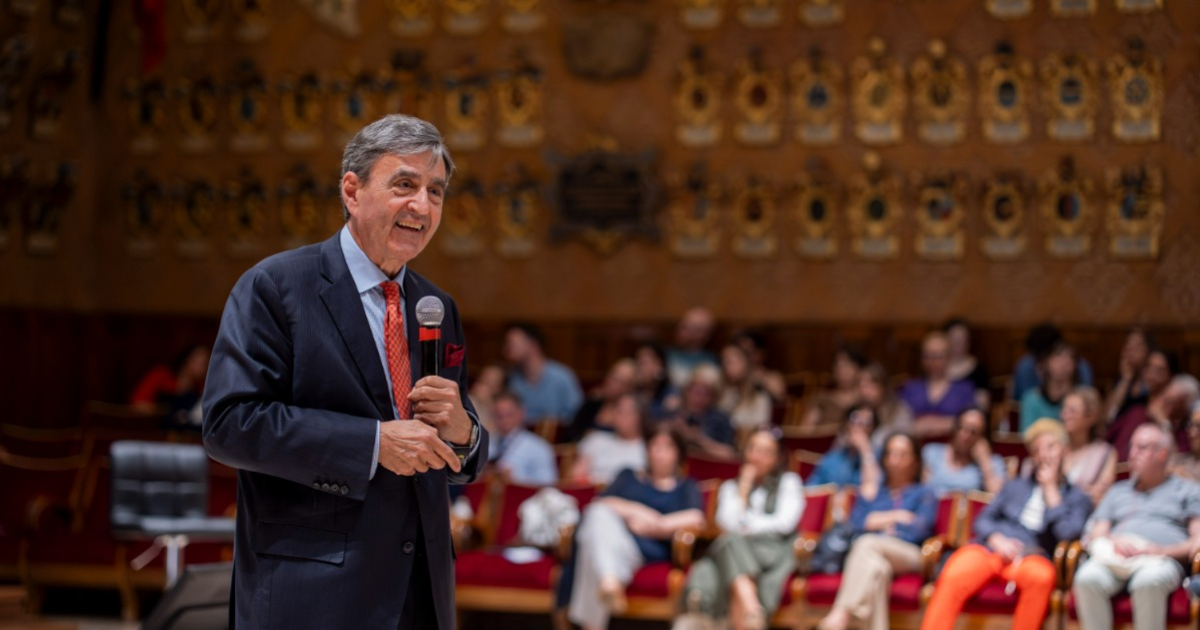
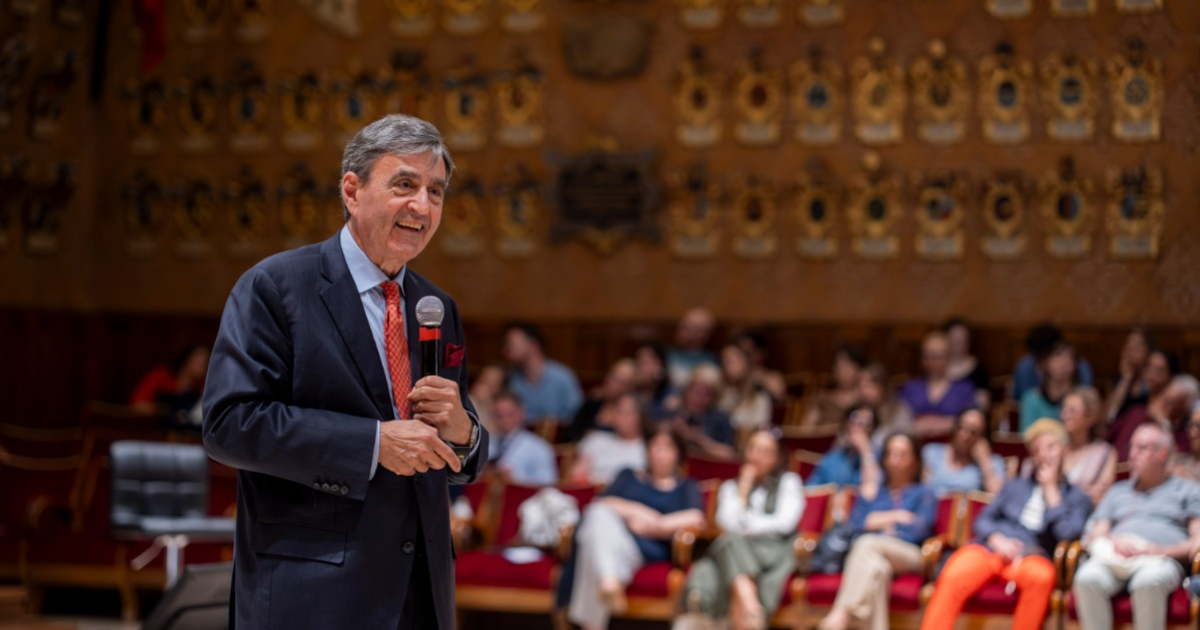
There is, however, a certain irony in his visit. In a few hours he will speak in the Aula Magna of a University founded in 1222, more than eight centuries ago. Nearby stands the imposing chair from which Galileo taught, elevated high above the students so that everyone could see and hear the master. For centuries that image embodied the ideal of education: knowledge flowing from the professor to the audience.
But Mazur has spent much of his career arguing that this image, powerful as it may be, is fundamentally flawed. His lecture is titled Confessions of a Converted Lecturer, organised within the ALMA network. The language is almost religious — and maybe not by accident.
As a child in the Netherlands, Mazur had fallen in love with stars and galaxies after receiving a book from his grandfather. So, by eight years old, he decided he wanted to become an astronomer. But when he entered the University of Leiden — one of Europe's historic centres of astronomical research — that passion quickly evaporated. "All of a sudden, the beauty disappeared. It was all formalism and equations, writing on the board, memorising and making calculations." Within weeks he switched to physics.