June 13, 2026
2 min read
Add topic to email alerts
Receive an email when new articles are posted on
Please provide your email address to receive an email when new articles are posted on .
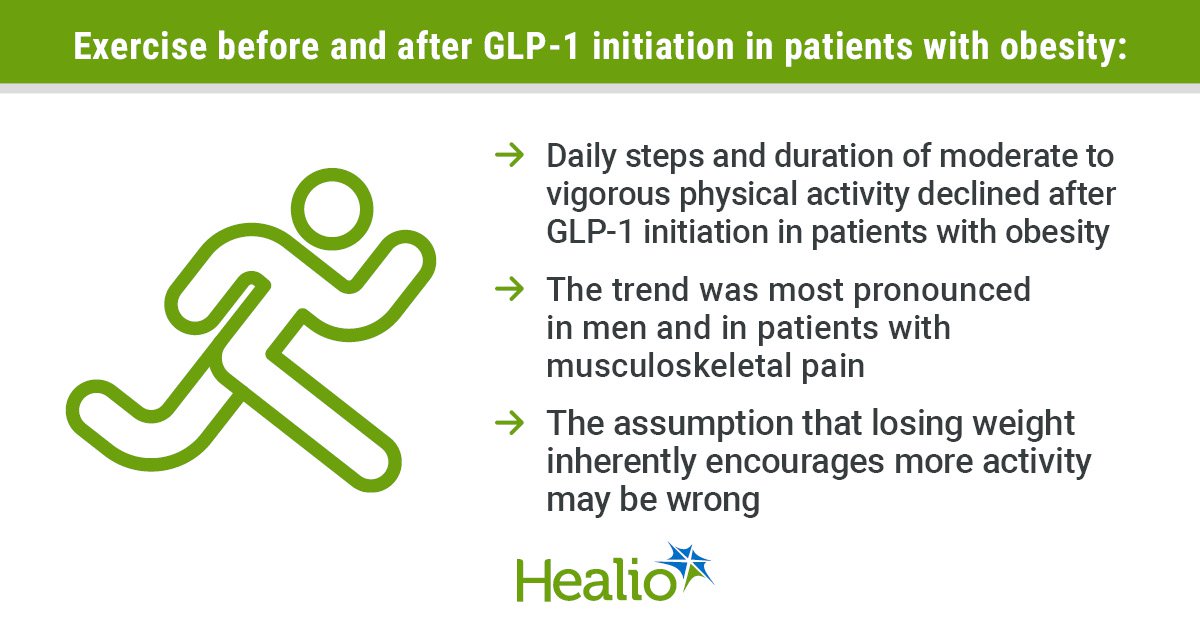
CHICAGO — In patients with obesity, exercise as assessed by wearable-measured activity declined after they initiated GLP-1 receptor agonist therapy, according to findings presented at ENDO 2026. “GLP-1 receptor agonists are now used by millions of adults for weight loss, and we know from prior work that exercise is critical for preserving lean muscle and sustaining long-term weight reduction,”
ENDO 2026: wearable-measured activity declined in 753 patients after GLP-1 initiation (steps 5,047→4,487). Steeper decline in men and those with musculoskeletal pain; exercise must be actively prescribed, not assumed from weight loss.
June 13, 2026
2 min read
Add topic to email alerts
Receive an email when new articles are posted on
Please provide your email address to receive an email when new articles are posted on .
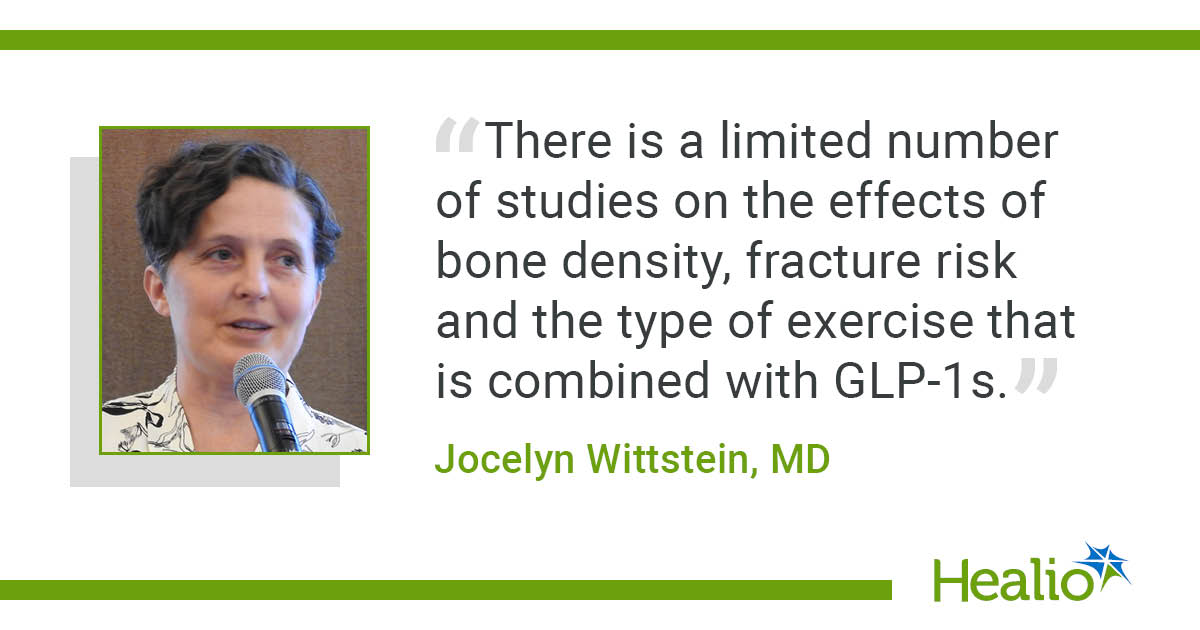
PARK CITY, Utah — When used for weight loss, previously published literature has shown GLP-1s may lead to bone resorption and…

Lifestyle intervention remains a core component of obesity management, alongside the emergence of more potent pharmacotherapy.The…

Although nearly a third of individuals with obesity who use GLP-1 receptor agonists experience constipation, the risk for…

Obesity is a chronic disease. This statement is clearly at the heart of the answer to this question. When you look at the data in…
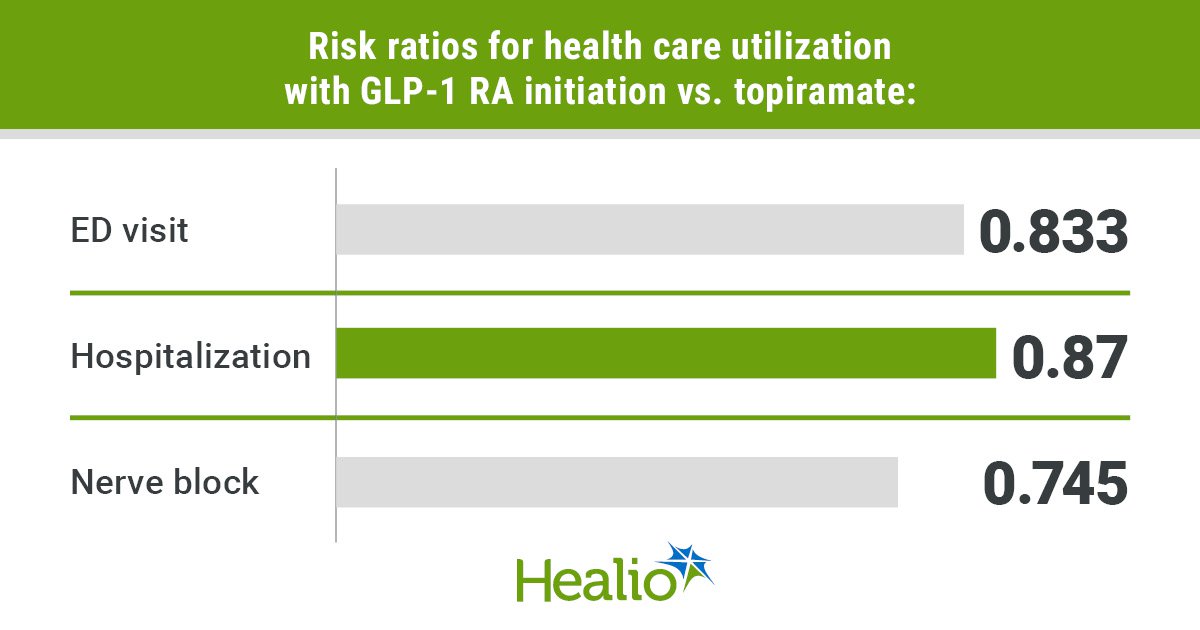
Patients with migraine who began using GLP-1 receptor agonists for obesity did not experience any significant changes in headache…

NEW ORLEANS — Individuals with obesity and autoimmune diseases who use a GLP-1 receptor agonist may have lower risk for…