Last year, everyone was talking about how artificial intelligence (AI) would lighten our workload, save us more time, and perhaps even completely eliminate that modern affliction called "burnout." I was one of those who believed it. In my nearly twenty years of experience in system architecture and software development, I've always seen technology as an enabler; I thought this time would be no different.
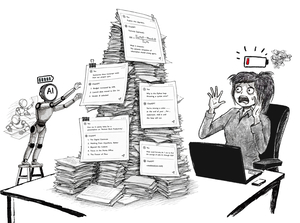
However, based on what I've observed and personally experienced over the past year, those who embraced AI the most, those who hoped for the most from it, have actually fallen victim to a new kind of burnout. While we used to talk about physical or mental fatigue, now we're grappling with a completely different cognitive load. This isn't because AI itself is bad, but rather about how we use it, what we expect from it, and how those expectations clash with reality.
The Chasm Between Expectations and Reality
When AI first emerged, the initial image in our minds was an assistant that took over monotonous tasks, handling boring work for us. When integrating an AI-powered production planning module into a manufacturing ERP, we initially imagined everything would be automated, with operators merely pressing an approval button. We expected a world where everything, from order flow to raw material procurement, would be perfectly optimized.