Story audio is generated using AI
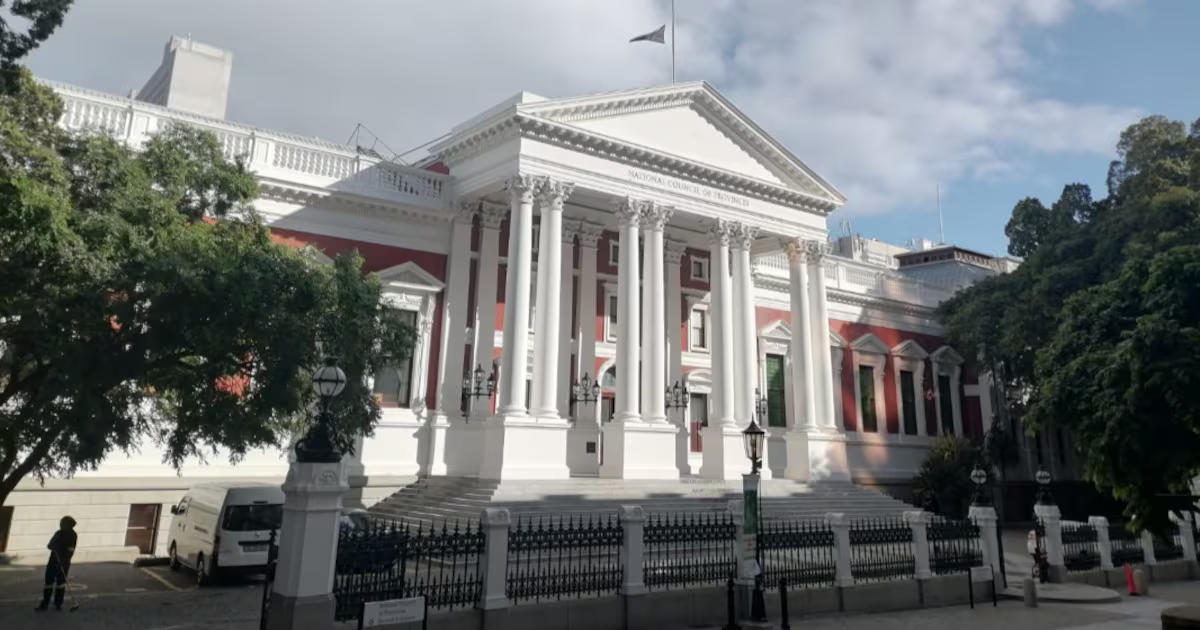
Blended finance is critical to the Land Bank’s ability to offer concessional funding and cheaper rates to farmers, Land Bank acting CEO Jabu Mphambo told parliament on Tuesday, in the same week that first-quarter figures showed agriculture had given GDP a significant boost. In a presentation to the finance committee of the National Council of Provinces, Mphambo defended the bank’s call to the National Treasury for funding. He told the committee that the bank has borrowed under strict conditions and short repayment tenures to finance a sector in which loan tenures are typically long-term. This increased pressure on the bank itself.“We have also been engaging National Treasury around potential recapitalisation. We will be submitting a formal request ... This is part of the funding model of the bank. It ’s not necessarily to say that the bank is being bailed out,” he said.“The bank is being funded to ensure that it can fulfil its mandate. Without this, we will still have these problems of farmers paying high costs with the Land Bank. The source of funding determines how a client gets charged.”Mphambo said one of the pillars around which funding strategy was built “emphasises developmental funding through blended finance, concessional funding, climate resilience initiatives and credit-enhancement instruments”.Separately, StatsSA figures showed agriculture had grown for a sixth consecutive quarter, expanding 3.9% quarter on quarter. But the sector faces major headwinds in the coming quarters, including pressure on fuel and fertiliser prices due to the war in the Gulf, the foot-and-mouth outbreak, African swine fever, and the El Niño weather event.Mphambo said the Land Bank planned to raise at least R7bn in the current financial year to refinance debt liabilities and another R3bn next year. From there, it would draw down R2bn to RR3bn yearly to support the sector into the future.It is something to be celebrated and shows the resilience of farmers who work day in and day out to put food on the table for South Africans— Sashen Singh, Nedbank“Part of the funding that we are raising is to solve the long tenure issue. So, the farmers that we are speaking to, we have been very clear that we are looking for funding that can be paid off over a long period of time and not over a short period of time.”Sashen Singh, senior manager for sustainability, strategy, business and commercial banking at Nedbank, told Business Times the agriculture sector’s Q1 performance was no small feat.“It is something to be celebrated and shows the resilience of farmers who work day in and day out to put food on the table for South Africans and even exports to the rest of the world. We had good rainfall, which helps improve the quality and quantity of harvests, and opening of new export markets like China for our fruits, as an example, has helped to keep this sector running and continue this growth momentum.”On the flip side, he said, the Middle East conflict that erupted in March meant “a bit of a slowdown” as a result of higher fuel and fertiliser prices, which will likely be shown in the next GDP update to have knocked profitability and growth in the sector.Paul Makube, senior agricultural economist at FNB, said standouts in the farm sector had been field crops and horticulture. “Early indicators that agriculture growth may surprise on the upside include an 11% year-on-year surge in exports to $3.7bn, dominated by horticulture products, per the Trade Map data.”However, Makube warned that recent floods that caused severe crop and infrastructure damage in the Eastern and Western Cape were likely to curtail export volumes.“For field crops, the national crop estimates committee (CEC) delivered a more optimistic harvest outlook after upgrading its major grain and oilseed estimates to a new record of 21.1Mt, up 3% from the previous season.“The CEC was more bullish on South Africa’s major staple, maize, whose overall estimate was up 2.5% year on year and, for the first time in history, surpassed the 17Mt at 17.06Mt from 2.72-million hectares, up 4.6% year on year.”Makube said cattle and pig farmers were still battling major disease outbreaks, mainly foot-and-mouth disease and African swine fever. Business Times