My voice agent took 1.2 seconds. Users hated it. So I made it lie.
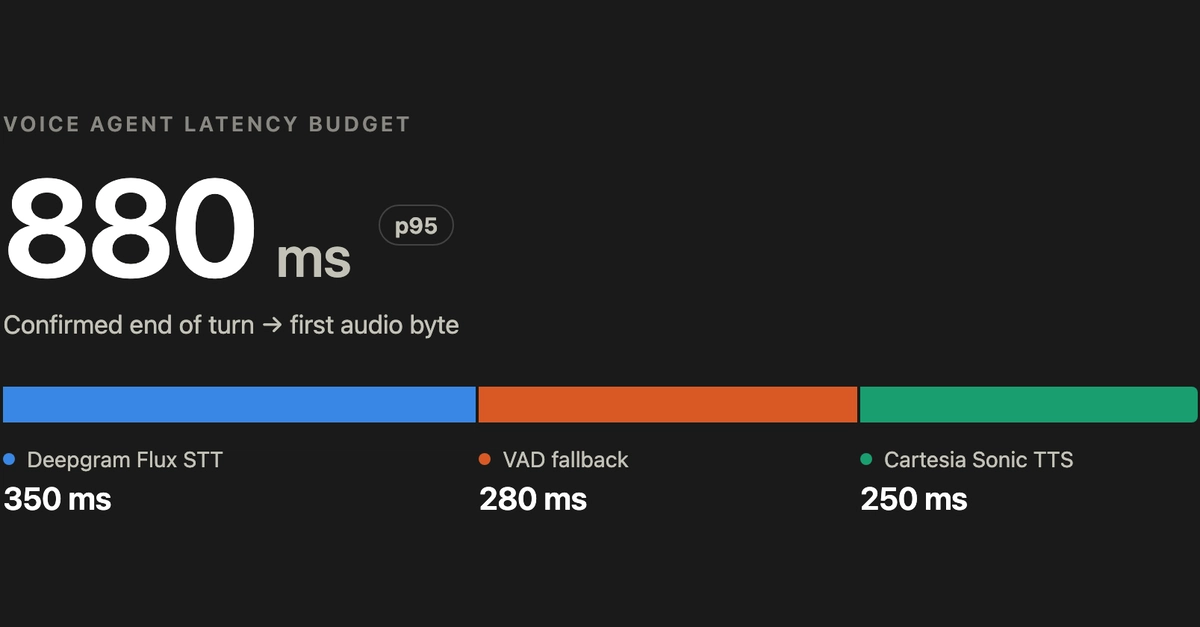
A while back I shipped a voice agent that took roughly 1,200ms to respond. Not catastrophic on paper. Pretty bad in practice. Users would ask a question, get a beat of silence, and start over. Some thought the mic had cut out. One tester told me, with a straight face, that my agent was "thinking too hard."
I tried everything legitimate first. Smaller LLM. Streaming TTS. Region-pinned endpoints. I shaved off about 200ms and felt clever for a week. Then I measured again and realized I was still on the wrong side of every latency threshold that matters.
So I gave up on being faster and started working on being a better liar.
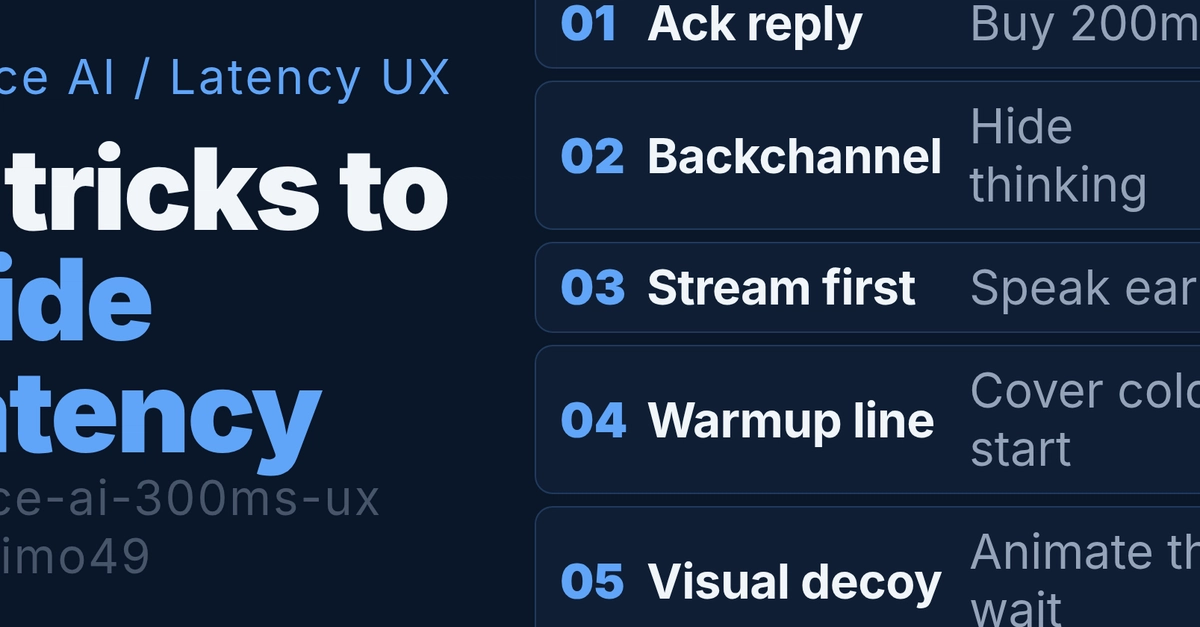
This is the playbook I wish I had when I started: five perception tricks that reduce felt latency without touching the actual numbers. They're the voice-AI equivalent of a magician's misdirection. Your right hand waves at the audience. Your left hand swaps the card.