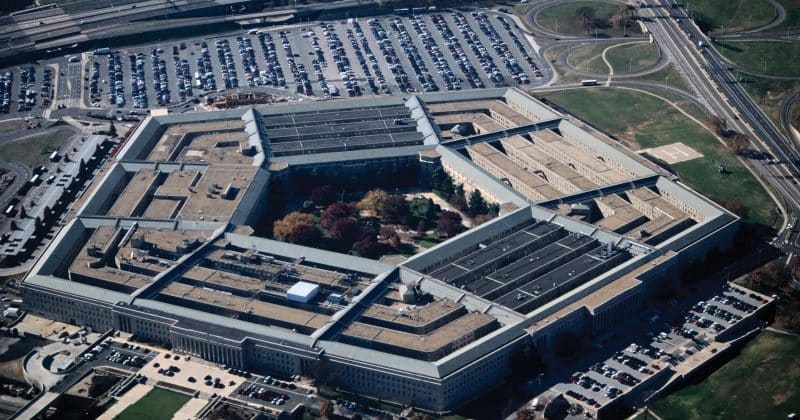
The US Senate is embedding new guardrails on artificial intelligence and prediction markets directly into the Pentagon’s annual policy blueprint. Language added to the fiscal year 2027 National Defense Authorization Act, a bill worth roughly $1.1 trillion, would prohibit the military from using AI in nuclear weapon decision-making, restrict AI-driven surveillance of American citizens, and crack down on defense personnel trading on prediction markets with sensitive nonpublic information.
For the crypto-adjacent prediction market industry, that last part is particularly notable. The provision would require the Defense Secretary to establish regulations, complete with defined penalties, preventing military personnel and civilians from placing bets on platforms like Polymarket or Kalshi using classified intelligence.
What’s actually in the bill
The AI provisions trace back to legislation introduced by Senator Kirsten Gillibrand on June 2, 2026. Her framework establishes three core restrictions on how the Department of Defense can deploy artificial intelligence.
First, AI cannot be used in nuclear targeting or launch decisions. Human beings must remain in that loop, full stop. Second, AI-powered surveillance tools cannot be turned on US citizens. Third, autonomous weapons systems must maintain meaningful human oversight.