view more
FRANKFURT. Stars shine because atoms fuse in their interiors, releasing energy. When a very massive star has exhausted its nuclear fuel, radiation pressure can no longer provide sufficient counterforce to gravity. The star then collapses under its own mass until only a single point remains: the singularity.
While the formation of a black hole appears plausible, black holes themselves continue to pose major challenges for science. How can ten billion solar masses concentrate on a single tiny point? How can spacetime be curved infinitely at that point, the singularity? At this stage, the laws of physics break down, making it impossible to predict what happens. Moreover, black holes conceal all information from observation: everything, including light, disappears irretrievably beyond the event horizon.
Filled with dark energy
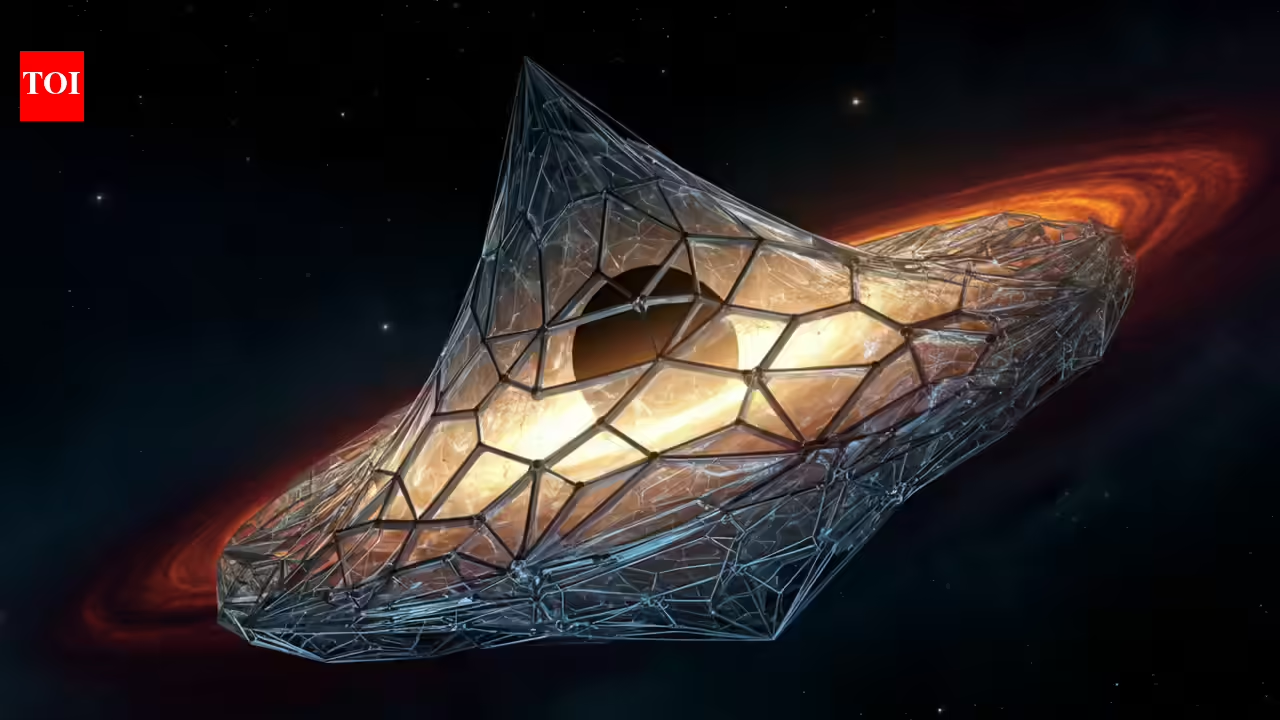
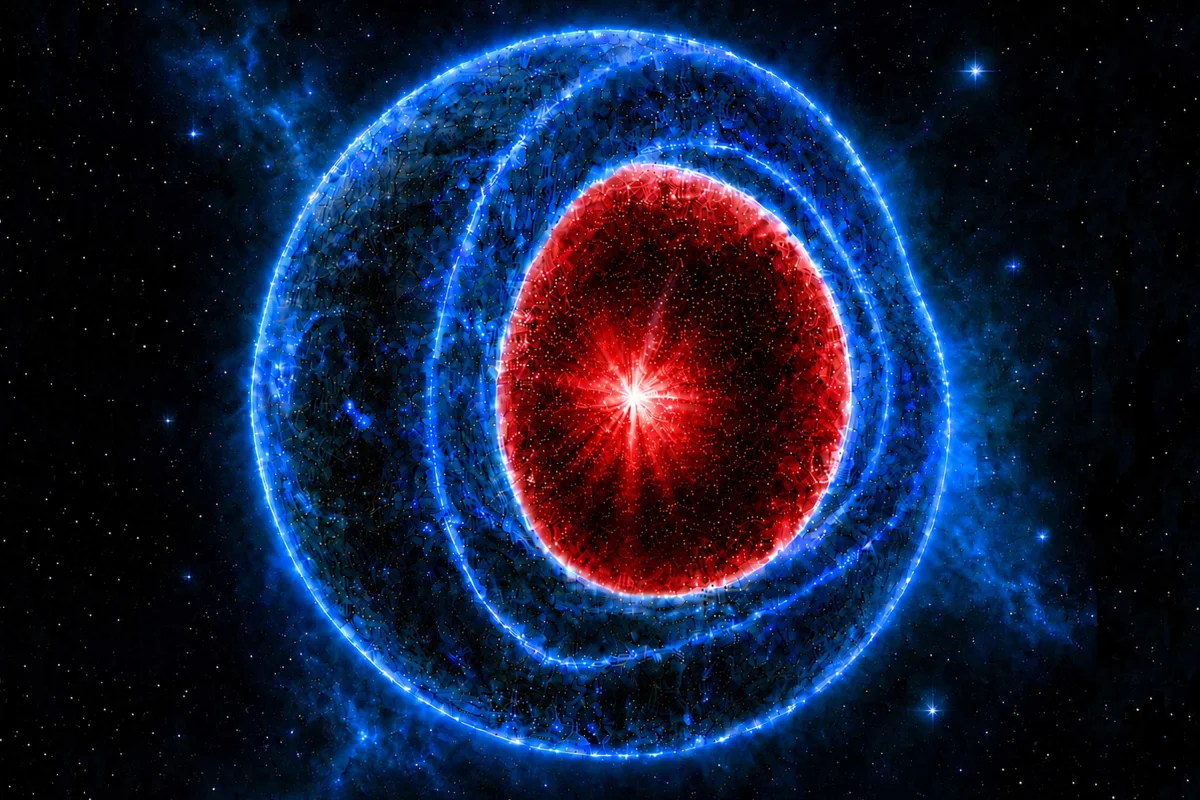
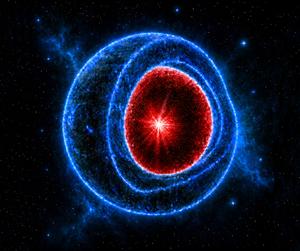
It is therefore possible that black holes are in fact entirely different objects, such as ultra-compact stars, which cannot be seen because of their intense gravity and are therefore also called gravastars. In addition to ordinary matter present in their outer layers, they would be filled with dark energy, which exerts an outward pressure and stabilizes their mass, which wants instead to collapse. Gravastars are easier for physicists to accept than black holes because they do not possess a singularity nor an event horizon and, yet are almost as massive and compact as black holes. What had remained unclear, however, was how such gravastars could form in practice.