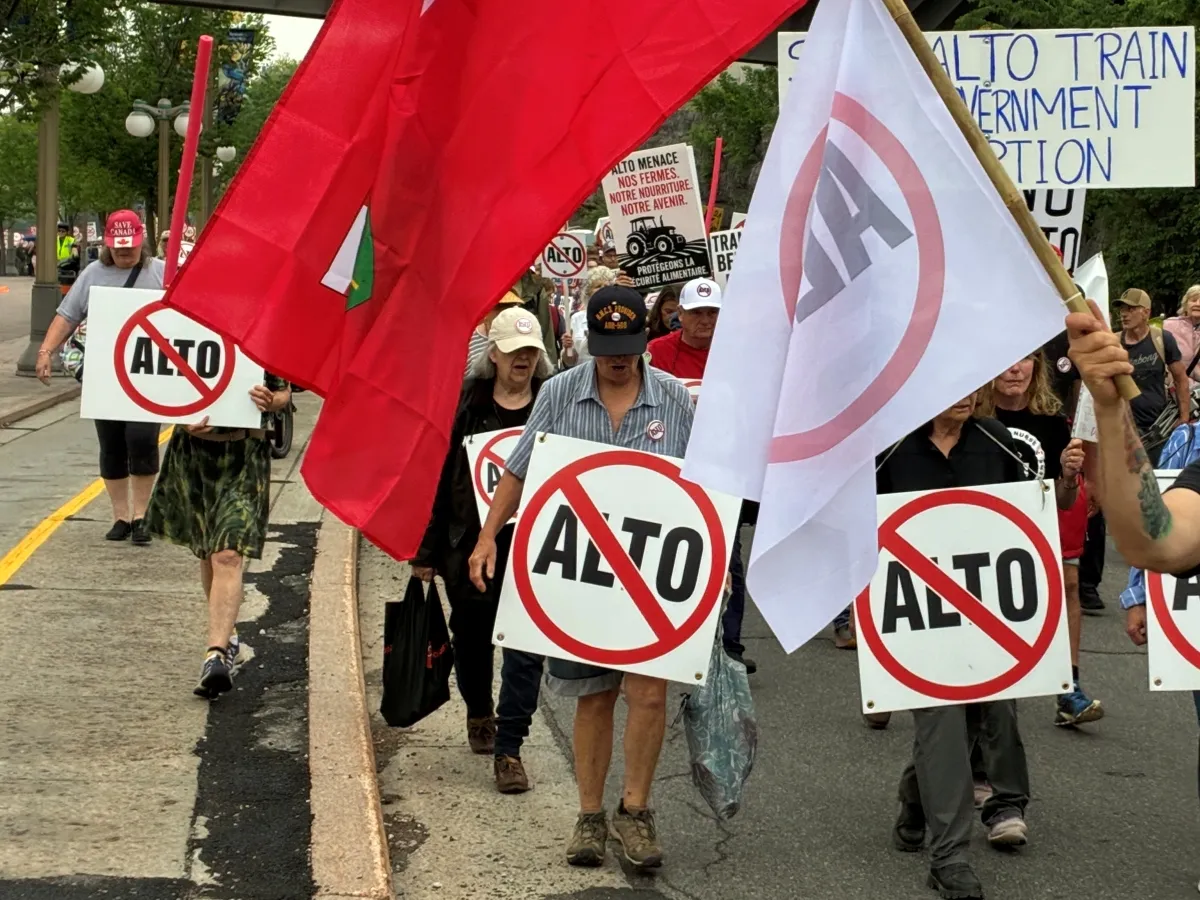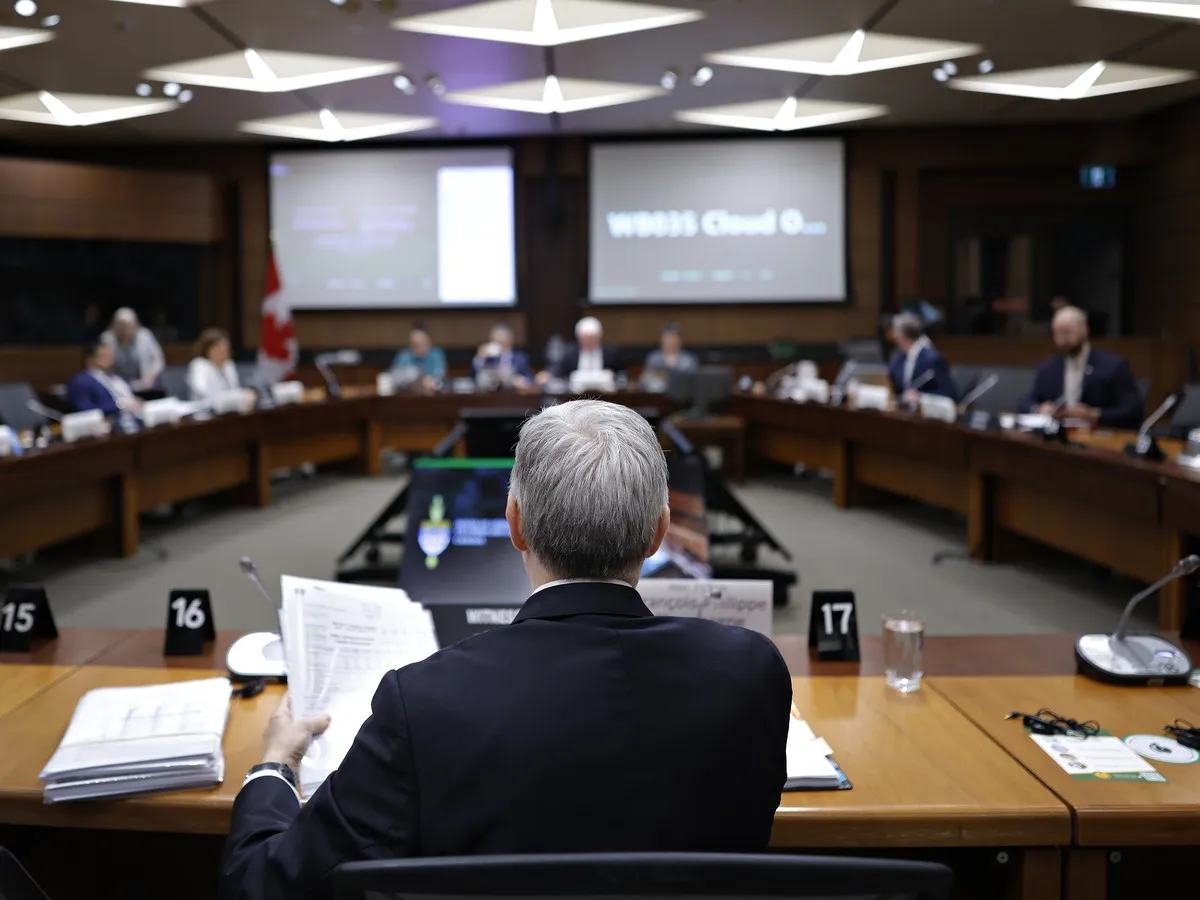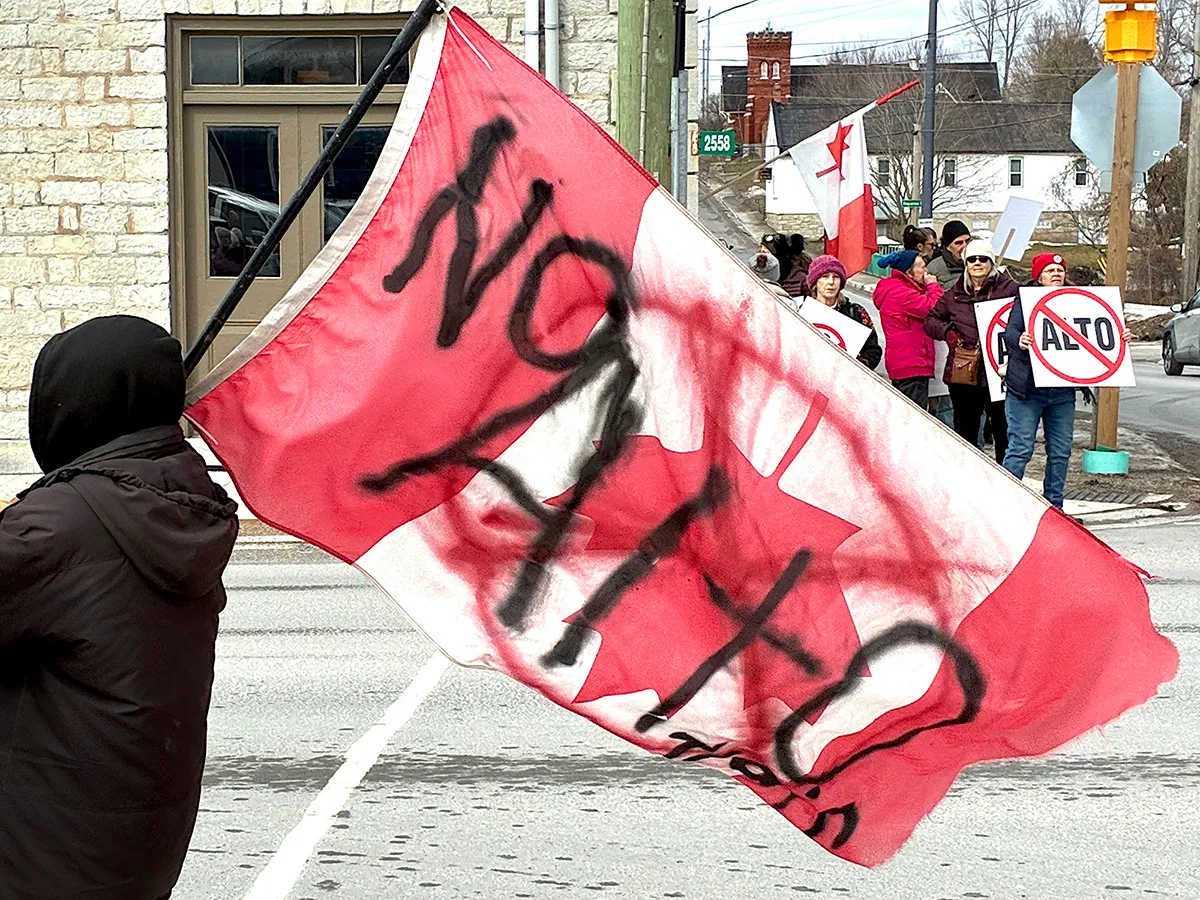
Skip to Content Subscribe Our Offers My Account Manage My Subscriptions FAQ Newsletters Canada Canadian True Crime Canadian Politics Health World Israel & Middle East Financial Post NP Comment Longreads Puzzmo Diversions Comics NP News Quiz New York Times Crossword Horoscopes Life Eating & Drinking Style Sponsored Play for Ontario Travel Travel Canada Travel USA Travel International Cruises Travel Essentials Culture Books Celebrity Movies Music Theatre Television Business Essentials Advice Lives Told Tails Told Shopping Buy Canadian Home Living Outdoor Living Kitchen & Dining Tech Style & Beauty Personal Care Entertainment & Hobbies Gift Guide Travel Guide Amazon Prime Day Deals Savings National Post Store More Sports Hockey Baseball Basketball Football Soccer Golf Tennis Driving Vehicle Research Reviews News Gear Guide Obituaries Place an Obituary Place an In Memoriam Classifieds Place an Ad Celebrations Working Business Ads Archives Healthing Epaper Manage Print Subscription Profile Settings My Subscriptions Saved Articles My Offers Newsletters Customer Service FAQ Newsletters Canada World Financial Post NP Comment Longreads Puzzmo Diversions Life Shopping Epaper Manage Print Subscription HomeNP CommentChris Selley: The $90B high-speed rail money pit is collapsing in on itselfFor once, the Parti Québécois raises a useful issue: opportunity costs You can save this article by registering for free here. Or sign-in if you have an account.People protest against the proposed Alto high-speed train in Camden East, Ont. on Sunday, March 8, 2026. Photo by Elliot Ferguson/The Whig-Standard/Postmedia/FileSome Quebecers and federal politicians seem a bit flummoxed by Quebec’s leading separatist parties, the Parti Québécois and Bloc Québécois, being very much not behind Ottawa’s high-speed rail plan. (I use the word “plan” advisedly.)Enjoy the latest local, national and international news.Exclusive articles by Conrad Black, Barbara Kay and others. Plus, special edition NP Platformed and First Reading newsletters and virtual events.Unlimited online access to National Post.National Post ePaper, an electronic replica of the print edition to view on any device, share and comment on.Daily puzzles including the New York Times Crossword.Support local journalism.Enjoy the latest local, national and international news.Exclusive articles by Conrad Black, Barbara Kay and others. Plus, special edition NP Platformed and First Reading newsletters and virtual events.Unlimited online access to National Post.National Post ePaper, an electronic replica of the print edition to view on any device, share and comment on.Daily puzzles including the New York Times Crossword.Support local journalism.Create an account or sign in to continue with your reading experience.Access articles from across Canada with one account.Share your thoughts and join the conversation in the comments.Enjoy additional articles per month.Get email updates from your favourite authors.Create an account or sign in to continue with your reading experience.Access articles from across Canada with one accountShare your thoughts and join the conversation in the commentsEnjoy additional articles per monthGet email updates from your favourite authorsSign In or Create an Accountor“We don’t have the luxury, or the interest, in potentially paying $200 billion for a train for which the primary objective is a desire for ‘nation building’ and reinforcement of Canadian unity by the federal Liberal government,” PQ Leader Paul St-Pierre Plamondon wrote on social media this week, citing a cost estimate from the Bloc. (The official, utterly unserious estimate — based on per-kilometre building costs in Europe, which are far lower than in North America — is $60 to $90 billion.)Transport Minister Steven MacKinnon went so far this week as to say, “there is no Alto project without Quebec,” which was somewhat odd since the government also insists it’s a purely federal project, a “project of national interest” no less, requiring no money from the province (except in taxes, of course). If provinces have a veto over projects of national interest, it doesn’t augur particularly well for Ottawa’s new pipeline deal with Alberta. Quebec farmers march across the Alexandra Bridge toward a rally against the Alto high-speed rail project on Parliament Hill on Wednesday June 10, 2026 in Ottawa, Ont. Photo by Elliot Ferguson /The Kingston Whig-StandardThis newsletter from NP Comment tackles the topics you care about. (Subscriber-exclusive edition on Fridays)By signing up you consent to receive the above newsletter from Postmedia Network Inc.We encountered an issue signing you up. Please try againQuebec Premier Christine Fréchette, for her part, sounded baffled. “(High-speed rail) a large-scale project that’s highly transformative, generating major benefits for Capitale-Nationale (Quebec City) and Quebec, and is funded by the federal government,” she told a Chamber of Commerce audience in Quebec City on Thursday evening. “It will generate benefits in terms of the economy, traffic flow, the environment and mobility. What more could you ask for?”To be fair to the flummoxed, the PQ and Bloc used to be on board. Since then, however, the Alto high-speed rail consortium put a remarkably preliminary “plan” out for public consultation. It included a map of potential routes that included vast swathes of central Ontario and Quebec’s North Shore. In so doing they essentially invited landowners to fear the worst — not least in Mirabel, north of Montreal, where landowners haven’t even slightly gotten over the land expropriations necessary to build the ill-fated airport of the same name in the 1970s. Opposing farmers is usually bad politics.I doubt your average farmer dislikes the project because it might build “Canadian unity,” though. That was a typically petulant, silly Plamondon flourish: I don’t wish to be part of this country, therefore I oppose any project that might strengthen it! Minister of Finance Francois-Philippe Champagne attends a House of Commons Ethics Committee meeting on Parliament Hill in Ottawa June 11, 2026. Photo by Blair Gable /PostmediaNo doubt much to the separatist leader’s chagrin, an independent Quebec, which the PQ is promising after a third referendum, would have to do quite a bit of business in Ottawa and Toronto. And if we actually built this high-speed rail line, Quebec politicians and businesspeople of all stripes would certainly use it to get there and back.Plamondon also used the opportunity this week to demand “Quebec’s share” of the project — $40 billion, by his calculation — to spend on other infrastructure priorities. So he wants a fair share of the money for a project he doesn’t think should exist (and barely does). Ridiculous.Let’s be clear: Unless your nation exists between Toronto, Ottawa, Montreal and Quebec City (insert Liberal Party of Canada joke here), this is a nation-dividing project, not a nation-building project. It’s certainly not building the nation among the Quebec farmers who descended on Parliament Hill in protest this week. Ontario communities affected by the “plan” seem to be roughly divided between those who demand the train stop outside Ned’s General Store and those who want the whole idea to die in a lake of sulphur.That said, the PQ also raised a very important point that hasn’t been made much otherwise: opportunity costs. “The priority has to be fixing what we already have,” PQ transport critic Joël Arseneau told reporters, rather than “cutting ribbons.” Michael Barrett, the Conservative MP for Leeds-Grenville-Thousand Islands-Rideau Lakes, speaks at a protest against the Alto high-speed rail project on Wednesday, June 10, 2026, in Ottawa, Ont. Photo by Elliot Ferguson /The Kingston Whig-StandardThat’s absolutely right. Canada’s “infrastructure gap” is legendary. If we had $90 billion plus massive overruns to spend on infrastructure — we don’t, but if we did — it would very obviously be more logical to spend it on building, upgrading and maintaining local and regional transit. There are alternatives to high-speed rail, for those who need to get between Toronto, Ottawa, Montreal and Quebec City.The alternatives for those who don’t want to waste hours of productivity per week stuck in traffic remain too few and often uncompelling. It takes an hour and 40 minutes to get from Barrie, Ont. to Toronto’s Union Station on the GO train. That’s 85 kilometres, as the crow flies. Abysmal.Meanwhile, outside cities, the alternatives for those who don’t want to waste productivity stuck behind 15 trucks on a two-lane section of the Trans-Canada Highway are often none.To which high-speed rail supporters will wail, “we can do both!” And it’s true, in theory. But no in practice. And we always have to prioritize. Why would we put high-speed rail at the front of the queue, when our existing infrastructure deficit is so large and universally acknowledged?National Post cselley@postmedia.com Get the latest from Chris Selley straight to your inbox Join the Conversation This website uses cookies to personalize your content (including ads), and allows us to analyze our traffic. Read more about cookies here. By continuing to use our site, you agree to our Terms of Use and Privacy Policy.
Chris Selley: The $90B high-speed rail money pit is collapsing in on itself
For once, the Parti Québécois raises a useful point: if we want to spend that kind of money on infrastructure, there are more urgent needs.
1,419 words~6 min read