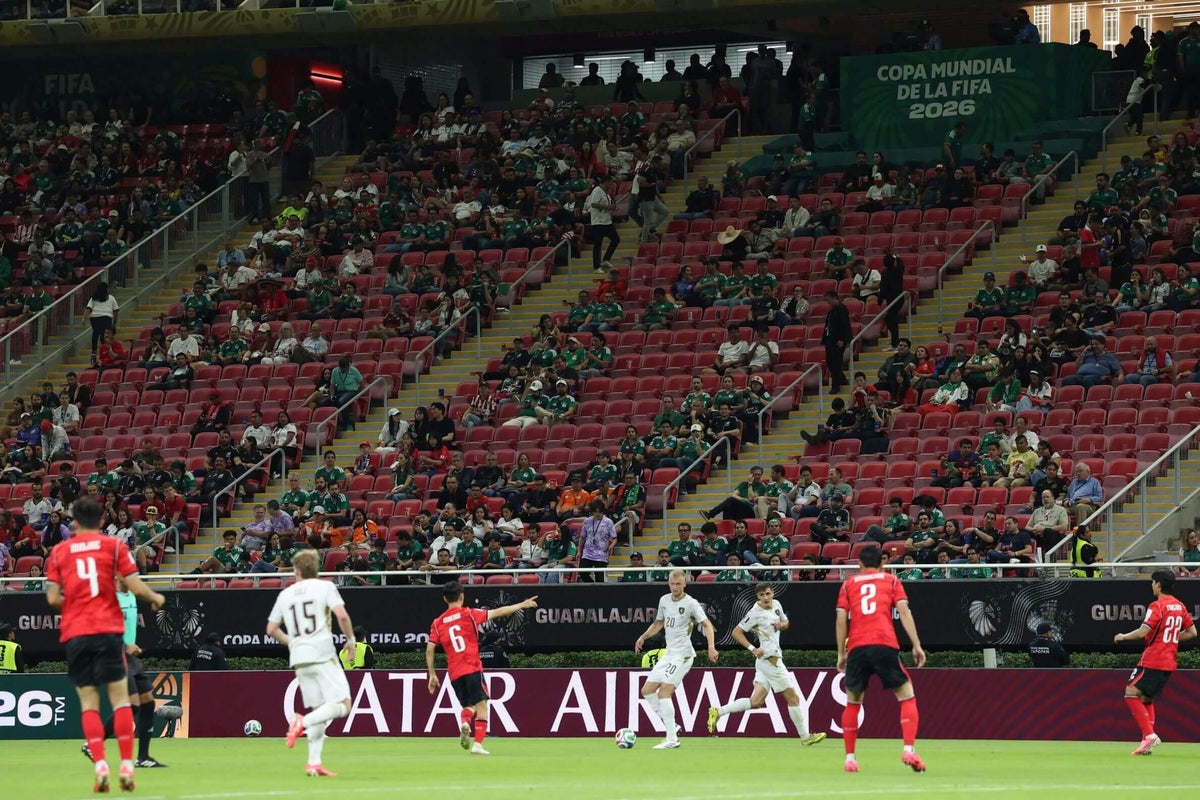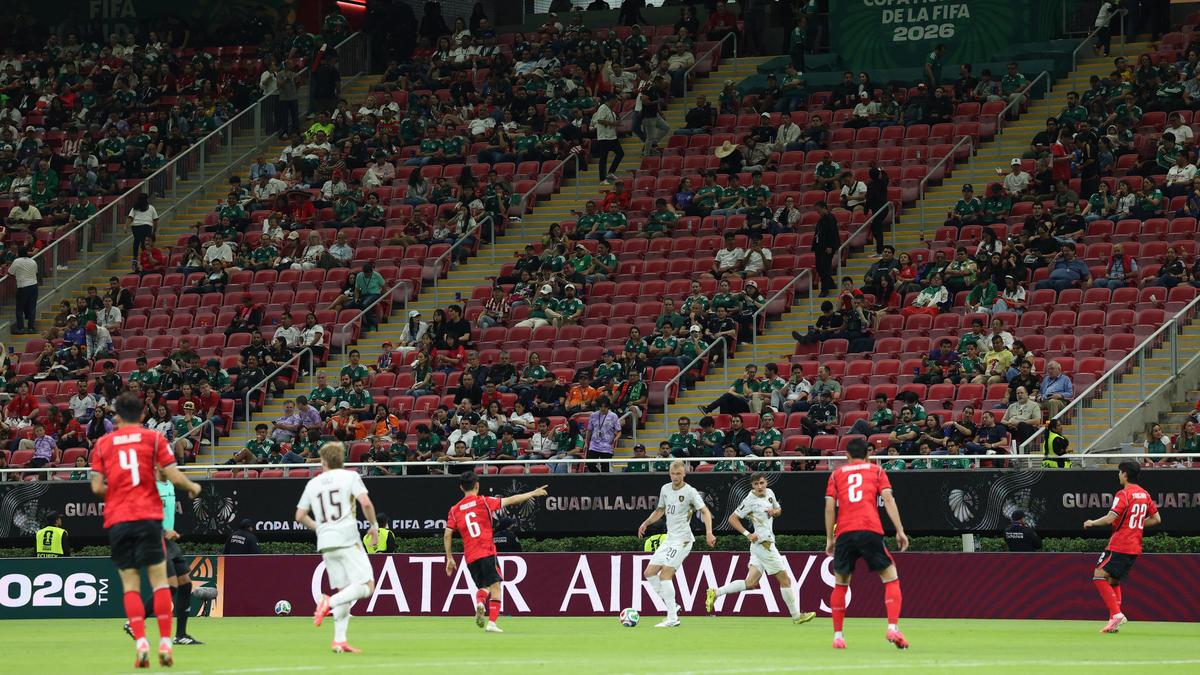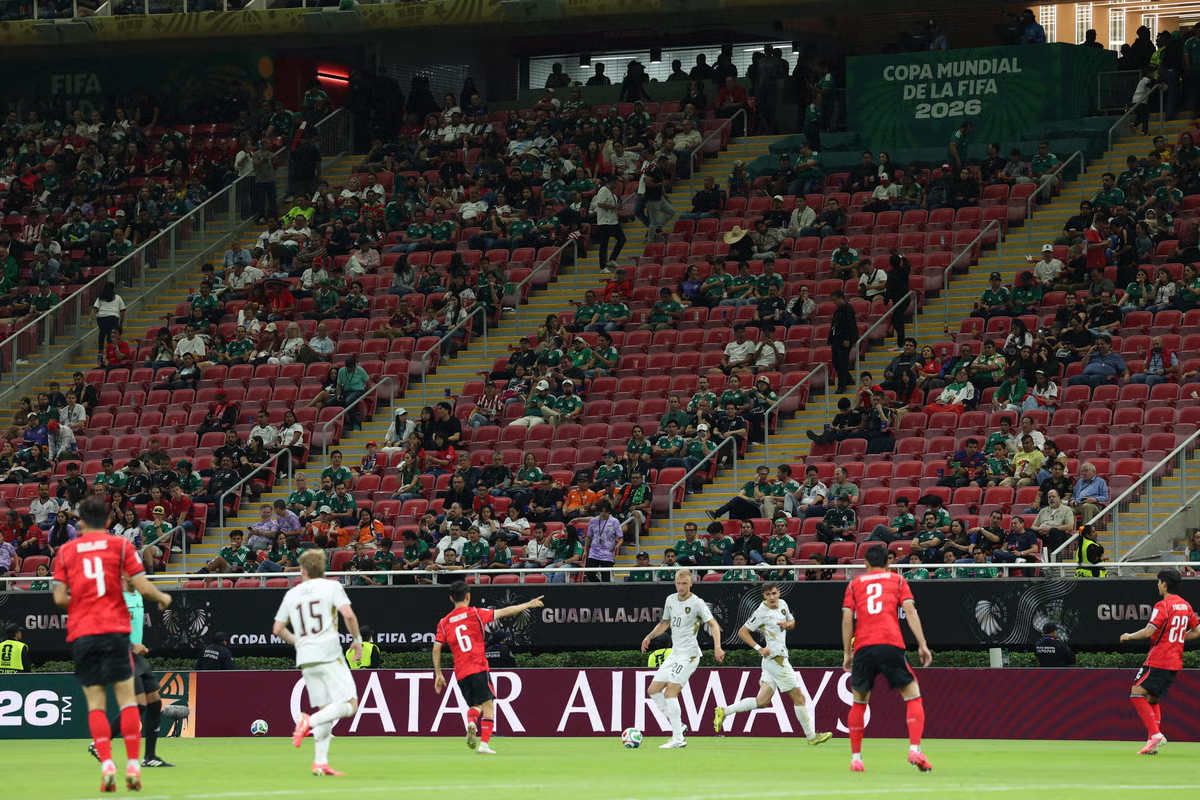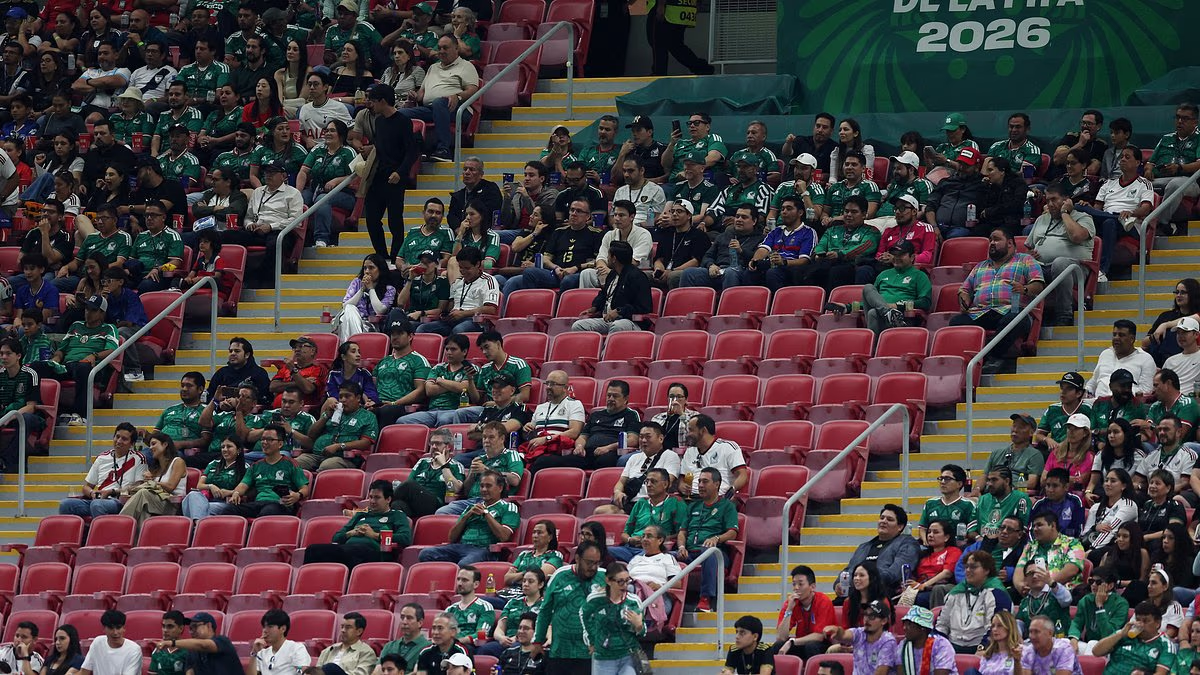
FIFA says the seats are full. The cameras say otherwise.
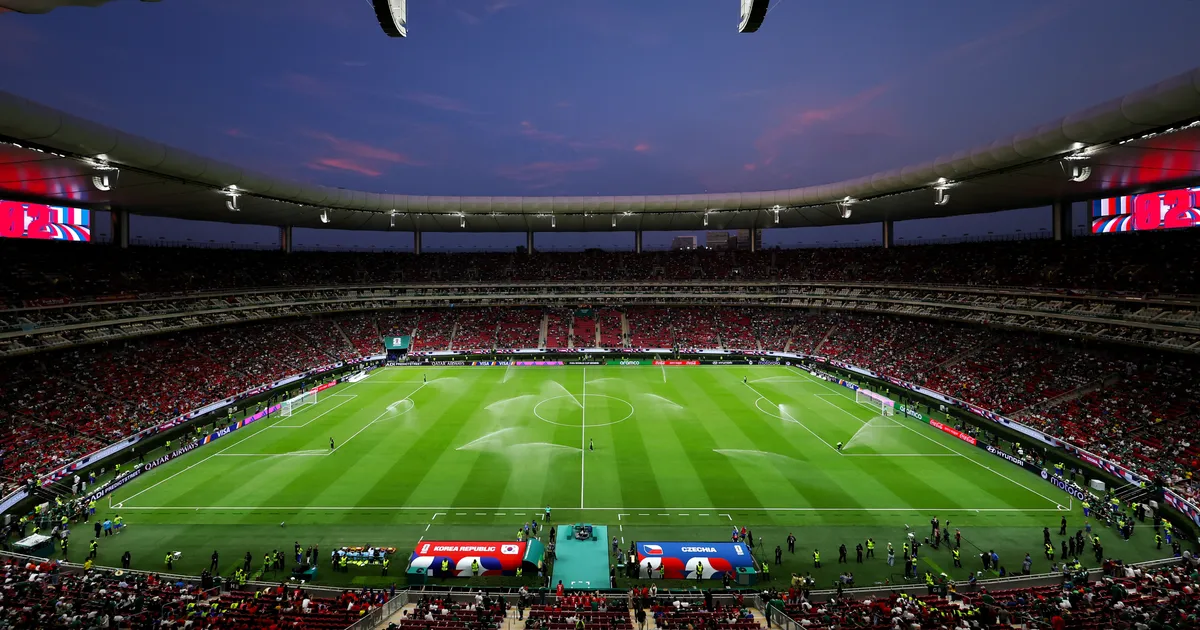
The 2026 World Cup, spread across the US, Canada, and Mexico this June, has produced a jarring visual: large sections of empty seats at group-stage matches, even as official attendance figures tell a different story. The South Korea vs. Czech Republic match at Estadio Akron in Guadalajara on June 12 reported an official attendance of 44,985 in a venue that holds 45,664. That’s 98.5% capacity on paper. Anyone watching the broadcast could see the math didn’t add up.
The pricing problem
Group-stage tickets for this tournament have ranged from $200 to $5,000 on average, with plenty drifting toward the upper end of that spectrum.
FIFA has leaned into dynamic pricing for 2026, a strategy borrowed from airlines and concert promoters that adjusts ticket costs based on demand signals. The result is a tiered system where early demand pushes prices up, and later corrections don’t always bring them back down to earth.