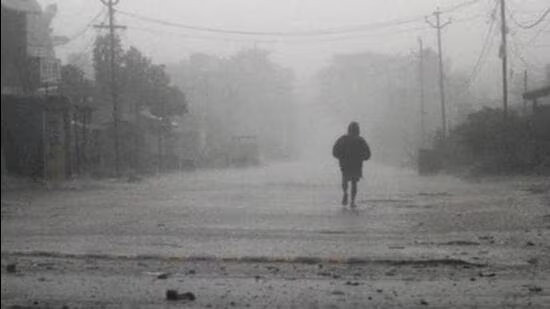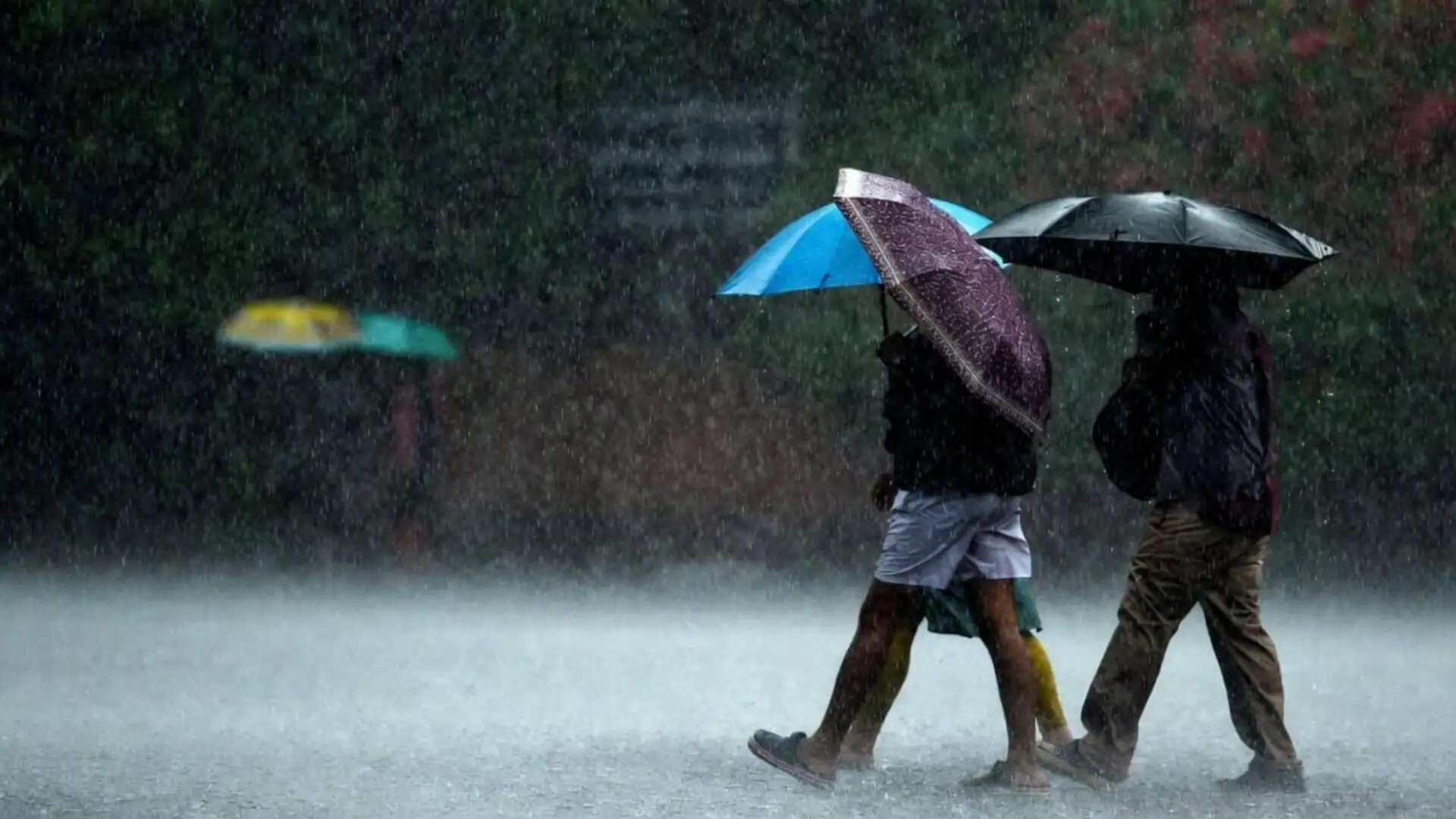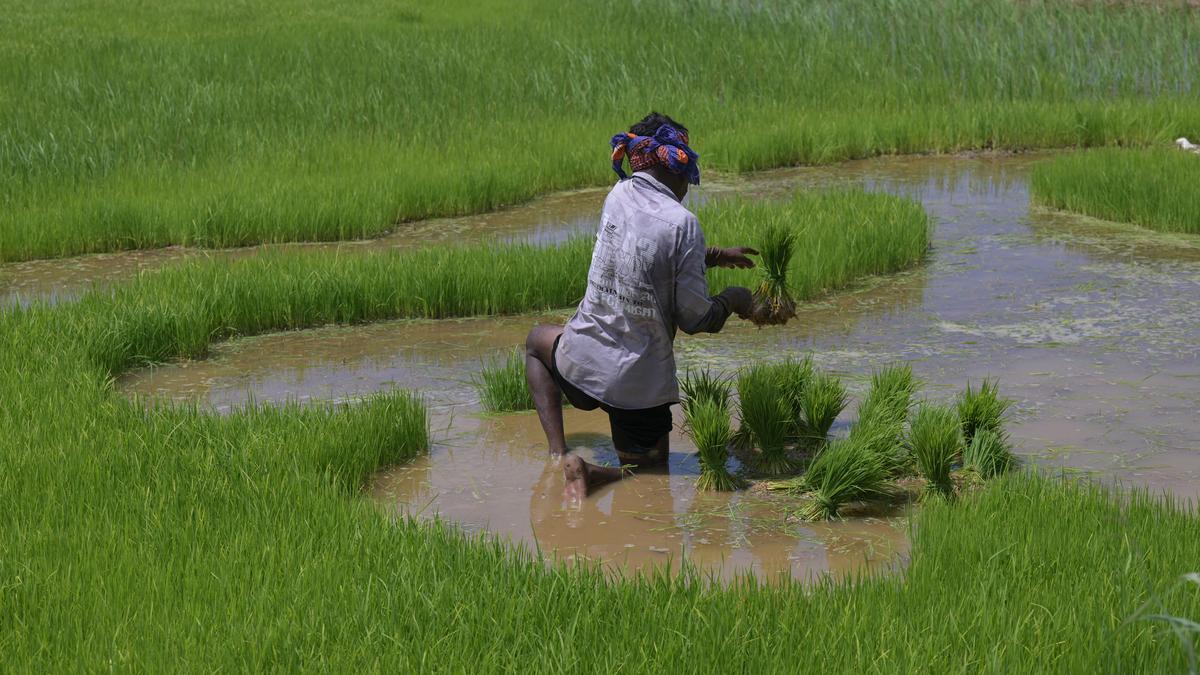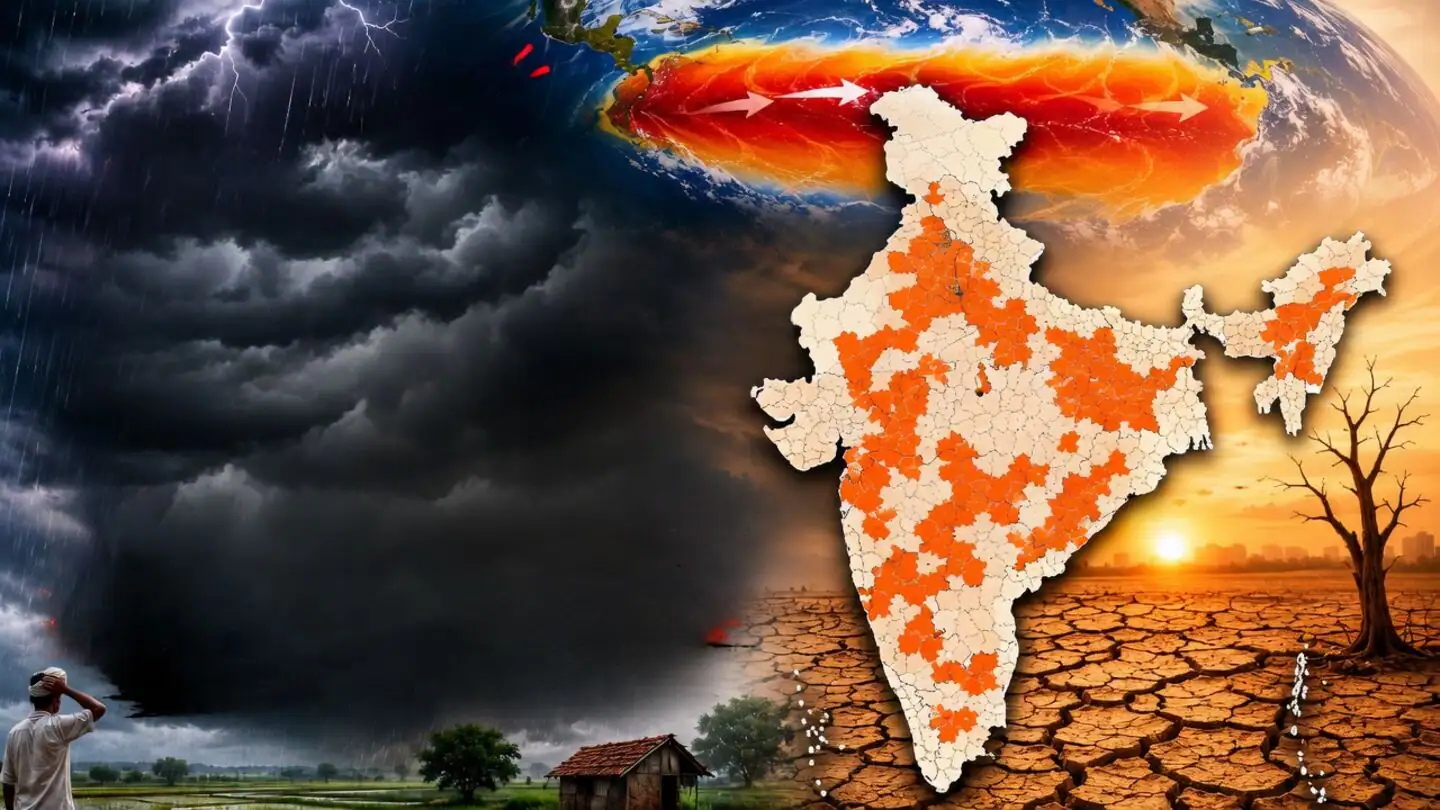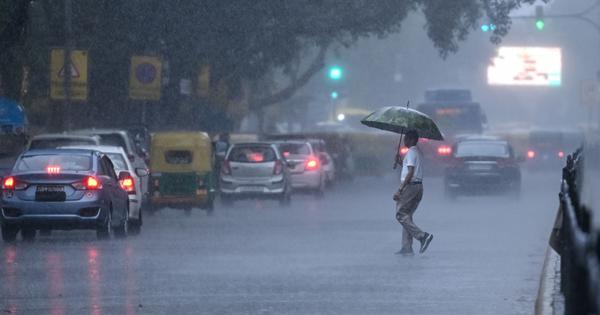
After a season of intense heatwaves, India will not have a lot of respite this monsoon, with the India Meteorological Department forecasting a “below normal” monsoon season.On May 29, the India Meteorological Department further downgraded its monsoon forecast to 90% of the long-period average as against the earlier 92%, and forecast a warmer June.One reason will be an El Niño brewing in the Pacific Ocean that can lead to a weak monsoon. There are concerns about this year experiencing a “super El Niño” event beginning in the second half and stretching on to early next year.El Niño and La Niña are opposite phases of the global ocean atmospheric phenomenon El Niño-Southern Oscillation, a powerful atmospheric-ocean phenomenon.The National Oceanic and Atmospheric Administration describes the phenomenon as follows: “During normal conditions in the Pacific ocean, trade winds blow west along the equator, taking warm water from South America towards Asia. To replace that warm water, cold water rises from the depths…. During El Niño, trade winds weaken. Warm water is pushed back east, toward the west coast of the Americas.”El Niño is associated with increased rainfall and flooding in parts of South America, East Africa, and the southern United States; drought conditions in eastern and northern Australia, Indonesia, southern Africa, and parts of South Asia due to suppressed monsoon activity; and reduced Atlantic hurricane activity, according to the World Meteorological Organization.Wilfran Moufouma-Okia, head of climate prediction services at the World Meteorological Organization, points on graphs displayed on a computer screen at the headquarters in Geneva on June 1. Credit: AFP.But, each El Niño event is unique in terms of its evolution, spatial pattern and impacts. It typically occurs every two to seven years and lasts around nine to twelve months.“After a period of neutral conditions at the start of the year, climate models are now strongly aligned, and there is high confidence in the onset of El Niño, followed by further intensification in the months that follow,” said Wilfran Moufouma Okia, Chief of Climate Prediction at the World Meteorological Organization. The organisation does not use the term “super El Niño” because it is not part of its classifications.With the war in West Asia still impacting global energy supplies, the El Niño (super or not) will further add to woes. India’s economy has also been impacted by these global events and a weak monsoon will have a cascading impact on sowing, yields, food security, water security, energy demand, food inflation and possibly even strong heatwaves next summer.What does the science say so far about this year’s El Niño and what steps could India take to better prepare for its impacts? We spoke to Raghu Murtugudde, an earth systems scientist, Emeritus Professor at the University of Maryland, and visiting faculty at the Kotak School for Sustainability at Indian Institute of Technology, Kanpur.Edited excerpts:There is a lot of discussion about the El Niño developing later this year, and there is some concern about it being a “super” El Niño. It is even being compared to the El Niño event of 1877 which is linked to the Great Famine that year in British-ruled India. What do we know so far and in your experience, is it going to be a super El Niño?“Super El Niño” is just a made-up word, but nonetheless indicates a very strong El Niño. Will this one grow strong? Models are saying that, and there seems to be a consensus about it. But a consensus answer is not always the right answer, because all the models are kind of latching on to similar things.There is a supply of warm water below the surface on the equator, which tends to come up in a couple of months. But how strong it will get will depend on whether that will create this kind of positive feedback or vicious cycle with sea surface temperatures, pressure gradients, winds… they all begin to talk to each other and give feedback, then you can get a strong El Niño. But models are notoriously bad at predicting the amplitudes very well.When do you think the picture will be clear?Right now, it’s already clear that this year we’ll have an El Niño, because when there is so much warm water in the tropical Pacific, we will get something like an El Niño.But what matters is what that will do to the monsoon. It also depends on whether the models can say something about the onset, the distribution of rainfall in regions and time. These things are complicated and models are not terribly good at it. So, we have to watch.Hopefully in the next couple of months, everything will begin to become more obvious because already, the monsoon onset (which was earlier forecast for May 26 by the IMD) is delayed. It might happen in the first week of June, which will still be normal. But if it gets delayed further by another week or two, then there might be speculation or suspicion of a super El Niño again.— India Meteorological Department (@Indiametdept) June 5, 2026
Interview: How will El Niño affect the monsoon in India?
‘Unprecedented measures’ should be taken as a weak monsoon will have a varying effect on food and water security, says scientist Raghu Murtugudde.
TL;DRAI
IMD downgraded monsone forecast a 90% della media per El Niño H2 2026; esperti allertano per 'super El Niño'. Monsone debole cascata su energy security e food inflation in India—impatto su costi datacenters, supply chain IT outsourcing e decisioni hiring.
2,192 words~10 min read