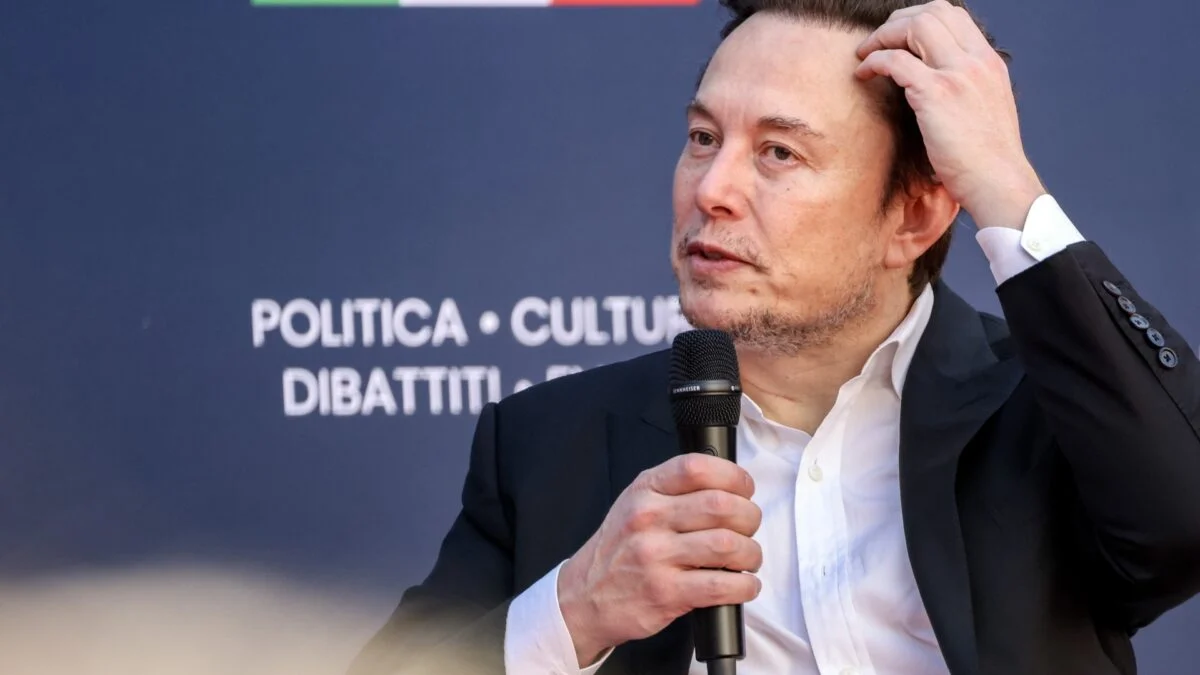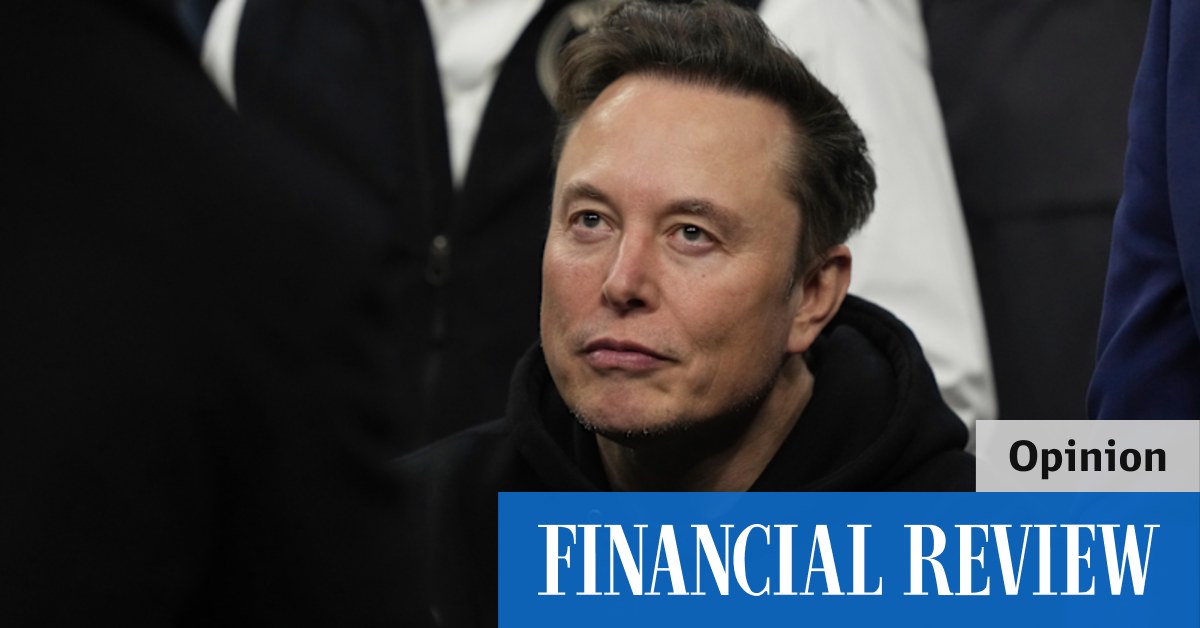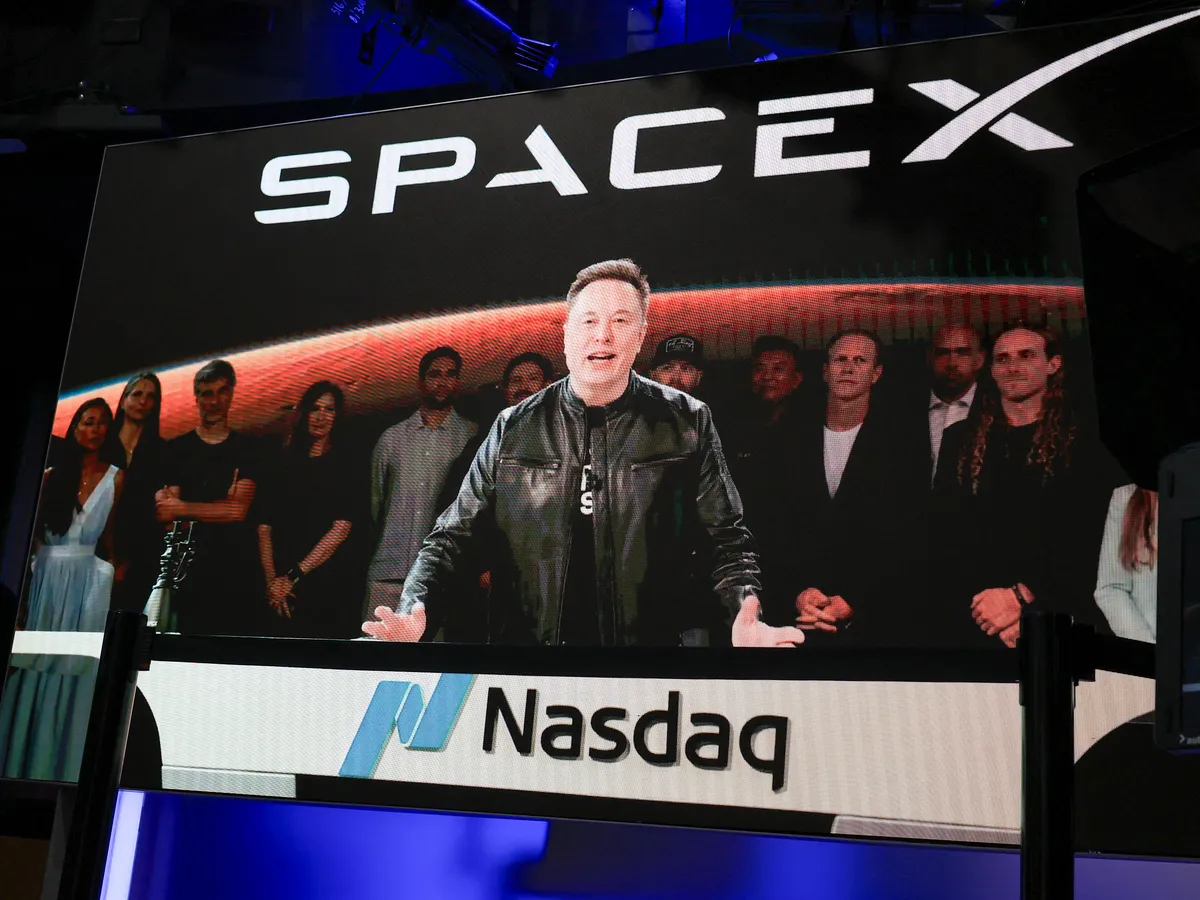
Skip to Content News Archives Economy Energy Oil & Gas Renewables Electric Vehicles Mining Commodities Agriculture Real Estate Mortgages Mortgage Rates Finance Banking Insurance Fintech Cryptocurrency Work Wealth Smart Money Wealth Management Investor Personal Finance Family Finance Retirement Taxes High Net Worth FP Comment Executive Women Puzzmo Newsletters Financial Times Business Essentials More Innovation Information Technology FP500 Podcasts Small Business Lives Told Tails Told Shopping Financial Post Store Obituaries Place a Notice Advertising Advertising With Us Advertising Solutions Postmedia Ad Manager Sponsorship Requests Classifieds Place a Classifieds ad Working Profile Settings My Subscriptions Saved Articles My Offers Newsletters Customer Service FAQ News Economy Energy Mining Real Estate Finance Work Wealth Investor FP Comment Executive Women Puzzmo Newsletters Financial Times Business Essentials HomeInvestorSpaceX treated as ‘simply too risky’ for funds with governance mandatesThere are concerns that the precedent set by SpaceX may serve to normalize the dilution of shareholder protectionsAuthor of the article: You can save this article by registering for free here. Or sign-in if you have an account.The IPO gives Elon Musk more than 80 per cent of the voting rights, while also making him chief executive and chief technical officer, as well as chair of the board. Photo by TIMOTHY A. CLARY/AFP via Getty ImagesThe list of sustainability-focused fund managers opting to blacklist SpaceX is growing, as they contemplate the unprecedented level of control that Elon Musk will hold over the rockets-to-chatbot behemoth.Subscribe now to read the latest news in your city and across Canada.Exclusive articles from Barbara Shecter, Joe O'Connor, Gabriel Friedman, and others.Daily content from Financial Times, the world's leading global business publication.Unlimited online access to read articles from Financial Post, National Post and 15 news sites across Canada with one account.National Post ePaper, an electronic replica of the print edition to view on any device, share and comment on.Daily puzzles, including the New York Times Crossword.Subscribe now to read the latest news in your city and across Canada.Exclusive articles from Barbara Shecter, Joe O'Connor, Gabriel Friedman and others.Daily content from Financial Times, the world's leading global business publication.Unlimited online access to read articles from Financial Post, National Post and 15 news sites across Canada with one account.National Post ePaper, an electronic replica of the print edition to view on any device, share and comment on.Daily puzzles, including the New York Times Crossword.Create an account or sign in to continue with your reading experience.Access articles from across Canada with one account.Share your thoughts and join the conversation in the comments.Enjoy additional articles per month.Get email updates from your favourite authors.Create an account or sign in to continue with your reading experience.Access articles from across Canada with one accountShare your thoughts and join the conversation in the commentsEnjoy additional articles per monthGet email updates from your favourite authorsSign In or Create an Accountor“It’s simply too, too risky for the type of longevity we want to see in a company,” Marcela Pinilla, director of sustainable investing at Zevin Asset Management LLC, said in an interview ahead of the SpaceX initial public offering.Zevin is among a group of investors — some niche, some big — publicly voicing their concerns about the norm-breaking governance structure that shareholders of SpaceX will face. The initial public offering gives Musk more than 80 per cent of the voting rights, while also making him chief executive and chief technical officer, as well as chair of the board. He is in effect the only person who can remove himself as chief executive.Canada's best source for investing news, analysis and insight.By signing up you consent to receive the above newsletter from Postmedia Network Inc.A welcome email is on its way. If you don't see it, please check your junk folder.The next issue of Investor will soon be in your inbox.We encountered an issue signing you up. Please try again“This is a company that cannot be sued, cannot be sold, cannot be contested,” Pinilla said. “As shareholders, you’d have to own US$52 billion in shares of a company — that is about three per cent — to raise any issues with the board,” because of the rules that apply in Texas, where SpaceX is incorporated, she said.Nell Minow, co-founder and chair of ValueEdge Advisors LLC, said the SpaceX IPO “extinguishes shareholder rights entirely, all but eliminating the right to bring a lawsuit for failure to meet fiduciary standards, cutting off access to books and records.”A Bloomberg request for comment from SpaceX, sent by email, went unanswered.Zevin joins US$25 billion Danish pension fund, AkademikerPension, whose chief investment officer last month said SpaceX is not only “grossly overvalued” but also marred by a “catastrophic governance structure.” The Starbase facility near Boca Chica beach in Brownsville, Texas. Photographer: Brandon Bell/Getty ImagesIn an interview with Bloomberg Television’s Oliver Crook on Friday, AkademikerPension CIO Anders Schelde said retail interest in the IPO reflects a “fear of missing out” at a time when a sober assessment of the risks is what’s needed.SpaceX is a “very risky endeavour,” Schelde said. “Over the coming years many things can and will go wrong,” and good governance “becomes critically important in adverse scenarios.”In the United Kingdom, EdenTree Investment Management has also said it will stay away. SpaceX’s intended governance structure would “reduce the protections available to minority investors,” said Hayley Grafton, senior sustainable investment analyst at EdenTree, which oversees about US$4.3 billion.EdenTree isn’t comfortable allocating client assets “to a structure where weak investor protections appear to be the price of admission,” Grafton said.In the United States, public pension funds have voiced their alarm at the apparent disregard for regular shareholders they say Musk is showing.“I understand that we are in an era of founders wanting more control,” New York City Comptroller Mark Levine said in an interview. But what Musk is planning with SpaceX “is way beyond what we’ve seen.”And on Tuesday, the Council of Institutional Investors sent a letter to SpaceX outlining its concerns about shareholder rights and corporate governance. The nonprofit, whose members include some of the biggest U.S. public pension funds, said it was urging SpaceX to “reconsider” several governance provisions.Such misgivings add to questions around SpaceX’s valuation articulated by some high-profile individual investors. Veteran short seller James Chanos suggested the size of the IPO “for a company with revenues of US$19 billion and negative free cash flow” should give investors pause. Jim Chanos, founder and president of Chanos & Company LP, during a Bloomberg Television interview in New York, US, on Wednesday, June 11, 2025.“This is really a hopes-and-dreams IPO,” Chanos said at the iConnections Global Alts conference in New York, at which more than 2,500 institutional allocators and fund managers were gathered.For now, however, there appear to be more than enough investors willing to pile their money into the company. SpaceX made history on Thursday with the biggest-ever IPO, sending it into the top ranks of the largest public companies and putting Musk on the verge of becoming the world’s first trillionaire.With less than US$1 billion under management, Zevin is far too small to make a dent on the surface of SpaceX’s mega IPO. But Pinilla is framing her warning as one specifically intended for investors for whom the question of stewardship is important. She says SpaceX is the latest example in an ongoing trend in which the rights of smaller shareholders are being overlooked.Minow of ValueEdge says she’s advising clients asking about the SpaceX IPO “not to buy the stock or the indexes,” because, in her view, the company’s offering “extinguishes shareholder rights entirely.”Instead, Minow says she’s “recommending that large institutional investors tell their financial institutions to create new indexes” that exclude SpaceX.There are also concerns that the precedent set by SpaceX may serve to normalize the dilution of shareholder protections.Natasha Landell-Mills, head of stewardship at Sarasin & Partners, says the asset manager is “deeply concerned by weakening governance standards generally, and SpaceX is only adding to the negative direction of travel.”She goes so far as to link this trend with a pattern of conduct that presaged the financial crisis of 2008.“Shareholder accountability was found to be seriously wanting in the financial crisis of 2007/08, spurring over a decade’s worth of reforms to ensure more effective corporate governance and investor stewardship,” Landell-Mills said. “It seems the pendulum has swung back.”—With assistance from Olivia Raimonde, Alastair Marsh and Leonard Kehnscherper. Join the Conversation This website uses cookies to personalize your content (including ads), and allows us to analyze our traffic. Read more about cookies here. By continuing to use our site, you agree to our Terms of Use and Privacy Policy.
SpaceX treated as ‘simply too risky’ for funds with governance mandates
The list of sustainability-focused fund managers opting to blacklist Elon Musk's tightly controlled SpaceX is growing. Find out more here
1,419 words~6 min read