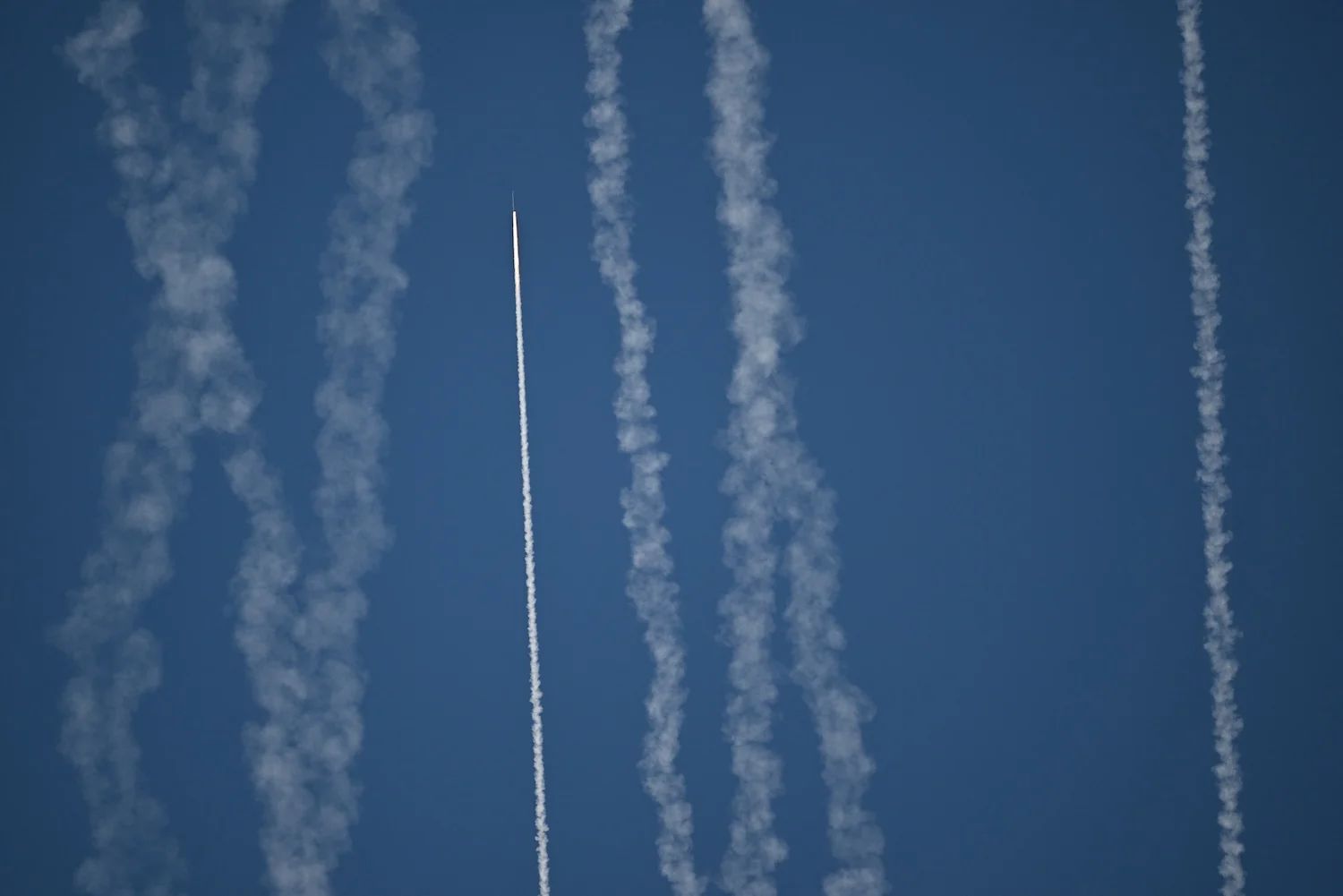
The United States’ tactical successes in its war with Iran—notably, the destruction of a portion of Iran’s missile arsenal and the interception of the vast majority of incoming missiles and drones—have prompted a reevaluation of missile and drone threats in other theaters. Carter Malkasian, a professor at the National War College, argued in Foreign Affairs that these successes may give pause to other U.S. adversaries, including China, which might have hoped to use long-range precision strikes to carry out a war of aggression over Taiwan. After all, if U.S. air and missile defenses can significantly blunt Iranian missile barrages, why not Chinese ones over Taiwan or the wider Pacific?
Even optimists such as Malkasian note the limits of Iran’s missile force. Iranian strikes have damaged an estimated 20 U.S. military sites across the region, yet they have failed to seriously disrupt combat operations because Iranian missiles, while destructive, lack the precision needed for serious counterforce operations. This, combined with successful missile interception, have rendered them nowhere near as effective as initially feared.
The United States’ tactical successes in its war with Iran—notably, the destruction of a portion of Iran’s missile arsenal and the interception of the vast majority of incoming missiles and drones—have prompted a reevaluation of missile and drone threats in other theaters. Carter Malkasian, a professor at the National War College, argued in Foreign Affairs that these successes may give pause to other U.S. adversaries, including China, which might have hoped to use long-range precision strikes to carry out a war of aggression over Taiwan. After all, if U.S. air and missile defenses can significantly blunt Iranian missile barrages, why not Chinese ones over Taiwan or the wider Pacific?