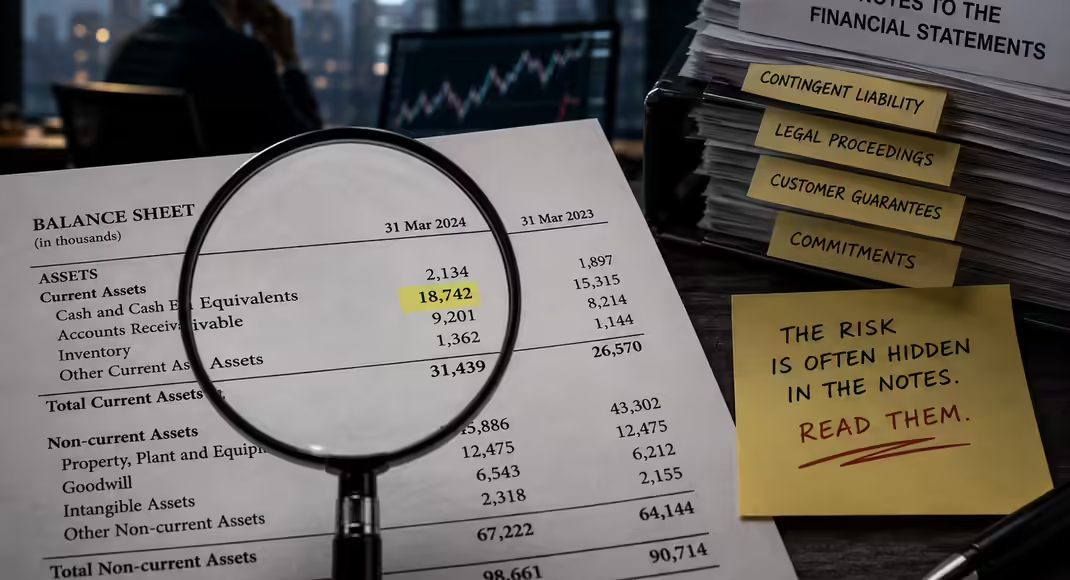
Search+Intelligent InvestingSynopsisIn one recent case, a large investment sat comfortably under equity until the auditor read the shareholders' agreement, found a buyback clause, and delivered an adverse opinion – the harshest verdict in an auditor's vocabulary. In another, a company made no provision for a guarantee even after the lender sent a demand notice and dragged it into recovery proceedings. These are examples of managements hiding what they owe and making balance sheets look strong.A balance sheet is supposed to answer one question cleanly: How much does the company really owe? Increasingly, it doesn't. The most expensive losses in the stock market rarely announce themselves. They are to be found in a clause buried in a shareholders' agreement, a guarantee tucked into a footnote, an instrument labelled equity that behaves, in every way that matters, like debt. By the time the label fails, the stock has usually already been ETMarkets.com 34 mins readJun 12, 2026, 06:46:00 PM ISTGift this Story to your friendsFONT SIZEAbcSmallAbcMediumAbcLargeSAVEPRINTCOMMENTContinue reading with one of these options:Limited AccessFreeLogin to get access to some exclusive stories & personalised newslettersLogin NowUnlimited AccessStarting @ Rs120/monthGet access to exclusive stories, expert opinions & in-depth stock reportsSubscribe NowETUh-oh! This is an exclusive story available for selected readers only.Worry not. You’re just a step away.What’s Included withETPrime Membership
The accounting trick used by companies to make a weak balance sheet look strong
In one recent case, a large investment sat comfortably under equity until the auditor read the shareholders' agreement, found a buyback clause, and delivered an adverse opinion – the harshest verdict in an auditor's vocabulary. In another, a company made no provision for a guarantee even after the lender sent a demand notice and dragged it into recovery proceedings. These are examples of managements hiding what they owe and making balance sheets look strong.
566 words~3 min read