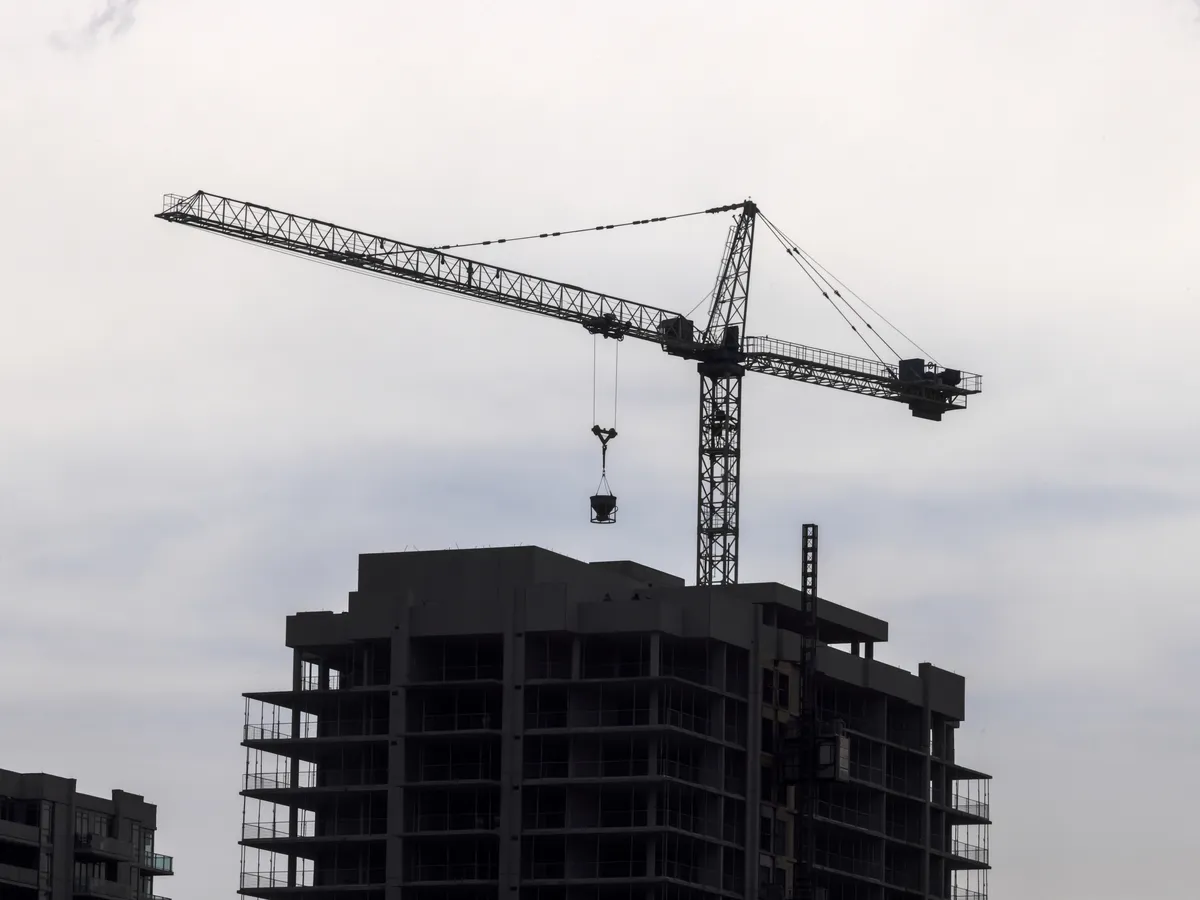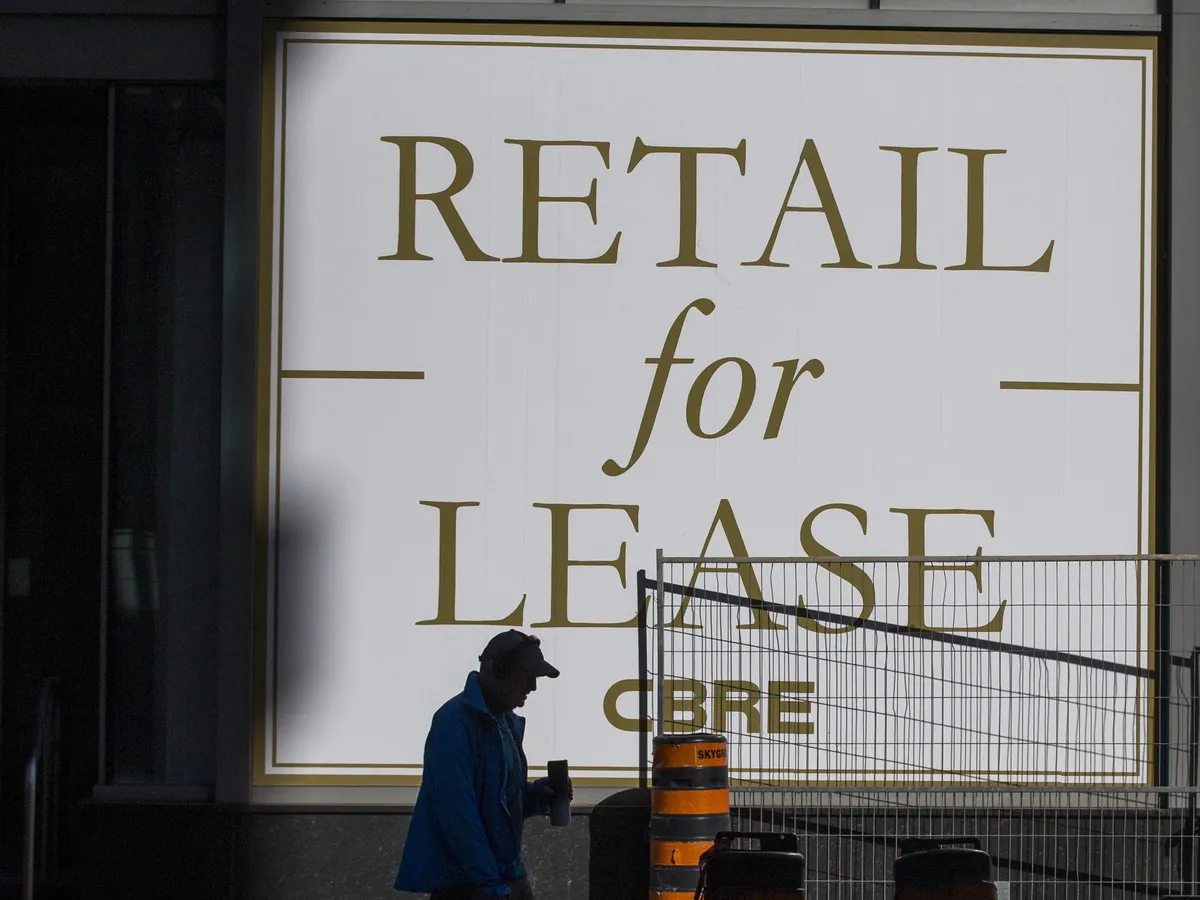
Skip to Content News Archives Economy Energy Oil & Gas Renewables Electric Vehicles Mining Commodities Agriculture Real Estate Mortgages Mortgage Rates Finance Banking Insurance Fintech Cryptocurrency Work Wealth Smart Money Wealth Management Investor Personal Finance Family Finance Retirement Taxes High Net Worth FP Comment Executive Women Puzzmo Newsletters Financial Times Business Essentials More Innovation Information Technology FP500 Podcasts Small Business Lives Told Tails Told Shopping Financial Post Store Obituaries Place a Notice Advertising Advertising With Us Advertising Solutions Postmedia Ad Manager Sponsorship Requests Classifieds Place a Classifieds ad Working Profile Settings My Subscriptions Saved Articles My Offers Newsletters Customer Service FAQ News Economy Energy Mining Real Estate Finance Work Wealth Investor FP Comment Executive Women Puzzmo Newsletters Financial Times Business Essentials HomeReal EstateCommercial Real EstateGarry Marr: How retail space became a casualty of the Toronto condo bustSwathes of retail space in Canada’s largest city are sitting empty as high-rise projects are cancelled or put on holdLast updated 10 minutes ago You can save this article by registering for free here. Or sign-in if you have an account.Space for lease in the Yorkville neighbourhood on Avenue Road in Toronto, Ont. Photo by Ernest Doroszuk/Toronto Sun filesSwathes of retail space in Canada’s largest city are sitting empty after tenants were evicted or left, only for development projects to be put on hold amid a chill in the condominium market.Subscribe now to read the latest news in your city and across Canada.Exclusive articles from Barbara Shecter, Joe O'Connor, Gabriel Friedman, and others.Daily content from Financial Times, the world's leading global business publication.Unlimited online access to read articles from Financial Post, National Post and 15 news sites across Canada with one account.National Post ePaper, an electronic replica of the print edition to view on any device, share and comment on.Daily puzzles, including the New York Times Crossword.Subscribe now to read the latest news in your city and across Canada.Exclusive articles from Barbara Shecter, Joe O'Connor, Gabriel Friedman and others.Daily content from Financial Times, the world's leading global business publication.Unlimited online access to read articles from Financial Post, National Post and 15 news sites across Canada with one account.National Post ePaper, an electronic replica of the print edition to view on any device, share and comment on.Daily puzzles, including the New York Times Crossword.Create an account or sign in to continue with your reading experience.Access articles from across Canada with one account.Share your thoughts and join the conversation in the comments.Enjoy additional articles per month.Get email updates from your favourite authors.Create an account or sign in to continue with your reading experience.Access articles from across Canada with one accountShare your thoughts and join the conversation in the commentsEnjoy additional articles per monthGet email updates from your favourite authorsSign In or Create an AccountorIt’s an unanticipated consequence of the condo slowdown, and there are dramatic stories out there: A project to redevelop the 32-acre Cloverdale Mall in Etobicoke, for example, was cancelled by Mattamy Homes and Quadreal Property Group when only 10 per cent of the condos were sold and the mall is now actively courting tenants back on its website.Across Toronto, landlords are attempting to lure businesses back and restructure deals, while others are simply waiting for a condo recovery or converting to other uses, such as parking lots.Get the latest headlines, breaking news and columns.By signing up you consent to receive the above newsletter from Postmedia Network Inc.A welcome email is on its way. If you don't see it, please check your junk folder.The next issue of Top Stories will soon be in your inbox.We encountered an issue signing you up. Please try againThe vacancies comes as a City of Toronto report released this week showed the number of retail businesses declined by 10.5 per cent across the city from 2011 to 2025, with some areas posting a decline of three times as much.Greg Evans, president and broker of record with Behar Group, said some of the projects now in limbo had dynamic commercial uses and would have created new ground-level leases, but won’t be built any time soon. Instead, the priority is getting tenants back, with some landlords agreeing to longer leases.“We just had a property where the (developer) saw the market had turned and agreed to a 10-year lease,” he said, noting that condo launches are just not happening today. “A tenant today is pretty confident they are not going anywhere for seven or eight years.”Condo research firm Urbanation has said that projects totalling11,424 condo units have been cancelled since the beginning of 2024, while only a third have gone ahead, leaving most of the rest sidelined indefinitely.Adam Jacobs, head of research at Colliers, said streetscapes are vacant because “in theory, some 62-storey project” will happen — eventually.“There are blank areas where you can see … where the towers are going to be, but are we going to wait six years?” he said, noting that the overall impact on retail vacancy for a city as large as Toronto is not significant.Jacobs said some of the retail space throughout the city is hard to get a handle on because there are stores that have been around for decades and might be owned by individual mom-and-pop groups, but that suburban plazas are booming by comparison, and investors are gobbling it up.Mitchell Cohen, chief operating officer of Westdale Properties, concurred that the retail market is doing well.“One thing I would say is that a vacant store site reflects the uncertainty in the development, not the retail market. The market is buoyant now,” said Cohen.“In today’s retail market, uncertainty for the tenant is more expensive than rent. A retailer needs some certainty, and he needs some term.”Arlin Markowitz, executive vice-president of the urban retail team at brokerage firm CBRE, said those costs can easily be $1,000 per square foot, so a decent-sized restaurant could cost $1 million to fit out. Not many tenants want to spend that kind of money on a short-term lease.“Landlords are willing to give five-year leases,” said Markowitz, noting that just isn’t enough time for tenants to make the financial commitment and developers are not giving tenants options to extend the leases. “It’s not helping the developers as much as they would have liked.”Eli Vladimirsky, vice-president and sales representative at Value Insight Realty Inc., is trying to lease out a string of properties on the north side of Bloor Street near the University of Toronto that once had key tenants such as Pizza Pizza, Fresh, Second Cup and a Wine Rack.They all left because the area was going to be redeveloped. Now he is trying to mix and match tenants with what’s left. The pizza oven is long gone from one site, but the Fresh restaurant left the seating behind and a bar and is mostly ready to go.“Some of this depends on the space. The Second Cup space can be up and running quickly too. But there is a five-year demo clause, so that likely limits us to independent tenants and local groups,” Vladimirsky said. “But some sites are giving 10-year clauses.”During land assembly, developers like passive income from tenants, but with the speed at which development was happening, landlords wanted to get projects going, said Saba Haie, a partner at Amdev Property Group, about the market in general and not his own firm.“Sometimes it is very hard to find a short-term lease and ideally, in many cases, you just want vacant possession. You know you are going through an entitlement process, and want to just get ready to go and build it. You project you will have some losses,” he said.“Sometimes, some types of tenancies can complicate your ability to go forward, depending on how the lease is structured. You want to give businesses a chance to phase out, too.”The other thing that can happen during development is that acquired properties fall into disrepair, and then you face the debate over how much to invest in a building to secure some short-term cash from a ground lease.On the other hand, Haie noted that vacant buildings can incur additional costs, such as higher insurance rates.“The problem today with development being so unsure is you just can’t keep kicking it down the road because it could cost you even more to fix. You just have to balance it out,” he said.CBRE’s Markowitz said that in Toronto, the types of tenancies going into halted projects will not include major flagship stores or restaurants that can’t commit to shorter terms. The flipside is an opportunity for some tenants, like the FIFA World Cup, which has had its pick of pop-up locations this summer as the tournament comes to the city.“It does make a big difference,” he said, about slightly longer leases extending to half a decade, but it’s more mom-and-pop retailers. “It’s just not enough to open a big restaurant.”The broker hears regrets from some landlords who booted out tenants too early, but they can’t turn back now.“We are in a funny in-between phase. We will have some unique and cool things, but it’s going to be a lot of pop-ups, and it’s not ideal.”When does it resolve itself? When the condo market rebounds, Markowitz said.“It won’t stay down forever.” Join the Conversation This website uses cookies to personalize your content (including ads), and allows us to analyze our traffic. Read more about cookies here. By continuing to use our site, you agree to our Terms of Use and Privacy Policy.
Garry Marr: How retail space became a casualty of the Toronto condo bust
Swathes of retail space in Toronto are sitting empty after tenants were evicted, only for development projects to be put on hold. Read more.
1,567 words~7 min read