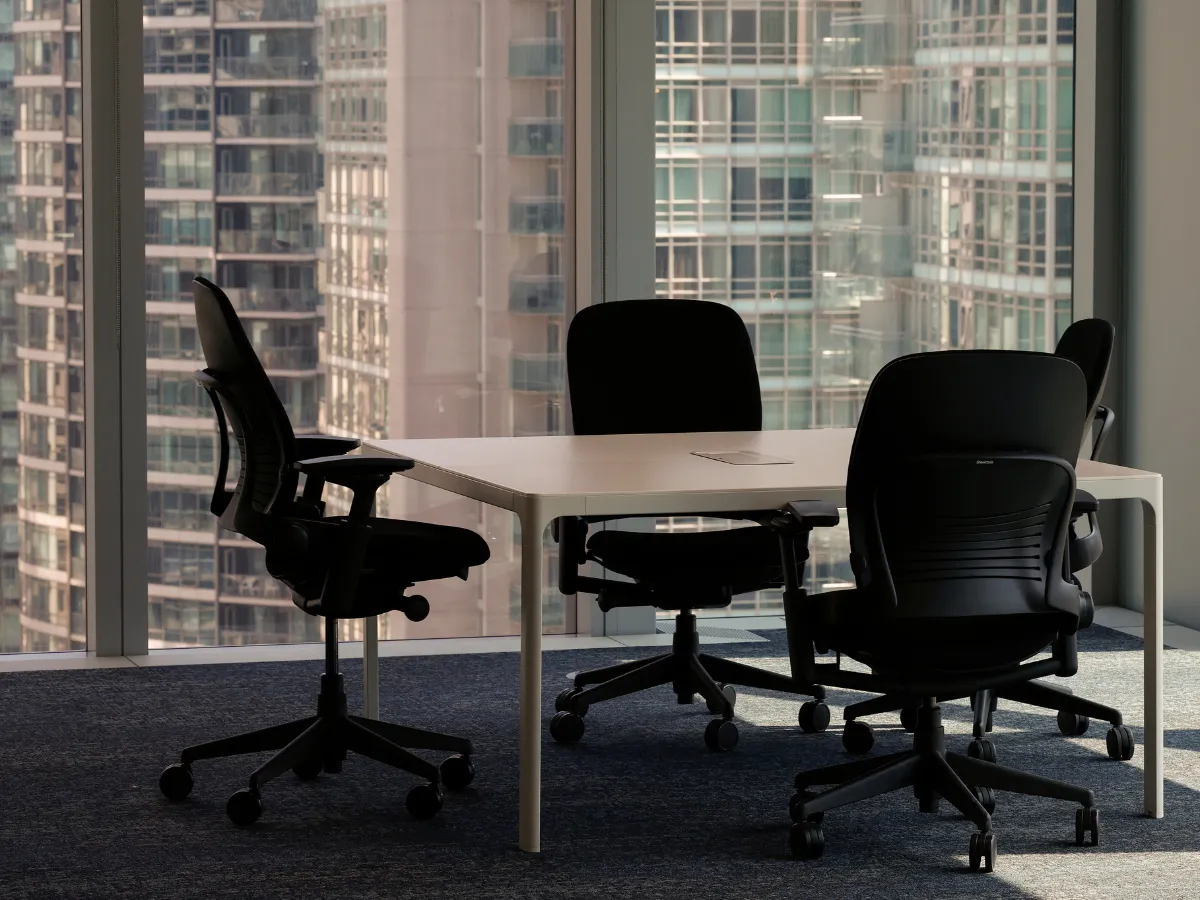
Skip to Content News Archives Economy Energy Oil & Gas Renewables Electric Vehicles Mining Commodities Agriculture Real Estate Mortgages Mortgage Rates Finance Banking Insurance Fintech Cryptocurrency Work Wealth Smart Money Wealth Management Investor Personal Finance Family Finance Retirement Taxes High Net Worth FP Comment Executive Women Puzzmo Newsletters Financial Times Business Essentials More Innovation Information Technology FP500 Podcasts Small Business Lives Told Tails Told Shopping Financial Post Store Obituaries Place a Notice Advertising Advertising With Us Advertising Solutions Postmedia Ad Manager Sponsorship Requests Classifieds Place a Classifieds ad Working Profile Settings My Subscriptions Saved Articles My Offers Newsletters Customer Service FAQ News Economy Energy Mining Real Estate Finance Work Wealth Investor FP Comment Executive Women Puzzmo Newsletters Financial Times Business Essentials HomeReal EstateCommercial Real EstateGarry Marr: Why tracking the return to the office is no longer a thing in TorontoThe plan to discontinue the report comes amid realization that hybrid work is here to stay as office workers crave flexibilityLast updated 27 minutes ago You can save this article by registering for free here. Or sign-in if you have an account.The headwind of workers wanting more options and choice in where they do their work, and ultimately choosing to spend less time in office, is hard to ignore. Photo by Rick Madonik/Getty ImagesAbout half a decade and a global pandemic later, the Strategic Regional Research Alliance is looking to finally pull the plug on tracking whether people are occupying Toronto offices.Subscribe now to read the latest news in your city and across Canada.Exclusive articles from Barbara Shecter, Joe O'Connor, Gabriel Friedman, and others.Daily content from Financial Times, the world's leading global business publication.Unlimited online access to read articles from Financial Post, National Post and 15 news sites across Canada with one account.National Post ePaper, an electronic replica of the print edition to view on any device, share and comment on.Daily puzzles, including the New York Times Crossword.Subscribe now to read the latest news in your city and across Canada.Exclusive articles from Barbara Shecter, Joe O'Connor, Gabriel Friedman and others.Daily content from Financial Times, the world's leading global business publication.Unlimited online access to read articles from Financial Post, National Post and 15 news sites across Canada with one account.National Post ePaper, an electronic replica of the print edition to view on any device, share and comment on.Daily puzzles, including the New York Times Crossword.Create an account or sign in to continue with your reading experience.Access articles from across Canada with one account.Share your thoughts and join the conversation in the comments.Enjoy additional articles per month.Get email updates from your favourite authors.Create an account or sign in to continue with your reading experience.Access articles from across Canada with one accountShare your thoughts and join the conversation in the commentsEnjoy additional articles per monthGet email updates from your favourite authorsSign In or Create an AccountorThere is little doubt occupancy has been going up since the pandemic ended, but the reality is that the trend has peaked, and some degree of hybrid or work-from-home is here to stay.More importantly, a new reality may be emerging that is less about people wanting lines drawn in the sand about when or where to be in the office and more about flexibility on when and where work happens.SUBSCRIBER EXCLUSIVE: FP West: Energy Insider brings you behind the oilpatch’s closed doors with exclusive insights from insiders every Wednesday morning.By signing up you consent to receive the above newsletter from Postmedia Network Inc.A welcome email is on its way. If you don't see it, please check your junk folder.The next issue of FP West: Energy Insider will soon be in your inbox.We encountered an issue signing you up. Please try again“We stopped publishing it because it’s just not a binary call anymore. You are not in, and you are not out,” said Iain Dobson, a co-founder of the group, which informally dates back to 2008. The SRRA will likely publish a final report in March 2027 to mark the anniversary of the pandemic’s onset.The group’s last numbers, published in February, serve as an exclamation point: the return to office is not just a dream of landlords. Average weekly office occupancy climbed to 86 per cent, the report found, with Wednesday close to 100 per cent and Friday just around 58 per cent.“When we started this research for the city of Toronto and the BIAs (business improvement areas), they were very concerned at the beginning of the pandemic,” Dobson said. “Back then, remote work was an all-or-nothing thing. You either had an office or you didn’t.”There were executives who travelled and might be in the office less often, but it was fairly easy to tell who was remote or who had a desk and was mostly at it. Dobson said only about five per cent of those employed by companies in downtown Toronto were not at desks before the pandemic.Flash forward to May 2026, and Statistics Canada reported that the proportion of employed Canadians working exclusively from home was 11.4 per cent, down one percentage point from the same month in 2025 and 7.3 percentage points from May 2022.Now, this doesn’t mean that office towers are full. The latest data for the first quarter of 2026 shows the total office vacancy rate across Canada is still 17.2 per cent, according to real estate firm Avison Young.But with no new supply delivered in the first quarter, compared to 1.3 million square feet a year earlier, it feels like landlords may finally be getting some traction, with supply and demand set to work in their favour in the coming years.Still, the headwind of workers wanting more flexibility, and ultimately less time in office, is going to be hard to ignore.A survey of 1,500 Canadian professionals by recruitment agency Robert Half found 44 per cent want to make a move for a “better” job in the second half of 2026. The top reasons were better benefits and perks and career enhancement, cited by 38 per cent of respondents.But one-third of the people planning to move on are doing so for greater flexibility, and 31 per cent for remote work options. The possibility of working remotely is a financial consideration when you factor in housing costs and how much they drop in smaller cities.Real estate brokerage Royal LePage said a survey it recently conducted showed that 51 per cent of Canadians in the Greater Toronto, Montreal and Vancouver regions would consider buying a primary residence in what it calls more affordable cities.Some type of office requirement has made that dream harder to realize and is probably a driver of collapsing prices in smaller exurbs.There is a lot of blurring between remote work and flexible work, but Meena Dube, senior practice director at Robert Half, said bigger firms want people in the office.While there are exceptions being made, the general consensus is that workers are more productive there.The belief that remote work is especially harmful to younger workers is also gaining traction. A paper published by the Federal Reserve Bank of New York suggests that youth unemployment has risen dramatically since the pandemic because of the shift away from the office.“Our analysis suggests that these trends are related, with remote work making it more difficult for managers to train and mentor new employees. Accordingly, companies may be reluctant to hire less-experienced workers in distributed work arrangements,” the paper argued.Jon Love, executive chair of KingSett Capital and a longtime proponent of a return to the office, said interns don’t learn much sitting at home. KingSett, which is also a major owner of office towers through various entities, requires in-office work five days a week.“They sit with mentors, attend meetings and hear the buzz and are engaged,” said Love.It’s hard to argue with him. Flexibility makes sense, but being on a summer internship and barely seeing an office or having head-to-head time with co-workers is a concept that we know is flawed.Making the office a worthy destination is another challenge facing companies and developers.Dominic Bettison, a director and architect with WilkinsonEyre, said the design can impact how people feel about coming into the office.That was the driving force behind his company’s CIBC Square, a new two-tower complex near Union Station in downtown Toronto.“The proximity to transit and ease of commute. You want to nip into work,” he said, adding that integrating transit and almost pulling it into the project was a main goal. The connections, including a new bus terminal, were key.The amenity game is getting more competitive for office buildings, too, and CIBC Square is trying to reach new levels with a new park between the towers, featuring summer programs and an ice rink in winter.“Years ago, an office building was a fancy lobby,” said Bettison. “Nowadays, it is a really complicated ecosystem of amenities to support that office environment.”These are necessities, not luxuries, in a world where Dobson’s groups say the 9-to-5 notion is being challenged.Since September 2025, his group has noticed that when workers are required to be in the office, some are working longer days, while others are shortening their in-office workday to three or four hours. Transit ridership is documenting this trend.“The genie is out of the bottle,” he said. ”The real next story is how do you measure output, and we don’t have a handle on that.”Productivity continues to drive the debate, but attitudes toward work have changed. Work-from-home, hybrid and in-office are terms that no longer perfectly fit in a world where flexibility is the order of the day. Join the Conversation This website uses cookies to personalize your content (including ads), and allows us to analyze our traffic. Read more about cookies here. By continuing to use our site, you agree to our Terms of Use and Privacy Policy.
Garry Marr: Why tracking the return to the office is no longer a thing in Toronto
The Strategic Regional Research Alliance is looking to pull the plug on tracking whether people are occupying Toronto offices. Read here now
1,620 words~7 min read