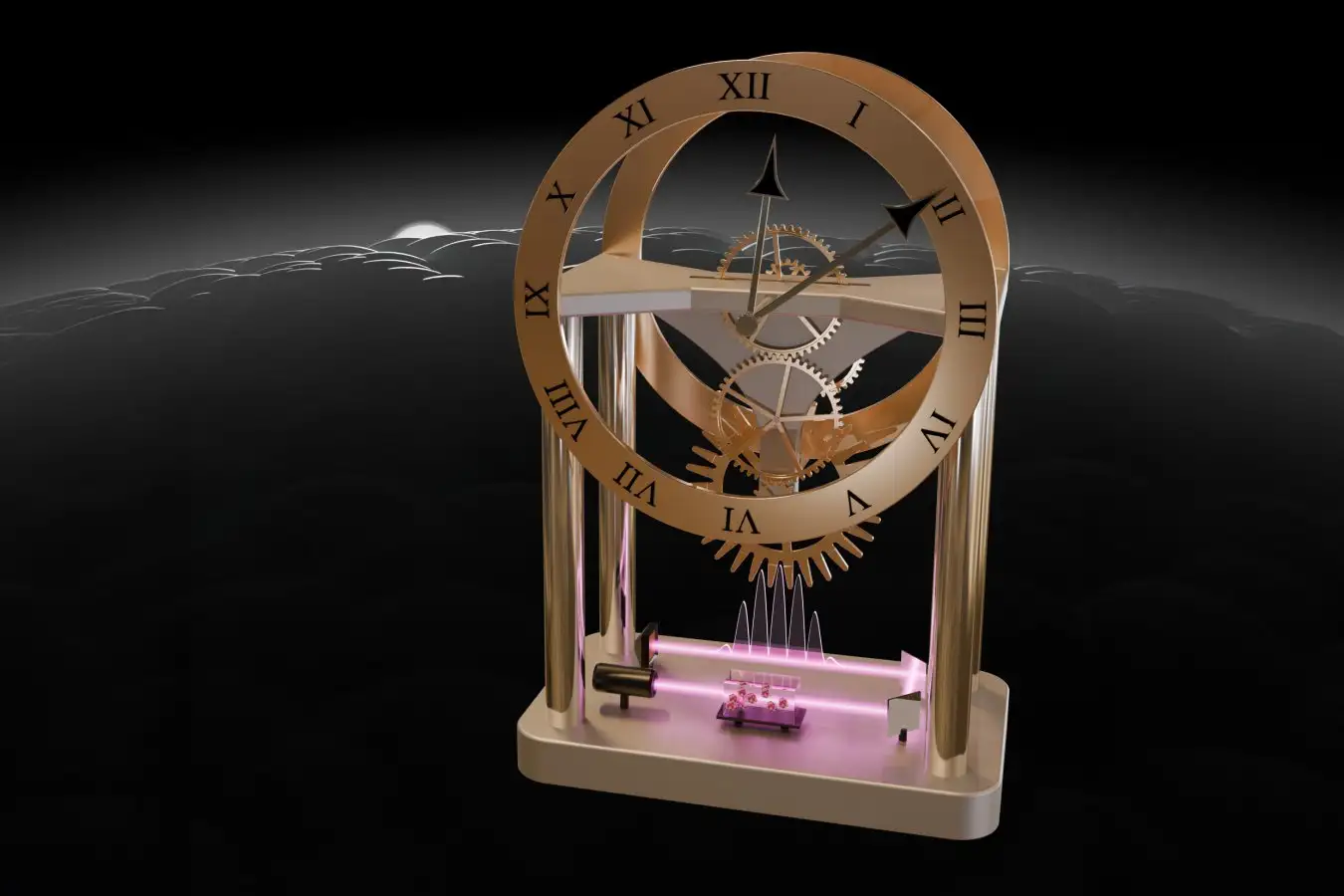
Conceptual illustration of a clock based on atomic nucleiOliver Diekmann, TU Wien
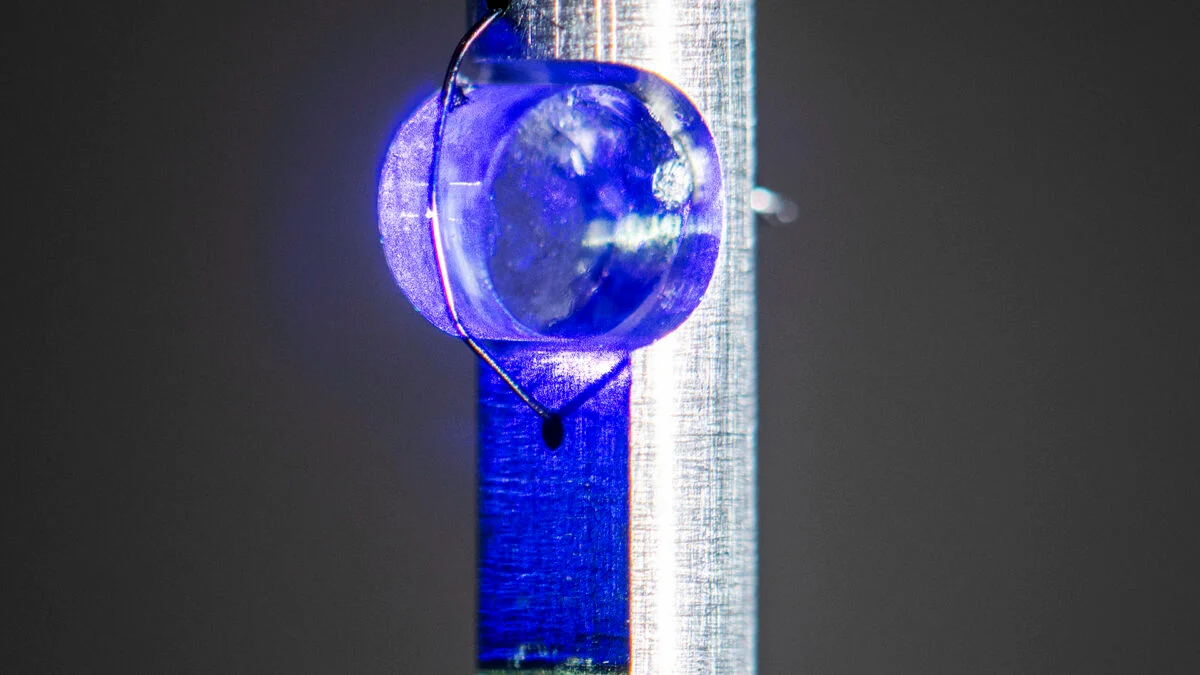
Scientists have built the first working nuclear clock, which uses the vibrations of atomic nuclei to keep time. Nuclear clocks have been sought after for more than two decades and could eventually allow for extraordinarily precise timekeeping and experiments that hunt for new physics.
The most accurate atomic clocks we currently have use electrons for timekeeping. Electrons occupy distinct energy levels, or orbits, around the atomic nucleus, and they only move between orbits when they are excited with light of a very specific frequency. The frequency of a light wave is defined by how many waves go past within a certain time, so counting these waves can be used for timekeeping, much like the ticking pendulum of a grandfather clock.
In an atomic clock, a laser tuned to the electron-exciting nuclear frequency is used to stimulate a collection of atoms. If it deviates from the correct frequency, fewer electrons will jump between energy levels and the frequency is corrected. This maintains the accuracy of the timekeeping, ensuring that clocks built in this way lose only a few seconds every billion years.
Atomic nuclei can also be made to bounce between energy levels. In theory, they promise greater accuracy than electrons because they have much higher energies and require more precise excitation. This means they have the potential to work to stabilities of seconds over hundreds of billions of years, far older than the age of the universe, which would help physicists look for exotic new physics.