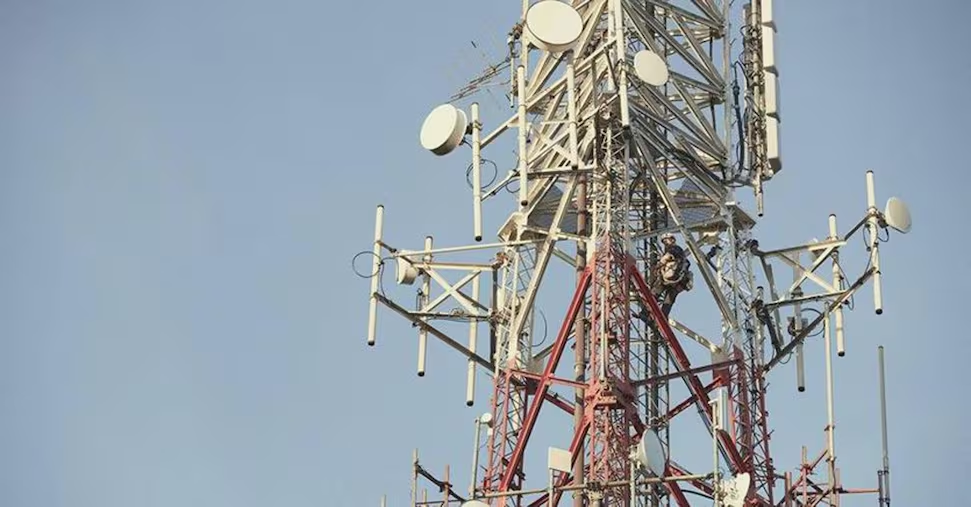
Duration and procedure of RF exposure in animal experiments. Credit: Electronics and Telecommunications Research Institute (ETRI)
A large-scale international collaborative animal study found no statistically significant association between long-term exposure to radio frequency (RF) electromagnetic fields (EMF) emitted by mobile phones and the incidence of brain, heart or adrenal tumors.
The results were published in Toxicological Sciences, with separate papers contributed by the Korean and Japanese research teams.
The study was designed to evaluate potential carcinogenic effects at exposure levels that form the basis of human safety guidelines for mobile phone RF electromagnetic fields and to scientifically verify the findings of the 2018 U.S. National Toxicology Program (NTP), under the National Institutes of Health (NIH).
The NTP study reported increased incidences of brain, heart and adrenal tumors in male rats following lifetime exposure to 900 MHz CDMA-modulated RF signals at 6 W/kg. The study was motivated by recommendations from international organizations, including the World Health Organization (WHO), which emphasized the need for further research to assess the reproducibility and validity of those findings.