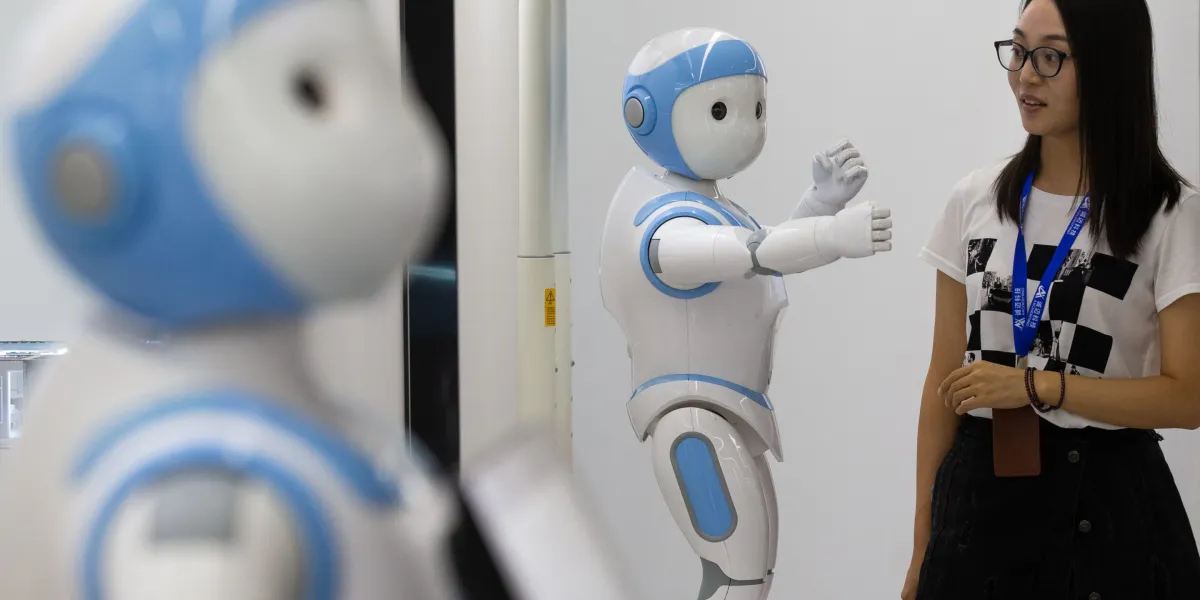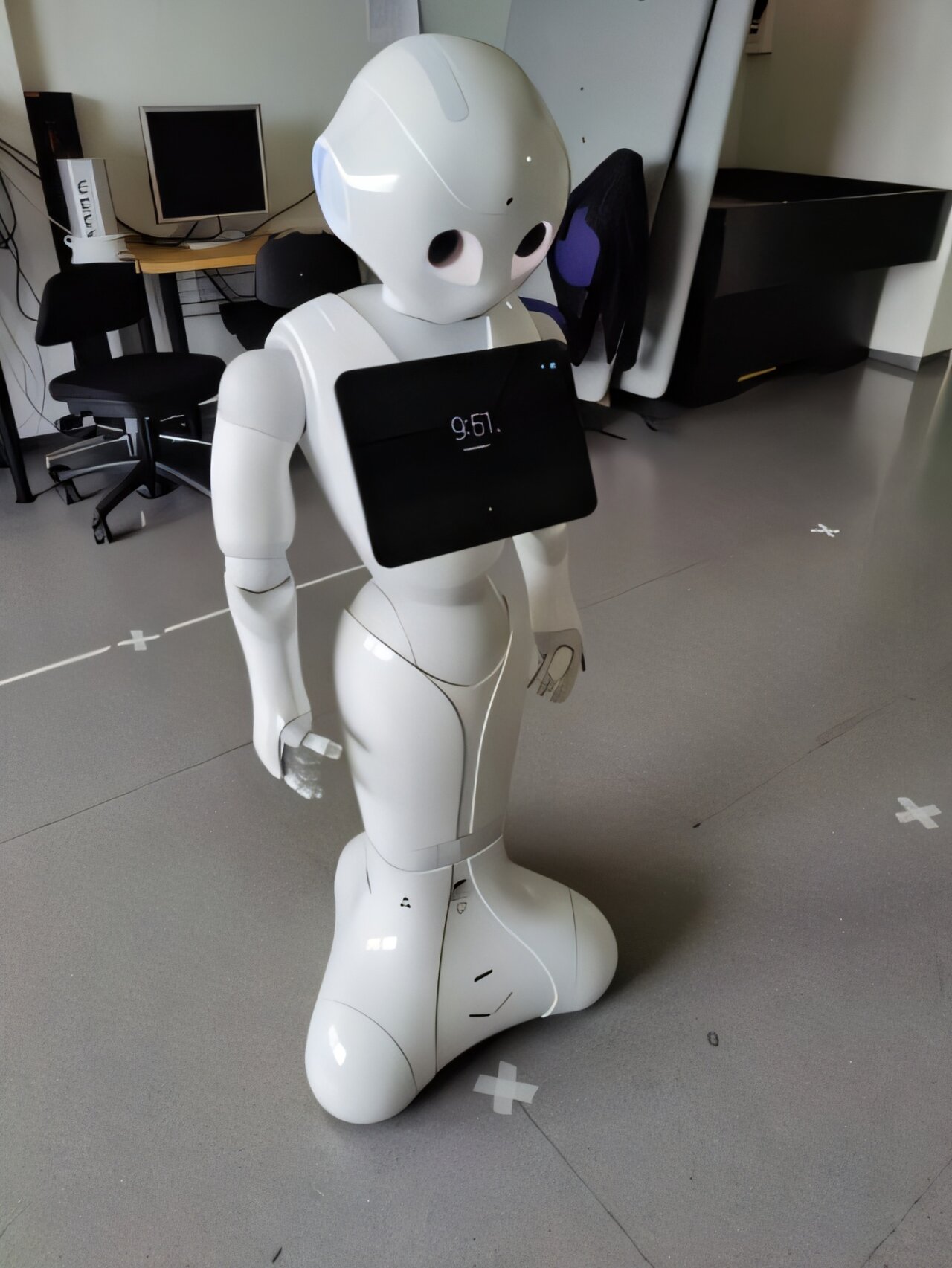
Pepper in person. Credit: Suraj De, NTNU
What's it like to play a physical game with or against a robot that both looks and behaves like a person? That's what NTNU researchers wanted to find out when they conducted a controlled laboratory experiment with Pepper, a social robot designed to interact with humans.
"Our observations show that robots can actually be good playmates, but only if they behave in ways that make sense to people," said Yavuz Inal, associate professor at NTNU's Department of Design in Gjøvik and first author of the study published in Entertainment Computing.
That means humanoid robots can make good playmates, but their design must take into account gameplay modes, pace, role and order of play.
If the robot suddenly acts like an overzealous 7-year-old who simply has to win, while also moving a bit stiffly and not quite understanding the rhythm of the game, its human counterparts quickly get annoyed. We expect robots that are more natural, responsive and flexible than current technology is capable of delivering.