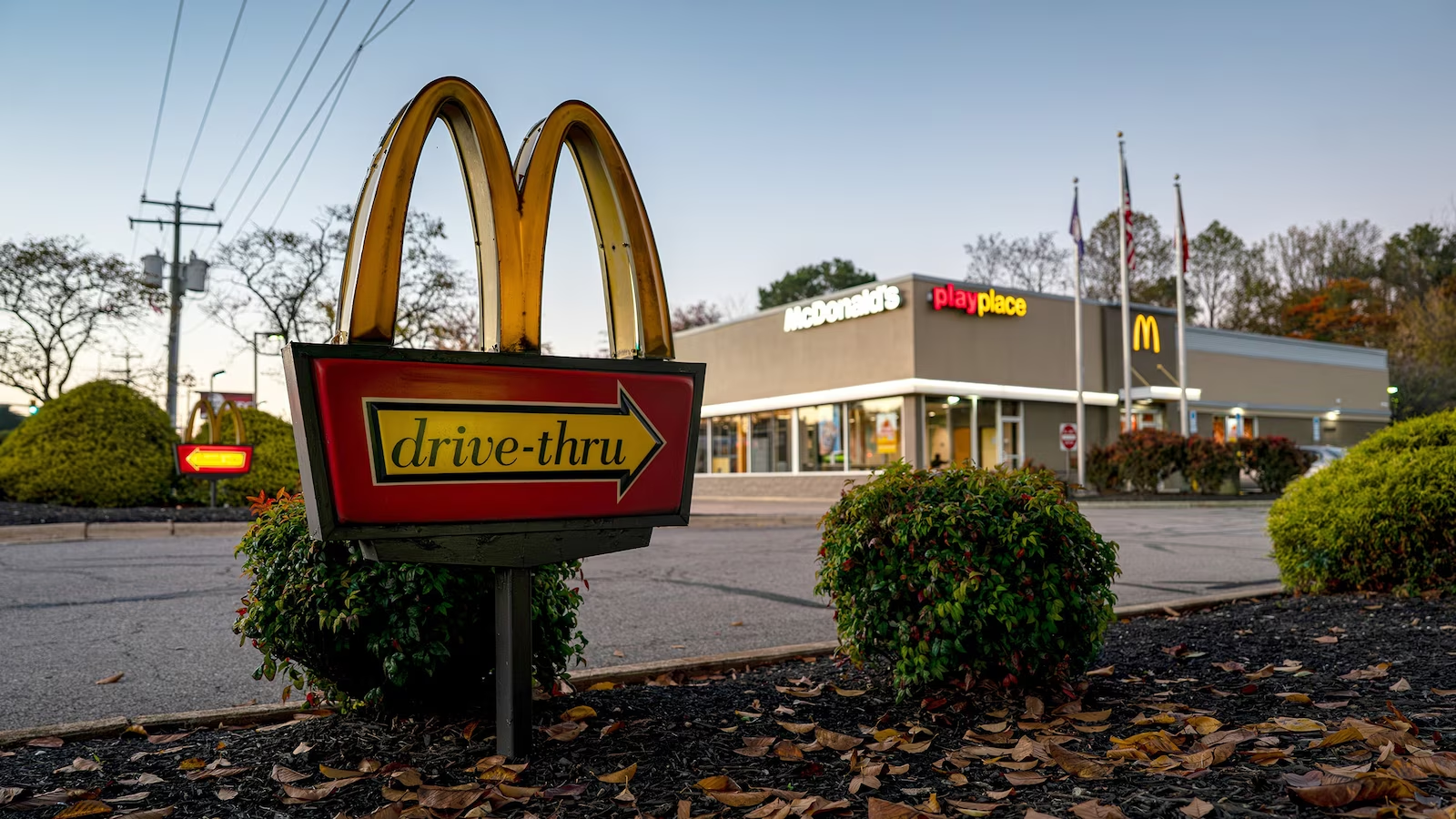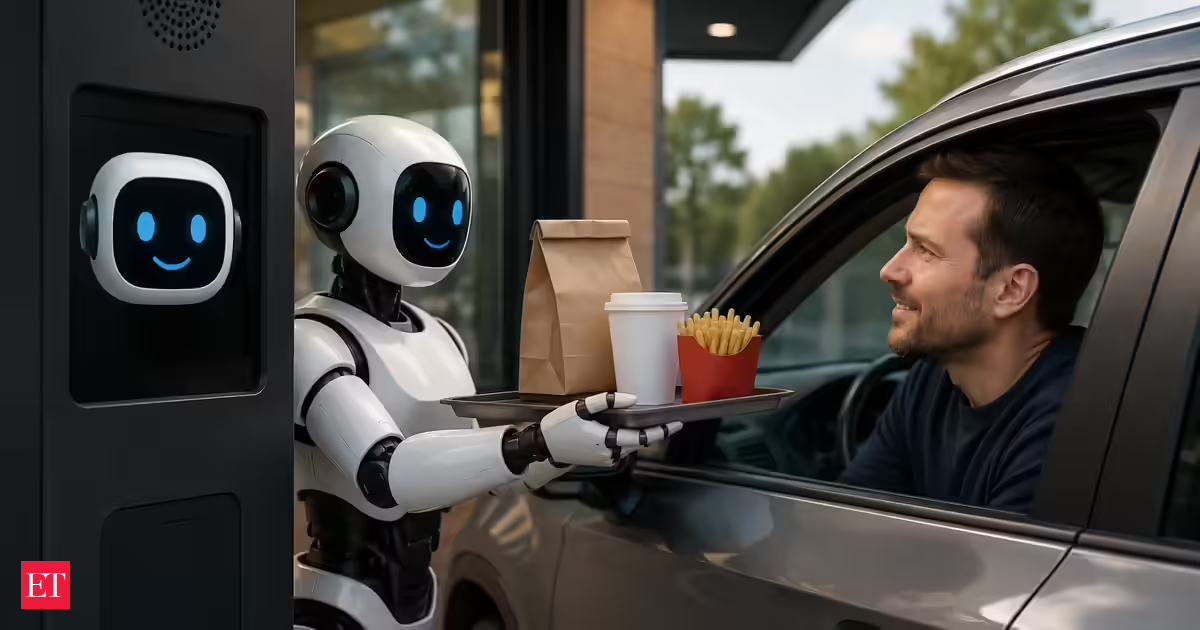
SynopsisMcDonald's is testing a new Google-backed AI drive-thru ordering system capable of handling customer conversations, processing orders, and supporting restaurant operations. While the technology is still in its early stages, the experiment highlights a broader shift taking place across the fast-food industry as companies increasingly look to artificial intelligence to improve speed, efficiency, and customer experience.ET OnlineFor decades, the drive-thru has been one of the most human parts of the fast-food experience.A customer pulls up. An employee takes the order. Questions are asked, changes are made, mistakes are corrected, and the conversation moves the transaction forward.It is a process that has remained largely unchanged despite years of technological innovation inside restaurants.Now, companies are beginning to rethink it.McDonald's is the latest major restaurant chain testing AI-powered drive-thru ordering, introducing a new system called ArchIQ at select locations in the United States. Developed with Google, the technology can take orders, process modifications, communicate with customers in multiple languages, and support restaurant operations behind the scenes.The significance of the test extends beyond McDonald's.Across the restaurant industry, artificial intelligence is increasingly being viewed as a way to address one of the sector's biggest operational challenges: delivering faster service while maintaining consistency at scale. Drive-thrus account for a significant share of revenue for many quick-service restaurant brands, making even small improvements in speed or accuracy potentially valuable.Yet speed is only part of the equation.The more interesting question is whether customers are ready for AI to become part of the ordering experience.Previous attempts at automated ordering have produced mixed results. Some systems struggled with accents, background noise, menu modifications, and unexpected customer requests. Social media quickly amplified examples of incorrect orders, highlighting how difficult human conversation can be for automated systems.The latest generation of AI may change that. Advances in conversational AI, speech recognition, and large language models have significantly improved how machines understand and respond to natural language. As a result, companies are becoming more confident about placing AI directly in front of customers rather than limiting it to behind-the-scenes operations.At the same time, restaurant brands are exploring broader applications for AI beyond ordering. Systems are increasingly being used to monitor equipment, identify operational bottlenecks, manage inventory, forecast demand, and support decision-making at the store level.Taken together, these developments suggest that AI's role in restaurants is expanding from operational support to customer interaction.Whether customers fully embrace that transition remains to be seen. But as major chains continue investing in automation, the future of fast food may involve fewer interactions between people and more conversations between customers and machines.Disclaimer Statement: This content is authored by a 3rd party. The views expressed here are that of the respective authors/ entities and do not represent the views of Economic Times (ET). ET does not guarantee, vouch for or endorse any of its contents nor is responsible for them in any manner whatsoever. Please take all steps necessary to ascertain that any information and content provided is correct, updated, and verified. ET hereby disclaims any and all warranties, express or implied, relating to the report and any content therein.Read More News onRead More News on
The voice taking your McDonald's order may not be human anymore
McDonald's is testing a new Google-backed AI drive-thru ordering system capable of handling customer conversations, processing orders, and supporting restaurant operations. While the technology is still in its early stages, the experiment highlights a broader shift taking place across the fast-food industry as companies increasingly look to artificial intelligence to improve speed, efficiency, and customer experience.
TL;DRAI
McDonald's tests ArchIQ, a Google AI system for drive-thru ordering with multi-language support. The rollout signals QSR automation push to reduce latency; success hinges on LLM robustness for edge cases and customer acceptance, reshaping staffing and unit economics.
516 words~2 min read