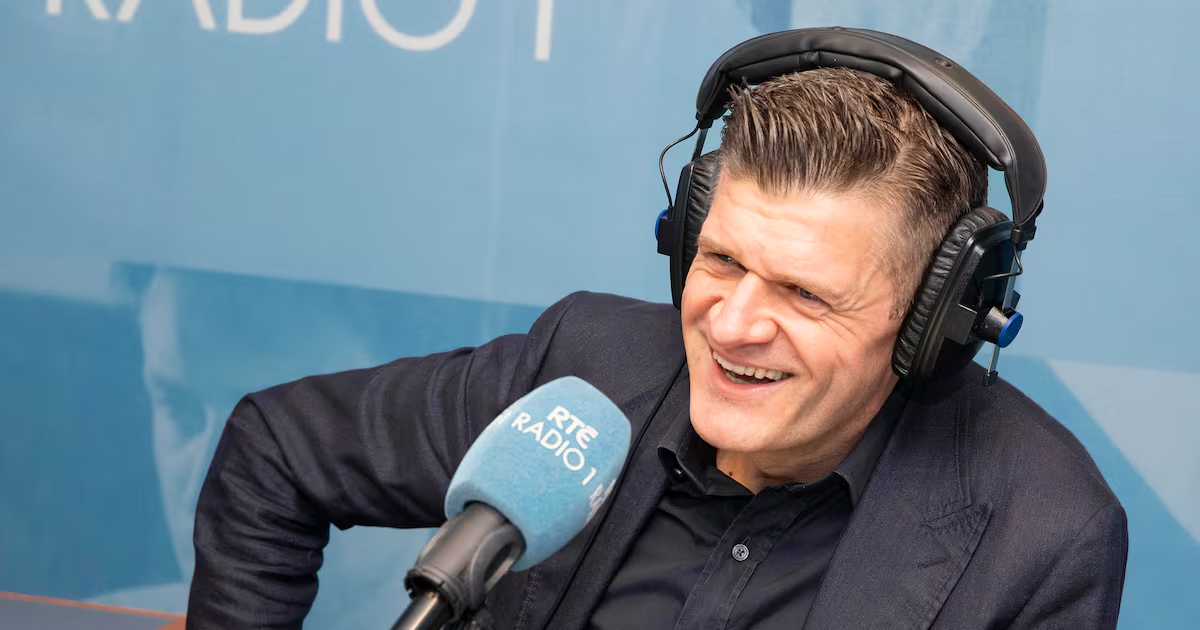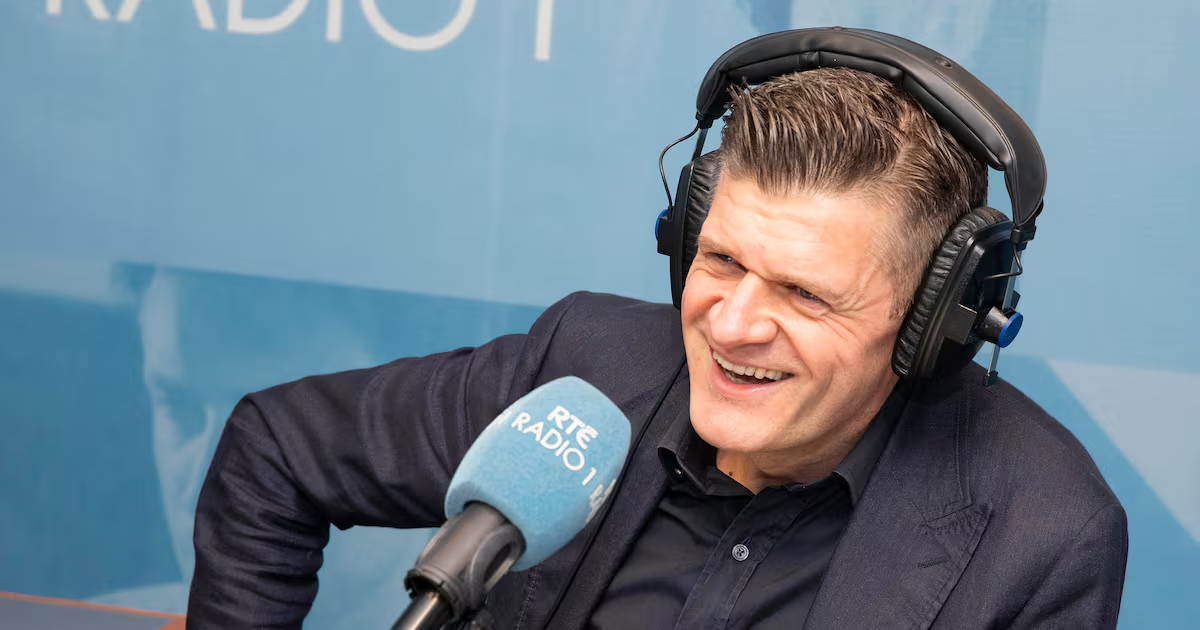
It may well be that Elvis Costello is, at least in his own telling, the least nostalgic person you’ll ever meet, but as the singer talks to Brendan O’Connor (RTÉ Radio 1, Saturday and Sunday) there’s just a hint of the elegiac as he ponders the venerable medium he’s appearing on.Asked why his current tour features only old numbers, Costello says he’s interested in how these compositions hold up in today’s world; he points to his 1978 classic Radio Radio, which he notes started out as a song in praise of the wireless but then became a critique. “That really wouldn’t be an issue now, because radio is seen as a precious, rare commodity these days,” the singer tells O’Connor. “Because there’s so many other ways that people can receive things, the whole argument of the song has a sort of wistfulness about it now.”It’s hard to disagree with Costello’s fond but slightly plaintive assessment, in terms of radio as well as (sorry) Radio Radio. For one thing, any platform that boasts a fiftysomething presenter’s interview with an early-septuagenarian singer-songwriter as a weekend highlight clearly isn’t courting Gen Z consumers. On the other hand, O’Connor’s engrossing conversation with Costello vividly illustrates why audiences, of whatever age, still tune in every week, even with so many alternatives available.The host is obviously delighted to be talking to Costello – he recalls the impact of seeing his guest on Top of the Pops in the late 1970s – but his questions are probing as well as admiring, contributing to a fascinating encounter. Among the topics covered are the ostensibly confrontational attitude of Costello’s early years (he says the gap in his teeth makes him sound more bolshie), his deep Liverpool-Irish roots (he was born Declan Patrick MacManus) and his less-than-harmonious relationship with Shane MacGowan: “He didn’t like me very much.”Amid this candour there’s also the odd note of doleful realism, as when Costello speaks of his unease at now playing another old favourite, (What’s So Funny ’Bout) Peace, Love and Understanding. “Isn’t it slightly in bad taste right now?” he ventures about the song’s message. “Because there’s a lot of people who don’t want it.”A similarly despondent thread runs through O’Connor’s talk with the American author Elizabeth Strout, who dissects the alarming state of politics in her homeland in gloomy terms: “The country is very divided, and there’s an undercurrent of fear, because we don’t know what’s going to be happening.” [ Elizabeth Strout: ‘It’s a deeply sad time in the US’Opens in new window ]Strout is no Trump supporter, but as a Pulitzer-winning novelist she thinks she understands some of the anger behind the Maga movement.“Because they feel humiliated?” O’Connor asks. “Yes, precisely,” Strout replies. “By people like you?” he asks. “Yes, precisely,” she answers. It’s the kind of frank but respectful exchange that Strout says is missing in American society these days.But this baleful subject matter belies the joyful fashion in which the interview is conducted. Despite her pessimistic analysis, Strout laughs infectiously as she muses on writing and family as well as politics. O’Connor sounds like someone genuinely relishing the intellectual cut and thrust with his guest, while gently ribbing her about turning 70 recently: “I won’t use the word ‘sprightly’.”The host’s upbeat mood is understandable. Powered by captivating interviews and surging audience numbers, he’s riding high right now, providing one of the few unqualified bright spots in a Radio 1 schedule still gingerly feeling its way after last year’s relaunch. In RTÉ at least, O’Connor’s show is indeed a rare and precious commodity.The once all-pervasive pull of radio forms the dark backdrop to Pirate Predator (RTÉ Radio 1, Sunday), the latest series from the station’s Documentary on One team. In an indication of the inexorable direction of travel in the media world, however, it’s primarily aimed at the podcast market, with online listeners accessing episodes a week before transmission on the airwaves.But however you hear it, the story of the pirate-radio boss and paedophile Eamon “Captain” Cooke is both riveting and horrific, though queasiness may end up getting the better of curiosity. Narrated by Peter Mulryan, one of its writers and producers, the series traces the sordid, scarcely believable life of Cooke, who transformed himself from an Inchicore electrician (whose first wife died in suspicious circumstances) into the scheming owner of Radio Dublin, the pirate station whose huge popularity in the 1970s gave him Pied Piper-like access to the children he preyed on.Like so many abusive predators, Cooke hid in plain sight – “He was a caricature of a dirty old man,” the former DJ James Dillon says – while protecting himself by forging powerful friendships, be it with gardaí or clerics. With grotesque inevitability, he even came to know the most notorious abuser of them all, Jimmy Savile.But Cooke was at his most sickeningly manipulative when it came to grooming and abusing children, using the lure of his garage – an Aladdin’s cave of electronic goods – as “the bait in the trap”, to use Mulryan’s phrase. Anne and Siobhán recall how, as young neighbours of Cooke’s, they were invited to play on his premises before he began to sexually abuse them repeatedly. Both women are composed and even forensic in their accounts, but it’s all the more harrowing for that.The production isn’t perfect, with Mulryan’s narrative style occasionally a tad over-egged. But he brings his own bracing personal experience to the tale: not only did he encounter Cooke in the 1980s; he has tapes of him broadcasting on Radio Dublin, creepily denying abuse allegations decades before he was eventually convicted.As the stories of Anne, Siobhán and others attest, the documentary is a primer into the lasting effects of abuse on survivors. It’s an issue once again given fresh urgency after the commission of investigation report on the Waterford paedophile Bill Kenneally, which found that he – like Cooke – used his connections to shield vile crimes.After all that, it seems trivial to add that the series represents another reason for optimism in RTÉ: Pirate Predator is the latest in an impressive run of Doc on One true-crime podcast series that have successfully tapped into the booming – and worldwide – demand for such digital audio content. Sometimes the message is more important than the medium.Moment of the weekWith anti-immigration extremists seizing on the terrible stabbing incident in Belfast as an opportunity for racist rioting, Barry Whyte reports from the east of the city on the aftermath of the violence for The Hard Shoulder (Newstalk). Speaking to the presenter Shane Coleman, Whyte describes “the smell of smoke still hanging in the air” and hears how residents from migrant backgrounds were targeted. Pastor Jack McKee recounts rescuing two “totally traumatised” congregants – both African women – from a brick-wielding mob. Whyte also hears a Scottish woman describe how her neighbours were burnt out of their home. Though obviously fearful, she neatly skewers the supposed rationale for the hateful actions of such self-declared protectors and patriots. “All they’re doing is making people feel unsafe,” she says bluntly. “That’s not standing up for your community.”
With Elvis Costello, Elizabeth Strout and surging audiences, Brendan O’Connor is riding high
Radio: RTÉ Radio 1 host shows his interview skills, while Pirate Predator recounts the horrific crimes of paedophile Eamon Cooke
1,184 words~5 min read