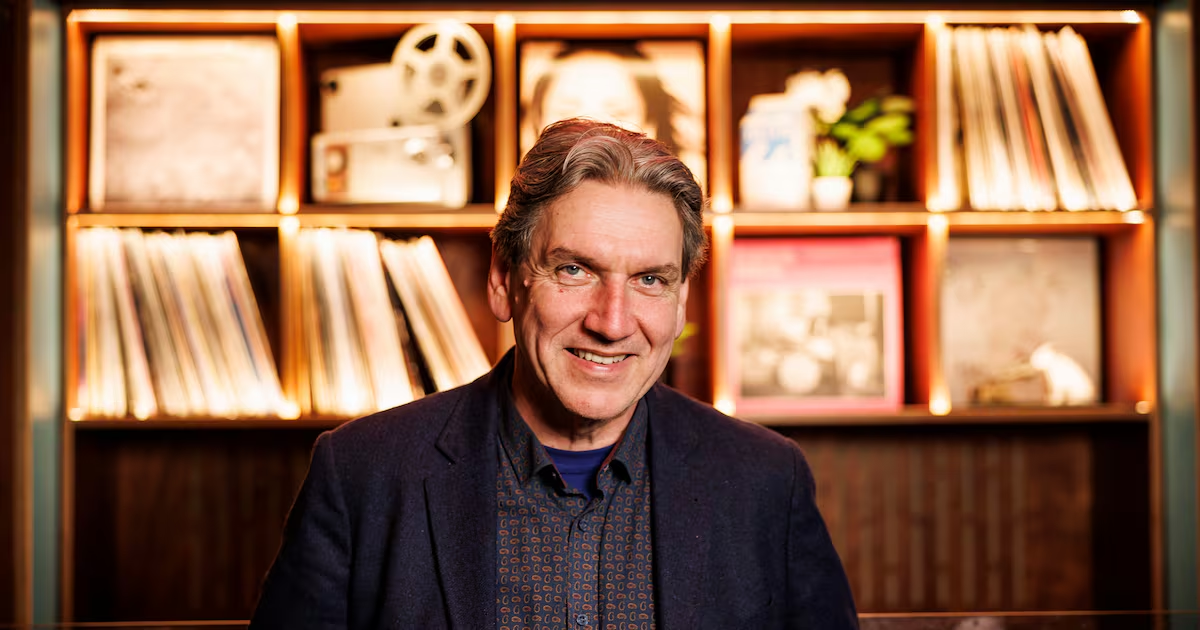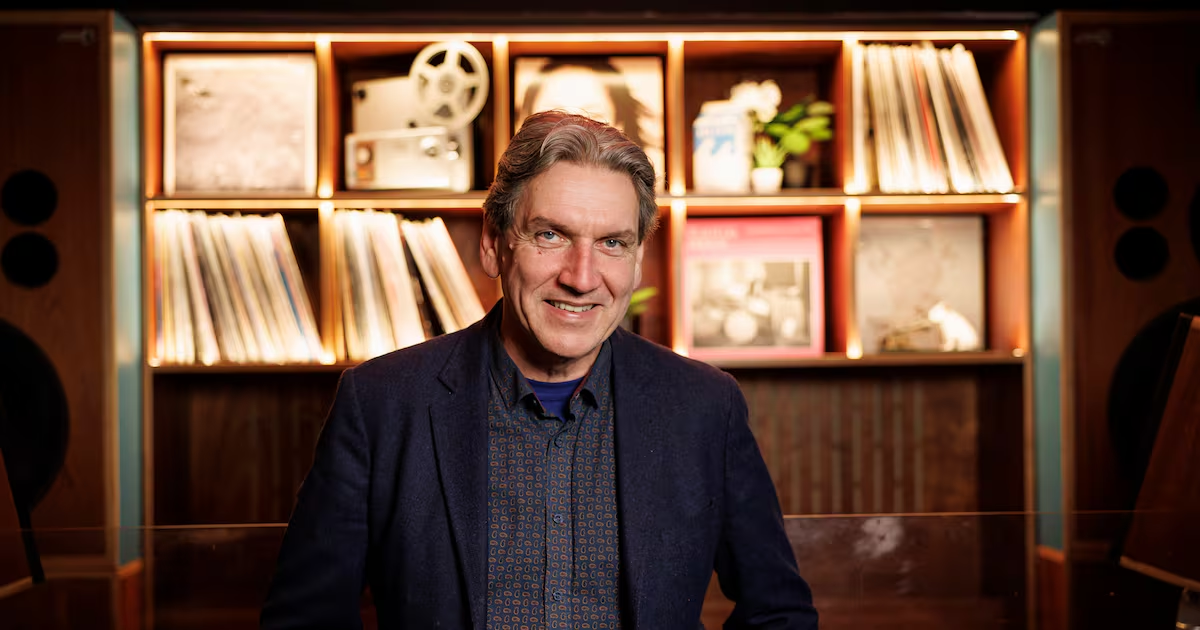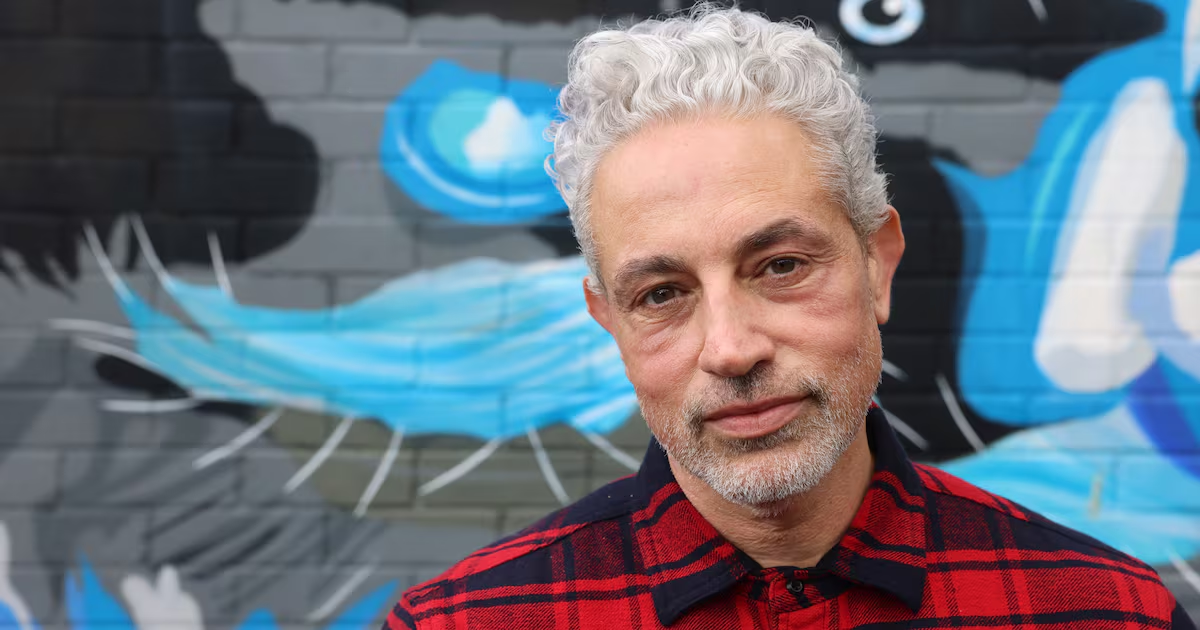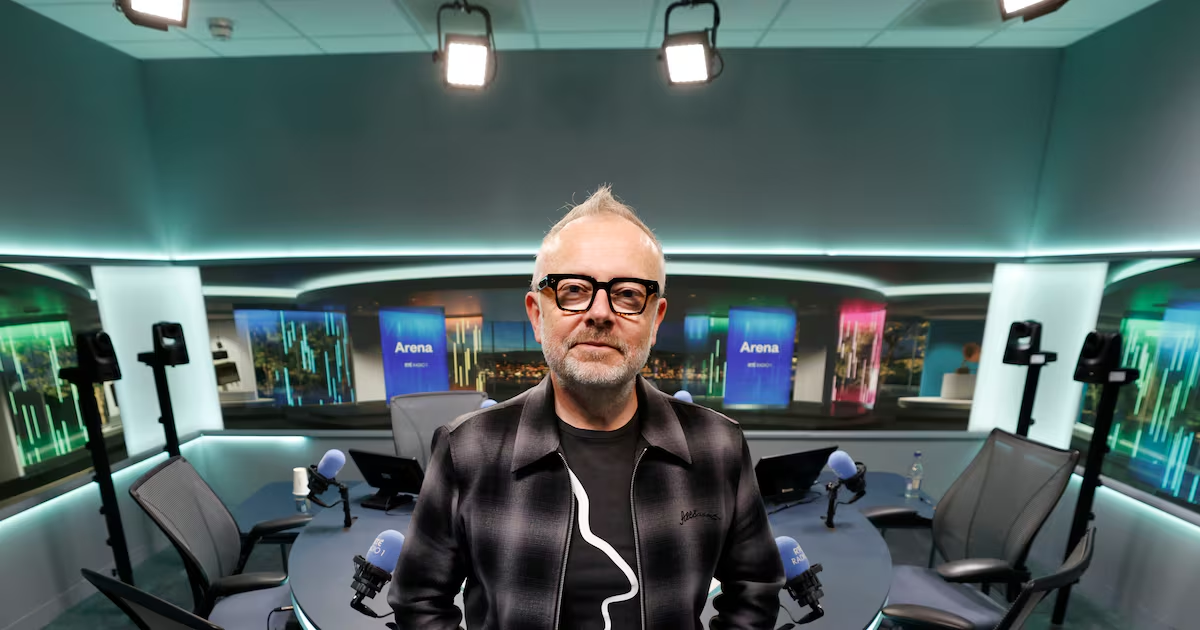
Rick O’Shea, the presenter of Arena, the arts and culture show on RTÉ Radio 1, is sitting in a Dublin hotel talking about the “dream job” he secured against stiff competition from 200 other applicants. It’s an inescapably sad fact that the job of O’Shea’s dreams became available under the most tragic of circumstances, following the sudden death, last July, of Seán Rocks, the widely respected and beloved RTÉ broadcaster.Last summer, O’Shea was asked to present the programme for a couple of weeks when Rocks, who had fronted the show since its inception, in 2009, was due to be on holiday. Ahead of those dates, Rocks fell ill, and O’Shea was called in to cover for him. “I was told he’d gone into hospital, I thought maybe for tests. It didn’t seem serious,” he says. “So I did the programme that night. It was the day he collapsed. I didn’t realise any of that at the time, and by the following day they knew he wasn’t coming back. And things got very serious at that point.”O’Shea, a genial RTÉ staffer who has hosted mostly music programmes on 2FM for the past 25 years, didn’t know Rocks well, but he admired him as a colleague. Although taking over in such terrible circumstances was, he says, “something I wouldn’t put my worst enemy through”, it was even more devastating for staff working on the show, many of whom were close friends with the late presenter. “I was really conscious that I was working with a team that knew him and loved him well, some of them for decades,” O’Shea says. “And they were still ploughing through the job, attempting to get a radio programme on air. In retrospect, it seems bonkers.“It was so sudden … It wasn’t like somebody retired. For the people who work on the show dealing with that, I think they showed extraordinary fortitude and professionalism. Nobody said ‘I can’t do this’ or took leave. Everybody just got on with the job.”RTÉ has since come under criticism for its treatment of Rocks, who had tried unsuccessfully for years to get the broadcaster to reclassify his employment position from producer to presenter. In May, his partner, Catherine Bailey, went on RTÉ Radio 1 to talk about the financial implications of this for her and the couple’s two young children. In a powerful interview on Today with David McCullagh, Bailey told the RTÉ reporter Brian O’Connell that the broadcaster’s refusal to regularise Rocks’s position had led to severe financial difficulties and an inadequate pension for his family. Late presenter Sean Rocks in the studio at RTÉ. Photograph: Andres Poveda What did O’Shea think of that? “It’s not something I want to get into,” he says, clearly prepared for the question. “It’s something I have very strong feelings about but not something I want to talk about in a forum like this.”Something else O’Shea is not keen to talk about is the RTÉ payments scandal from 2023, which decimated morale in the organisation. “It is another one of those things that I don’t think is helpful for me to have a public opinion about.” He will only say that he was flabbergasted. “I felt exactly the same way everyone else did. But that’s about as far as I’m going to go, because I don’t want to get dragged into it.”[ Mick Heaney: In Seán Rocks, Ireland has lost one of its great cultural championsOpens in new window ]He is slightly more forthcoming about the scrutiny around presenters’ earnings, remembering thinking years ago, when the first figures were released, “Oh my God. How is somebody being paid whatever it was to do a job that’s roughly similar to mine? This was back when Pat Kenny’s pay was somewhere around €900,000. It seemed baffling.”O’Shea believes transparency around the highest earners has been useful, in that it led to pay coming down to more reasonable levels. He is happy with the current system, where the pay of the 10 highest earners is publicly disclosed each year, partly because he is “nowhere close to being in the top-10 presenter pay list, and I don’t think I ever will be”.So how much is he earning at Arena? “That’s a good question,” he says, smiling. “But I’m not going to have that conversation with you.” Being the host of Arena has given him a “a small pay bump” compared with what he was earning on RTÉ Gold. “I think everybody wants to earn more money, but it’s a reasonable amount.”The 53-year-old is much happier to talk about the selection process for the Arena job. O’Shea had already put his name forward for any presenter gigs on RTÉ Radio 1 – he ticked the “arts coverage” box – so when Arena came up, he was always going to be a contender. For years he has been a familiar face conducting interviews at the country’s big literary and arts festivals; he has also curated other cultural happenings. He decided not to make a pilot programme as part of his application, as he was already presenting the show, something he concedes gave him a significant advantage.‘I could have kicked up a fuss, but I was 20, and I really wanted the job. The older you get, the weirder it is’— Rick O’Shea“I still thought there was every possibility somebody else would get it. My thinking was, they’re going to be better than me. They’re probably going to be younger than me. There may also have been a new way that RTÉ wanted to take the programme.”When O’Shea was told he was among the final four he allowed himself to think he might be in with a 50-50 chance of the job. Then, in March, he got an email from his boss, Tara Campbell, the head of RTÉ Radio 1, requesting a meeting offsite. “In my head it was one of two things. It’s going to be good news or it’s the equivalent of somebody is going to break up with you, and they don’t want you to make a scene, so they’re going to bring you to a public place in order to do it.” As it turned out, it was good news – “one of the better days I’ve ever had”.To celebrate, he and his wife, Liz Lyons, a partner in a law firm, shared a bottle of Lidl champagne at their kitchen table. [ Rick O’Shea: ‘I was never passionate about the idea of being on the radio’Opens in new window ]Although presenting the programme in the wake of Rocks’s death has been a challenge, O’Shea is clearly enjoying the job. He enthuses about a recent Arena show, broadcast live from the Irish Embassy in London, featuring the presenter Graham Norton, the musician Bernard Butler and others, saying he hoped it “meant something” to the Irish arts diaspora in that city. Rick O’Shea: 'I’d been a music-radio presenter for 33 years. It was the same job over and over again. And it’s a very lonely job.' Photograph: Nick Bradshaw/The Irish Times He enjoyed talking to Oscar Wilde’s grandson Merlin Holland on another recent show and reconnecting with musicians he previously interviewed early on in his career, such as Paddy Casey, who grew up a few streets from O’Shea in Crumlin, in Dublin.The broadcaster is from a working-class background. His father had a variety of jobs in the building trade, but he was unemployed for most of the recession-scarred 1980s. One of two brothers, O’Shea was a bookish, nerdy child, not at all sporty and “a bit of a show off”, with starring roles in musicals at Drimnagh Castle Christian Brothers school, on Long Mile Road. He met his first wife, the mother of their three now grown-up children, while a student there.O’Shea got his start in broadcasting as a teenager after spotting an ad in his local video store for a radio competition. “There was a big poster in the window with £50,000 worth of prizes, which in 1988 was like £1 million. I had no interest in radio, but I threw in an application.”He got to the final and was encouraged to pursue radio as a career. A short stint on hospital radio at St James’s followed, and when he went to study arts at University College Dublin he became heavily involved with its college radio station. He went on to jobs at East Coast FM, South East Radio, Atlantic 252 and FM104.This is a good time to point out that his name is not actually Rick O’Shea. So what is it? “People can Wikipedia that if they are suitably interested,” he says. “I got the name with a job when I turned up at Atlantic 252 … I went in on the very first day and was told, ‘There is your desk, and your name is on top of the desk, and we’ll see you later.’ “I could have kicked up a fuss, but I was 20, and I really wanted the job. The older you get, the weirder it is. You’d be surprised at the number of people who don’t understand it’s a fun pun.” ‘I’m going to say it out loud. I’m somebody who has no self-esteem of any kind’— Rick O'SheaAs punning names go, at least Rick O’Shea is vaguely plausible, unlike the names of some of the other DJs he has shared studios with over the years. “I’ve worked with a Dusty Rhodes, a Robin Banks and a Sandy Beach. They are much more obvious ones.”His career with RTÉ began in 2001 on a late-night show on 2FM, replacing the popular music presenter Uaneen Fitzsimons after her untimely death. It hasn’t escaped him that both his first and current RTÉ jobs came about following tragic circumstances. “I can’t pretend it’s not something that hasn’t occurred to me,” he says. He presented The Rick O’Shea Show for 16 years and then a daily music show, The Gold Lounge, on RTÉ Gold.As a hobby he runs The Rick O’Shea Book Club on Facebook, which he calls “a safe space on the internet”. It has 40,000 members, and he rules the group like a benign dictator, ejecting anybody who is nasty to other participants. For the past 20 years he has also been national patron of Epilepsy Ireland, speaking about his own experience with the condition. Thanks to medication, he hasn’t had a seizure for 16 years. “I never get tired of saying that,” he says.He is open about the fact that a couple of years ago he seriously considered leaving his staff job at RTÉ, unhappy on RTÉ Gold and depressed about his future at the broadcaster. He had been trying to get a foothold in arts coverage for years, a decade ago fronting two seasons of a poetry show on RTÉ Radio 1. But nothing stuck. “I was at a point where I got no joy at all from my job. I was tired of it.”Rick O'Shea: 'You see, I can’t even say the words out loud: I feel that I’m good at what I do.' Photograph: Nick Bradshaw/The Irish Times Two years ago, after some serious conversations with his wife, he decided he didn’t want to do radio any more. “I’d been a music-radio presenter for 33 years. It was the same job over and over again. And it’s a very lonely job. It’s just you … With a music show your choices are limited. It’s ‘Am I starting with David Bowie today?’ That was it, five days a week, and I looked at my life and I wondered is that what I wanted to do with the rest of it.”It was around this time that he got the initial call about standing in for Seán Rocks. Was Arena a job he coveted? “Oh look, 100 per cent, forever. But the person who was presenting it was so good at what they did. Still, I thought it would be nice to fill in every now and then.”[ Rick O’Shea on Solar Bones: ‘one of most fluid, approachable books I’ve read’Opens in new window ]So when that opportunity came along, he put any plans of leaving RTÉ on hold for a while. “I thought, I’ll see how this couple of weeks in the summer goes, maybe see if it leads to some sort of inroads into a Radio 1 show.”O’Shea now has what he describes as “the single greatest job I’ve ever had … There is rarely a day that I come out of my job without looking back at what I’ve just done and thinking, that was great – that was enjoyable, and I think it was really good.”Then he says something that might surprise anyone who has ever got the impression that O’Shea has a great welcome for himself. “Okay. I’m going to say it out loud. I’m somebody who has no self-esteem of any kind … I have dealt with low self-esteem for a very long time, but in this job I actually think I’ve found the thing I’m good at … “I had a really good grounding before I came to it, and now, after nearly a year with my feet under the table, it feels as if, for the first time in a really, really long time, I know what I’m doing ... God,” he says, his speech faltering slightly. “You see, I can’t even say the words out loud: I feel that I’m good at what I do.”If O’Shea is thriving professionally, things sound equally good on the personal front. Having children in his 20s and a marriage break-up in his 30s was sometimes a struggle – at the age of 34, post-separation, he had to move back in with his parents, to the box room of his childhood home – but he cherishes his close relationships with his now grown-up children, who are 28, 23 and 19. His elder son, Ben, works at the Department of Foreign Affairs; his daughter, Holly, is a third-level student; and his younger son, Max, has just finished the Leaving Cert.O’Shea also recently celebrated his 14th wedding anniversary. He and Lyons were married at the National Gallery of Ireland, which feels deeply on-brand for the presenter of RTÉ’s flagship arts show.Now, with his “dream job” on Arena, evenings are busy until 9pm, so he is reducing his extracurricular speaking gigs and events, keen to spend his “sacrosanct” weekends with his wife and their three rescue dogs, TJ, George and Anto. Collectively, the pets are “one of the best things that ever happened to me”.Before he leaves for lunch with his civil-servant son, who has recently returned from election-monitoring duties in Armenia, I ask about his tattoos. A few years ago O’Shea decided to get a collection of ink on his left arm for his 50th birthday. They include a compass, because he loves to travel, a depiction of The Great Wave off Kanagawa, by the Japanese artist Hokusai, and, underneath that, the Icelandic phrase “Thetta reddast”. Translation? “It will work out all right in the end.”Arena is on RTÉ Radio 1 at 7pm on weekdays
Arena host Rick O’Shea: ‘I’m going to say it out loud. I have no self-esteem of any kind’
After 25 years at RTÉ, the broadcaster now presents Radio 1’s culture show. He feels as if he’s found the thing he’s good at. He’s only sorry about the tragic circumstances
2,513 words~11 min read