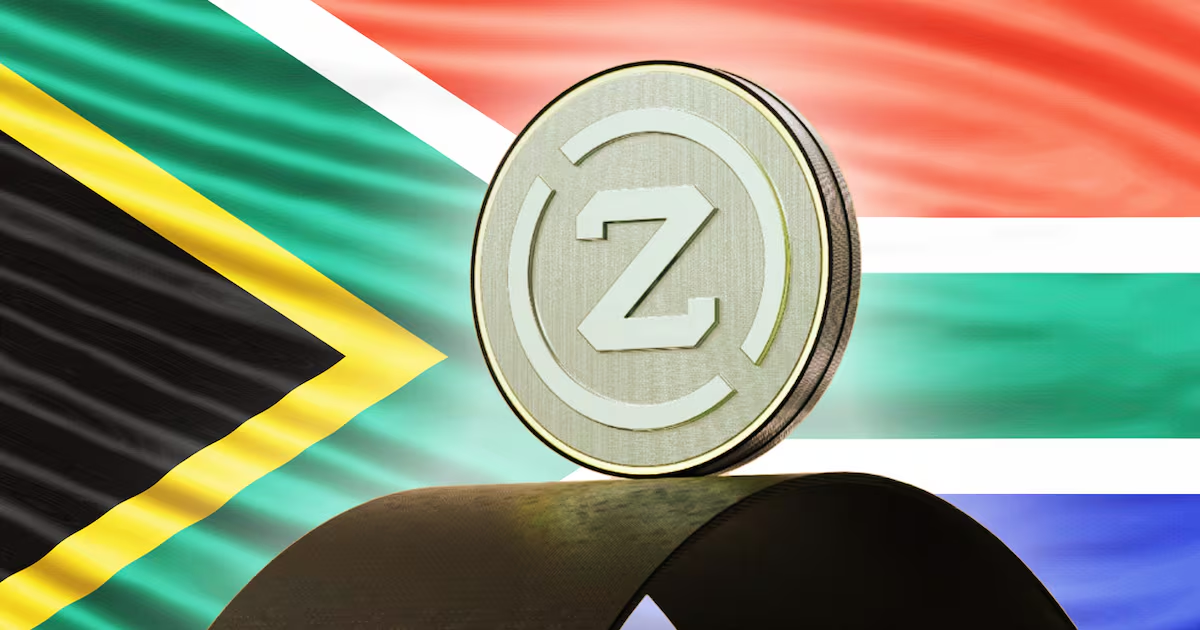
South Africa risks missing out on the surge in the adoption of stablecoins in cross-border trade and investment due to lapses in regulations, warns the CEO of Luno, the country’s largest crypto platform.Luno CEO James Lanigan said while stablecoins have become the payment rails of the modern digital economy, South Africa is lagging behind the rest of the world.He pointed to the draft capital flow management regulations, out for public comment until month-end, as a policy misstep.Under the proposed regulations, South Africa is likely to prohibit businesses from using stablecoins for cross-border payments and repatriating funds. Stablecoins are digital assets pegged to real-world currencies and are leading to a fundamental shift in the architecture of global finance.“Local stablecoins are critical infrastructure to support domestic payments and treasury flows, while dollar stablecoins provide a fast bridge to global commerce and cross-border settlement. Together, they reduce friction, lower costs and make money move more efficiently at home and abroad,” said Lanigan. “It is essential that South Africa move, through thoughtful revision of the draft capital flow management regulations, to unlock the economic growth potential of stablecoins. “Without the integration of stablecoins into the local financial mainstream, South Africa will limit its competitiveness in the modern economic system, falling further behind as the rest of the world upgrades its financial infrastructure.”A rand-backed stablecoin, ZARU, was launched in 2025 in a partnership between Lesaka, Easy Equities, Sanlam Specialised Asset Management, BlockTower and Luno. The draft capital flow management regulations propose a big overhaul of South Africa’s 1961 exchange control framework, moving toward a risk-based system focused on surveillance, illicit flow prevention and crypto asset regulation.Research by British multinational bank Standard Chartered notes that Sub-Saharan Africa emerges as a frontier for local currency stablecoins.The study, released on Thursday, says regulation, infrastructure and trade flows will shape the scale of the market.The study flagged Ivory Coast, Angola, the Central African Republic, Togo, Sierra Leone, Namibia, Ghana, Rwanda and Senegal as among the strongest Sub-Saharan African candidates for local-currency stablecoin development.Dalu Ajene, CEO & head of coverage at Standard Chartered Africa, said, “Stablecoins are becoming infrastructure. The next question is which currencies participate. Digital assets are moving from experimentation to integration into core financial systems.”
Luno warns stablecoin rules could leave SA behind
Stablecoin restrictions may curb South Africa’s role in the evolving digital economy
368 words~2 min read