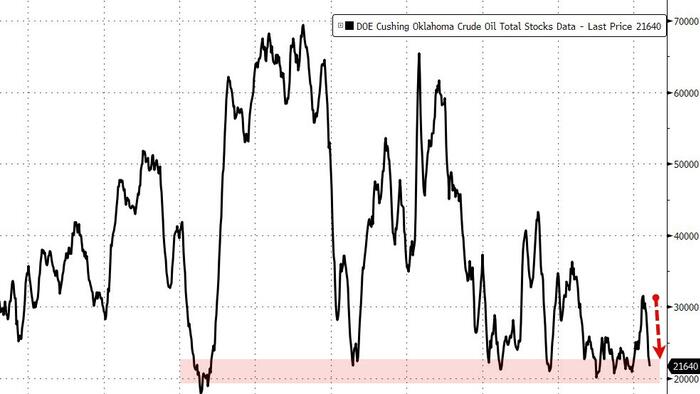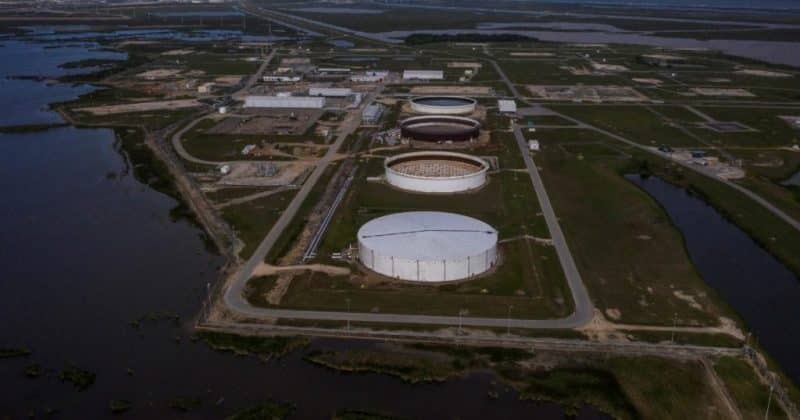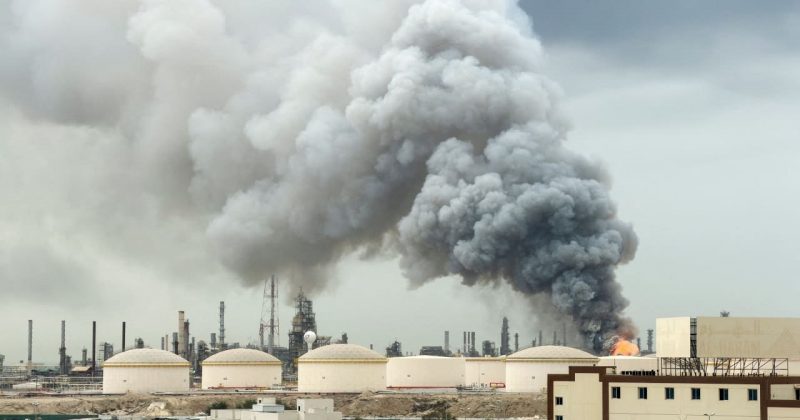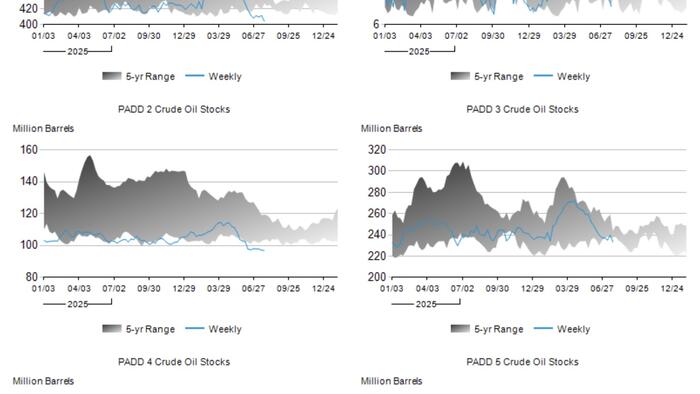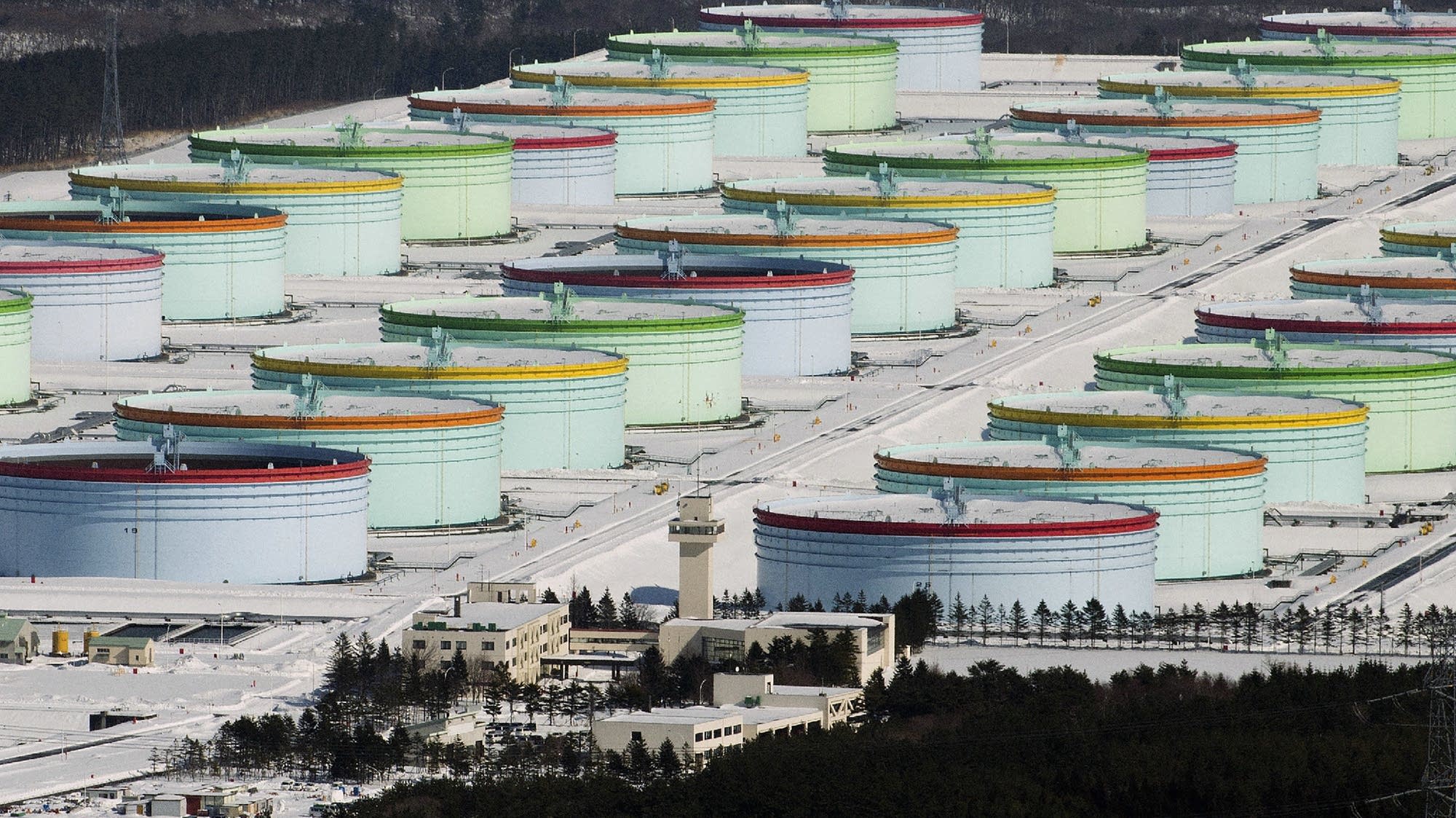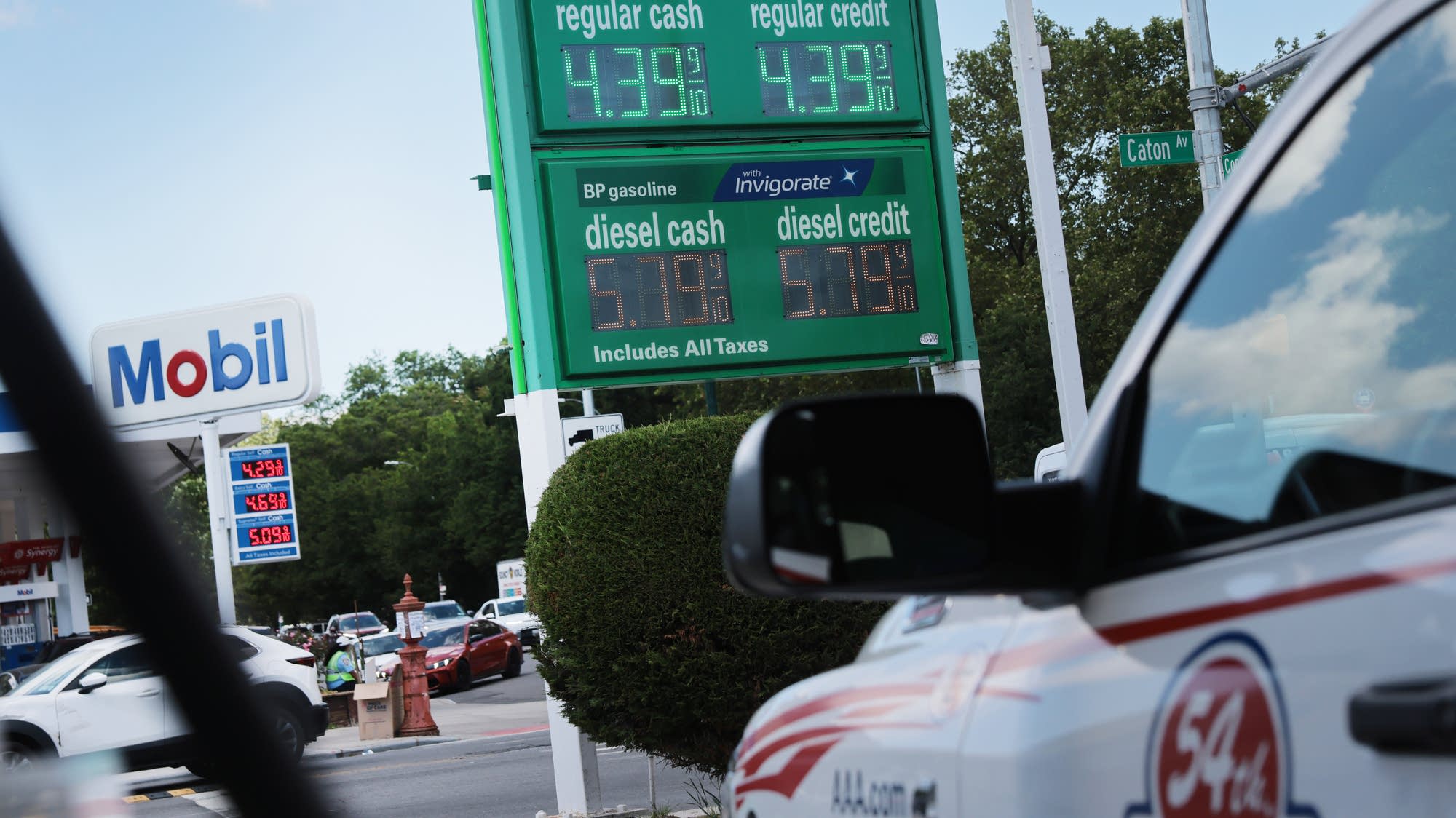
As the war in the Middle East continues, so does the drawdown on U.S. commercial and strategic oil inventories. Crude oil inventories fell another 7.2 million barrels this week, according to the Energy Information Administration. That brings the drawdown to a whopping 79 million barrels since the war began.The country’s still got hundreds of millions of barrels left. But inventories can only get so low before the supply chain starts to break down. Just how long have we got until that happens?One factor to consider is out of all those barrels in our oil inventories, a lot of them just aren’t accessible.“Think about a large storage tank, there's always going to be some oil at the bottom that can't be pumped out,” said Aaron Brady with S&P Global Energy.There’s also the oil that keeps pipes lubricated and storage caverns safely intact. Brady estimated roughly 290 million of the 426 million barrels of oil now in the U.S. inventory won’t actually get used or sold. At the current drawdown rate, he said, “sometime in July is my best guess is when we get into that danger zone where we get close to those minimum operating levels.”Even if the war ended today, it takes a couple months to get the global supply chain back up and running normally.“The hardest part is that it does not feel like we're close to a situation where things start to move back toward normal,” said Dan Pickering, founder and chief investment officer of Pickering Energy Partners. He said as countries deplete their reserves, oil prices have been deceptively not bad.“Folks are like, ‘What do I need to worry about?’ And the issue is every single day that market's tightening, and when you get to the point where it's obvious that there's an issue, it's very hard to fix,” Pickering said.The U.S. is in a very different position than it was the last time it was flirting with oil supply problems in the 1970s, said Hugh Daigle, professor of petroleum engineering at the University of Texas at Austin.“When you had things like, you know, big lines of gas stations, gasoline rationing, reduction of national speed limits to 55 miles an hour, I mean, those are pretty drastic measures,” he said.Today, Daigle said it’s more of a slow-moving crisis. And the main threat to consumers is a drastic change in price.“As we keep drawing down the reserve, you're really limiting your ability to further control the prices that people are paying for refined products,” he said.Which is why all three analysts said oil prices will rise this summer. Pickering said it could go up anywhere from 20% to 50% higher.More about the drain on U.S. oil reservesJune 9, 2026: War in Iran continues to strengthen oil and gas companies' balance sheetsJune 4, 2026: Historically low U.S. oil inventories could mean more pain at the pumpMay 29, 2026: Futures markets expect the price of oil to fall in the medium-to-long term
U.S. crude oil inventories continue to fall since start of war with Iran
The country still has hundreds of millions of barrels left. But inventories can only get so low before the supply chain starts to break down.
492 words~2 min read