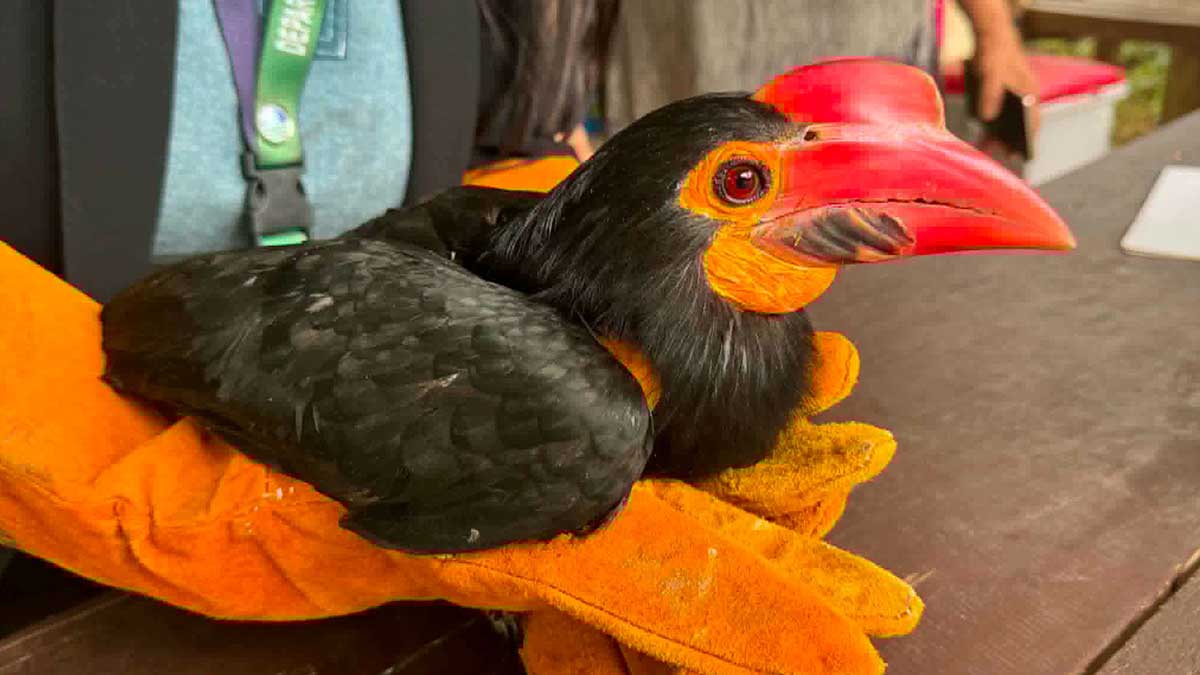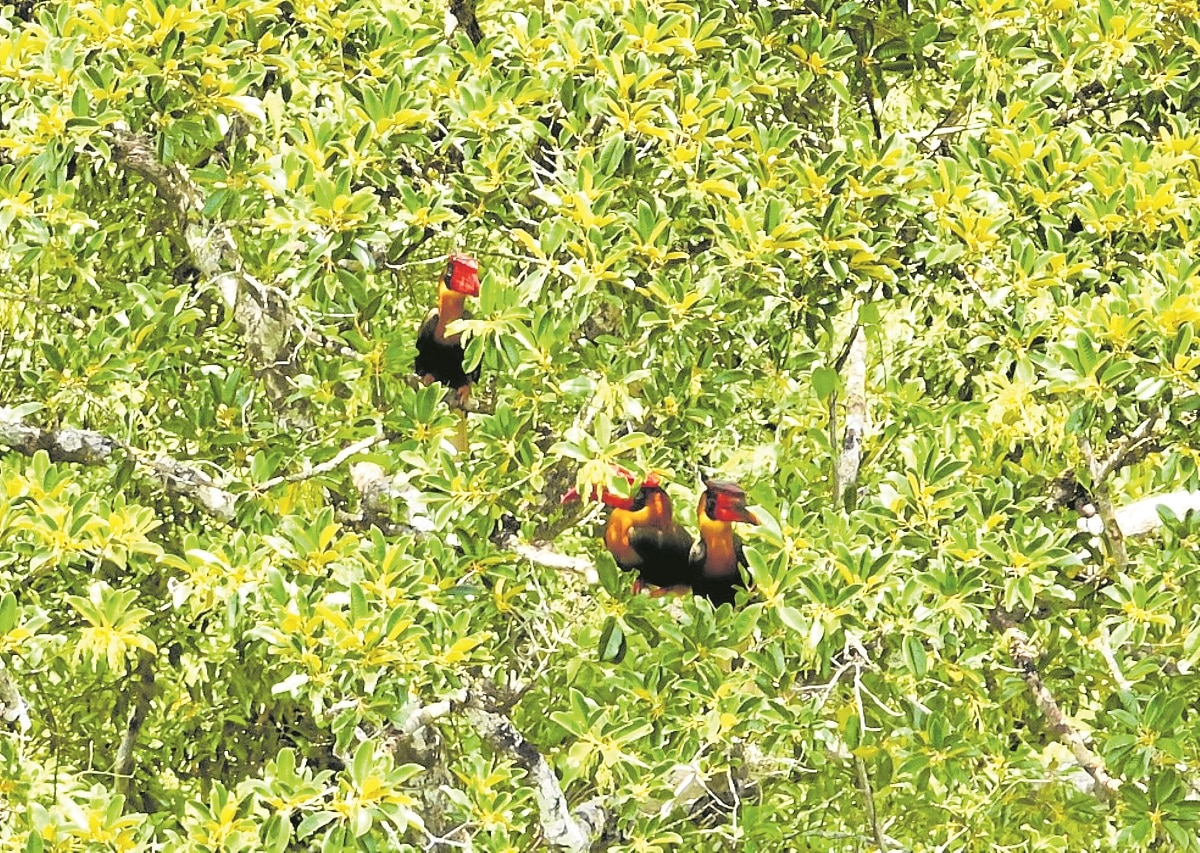
WELCOME SIGHT: These northern rufous hornbills, or “kalaw,” have been documented last month roosting in a section of Bicol Natural Park in the Camarines provinces, raising hopes about the survival of the bird, classified as “vulnerable” by the International Union for Conservation of Nature. —Photo from DENR Bicol
LEGAZPI CITY, Albay, Philippines — Deep within the forests of Bicol Natural Park in the Camarines provinces, four hornbills emerged above the canopy, offering conservationists a rare and encouraging glimpse of a species fighting for survival.
During a wildlife monitoring patrol last month, Department of Environment and Natural Resources (DENR) personnel documented and photographed a family of four northern rufous hornbills (Buceros hydrocorax), locally known as “kalaw,” near the park’s iconic “Mother Tree” in Camarines Norte.
The sighting marks an important milestone for biodiversity conservation in the region, providing direct scientific evidence that the threatened bird continues to thrive within one of Bicol’s largest protected landscapes.
Article continues after this advertisement