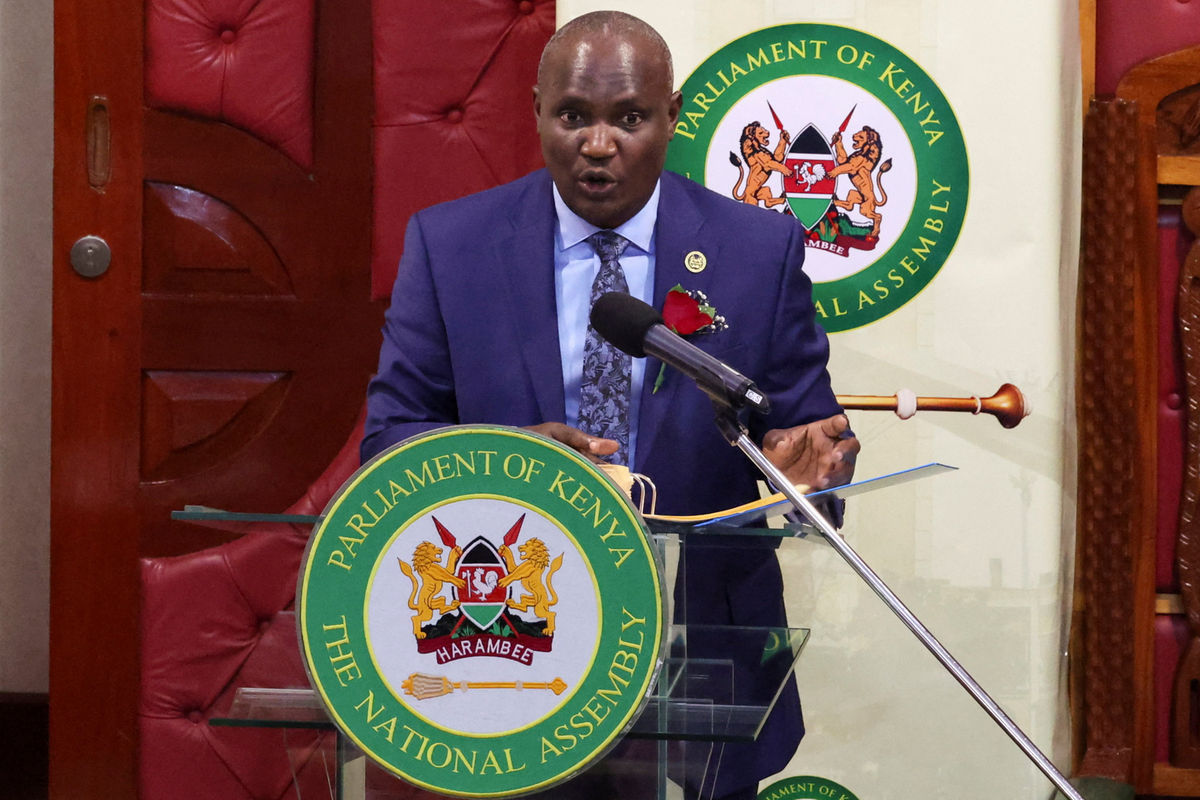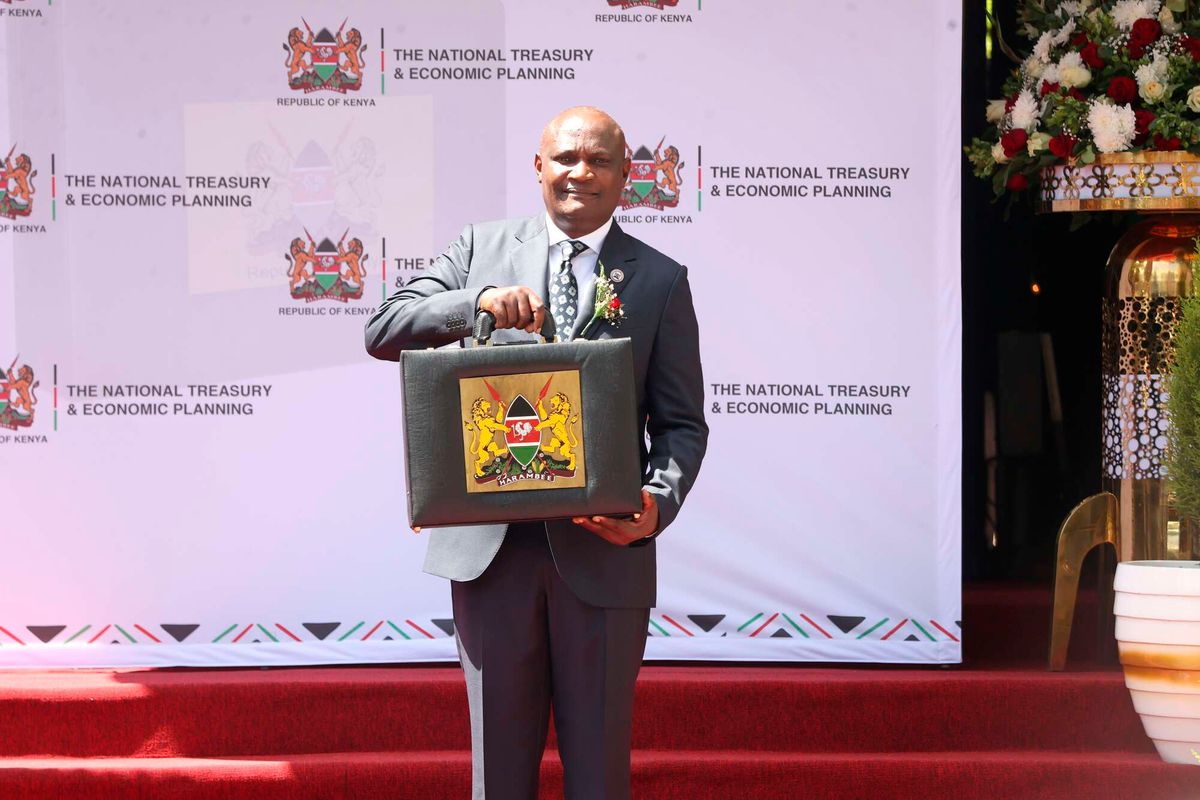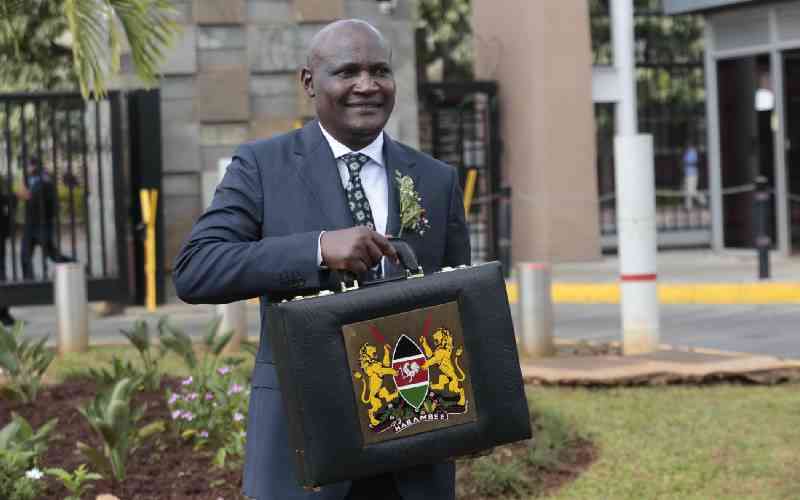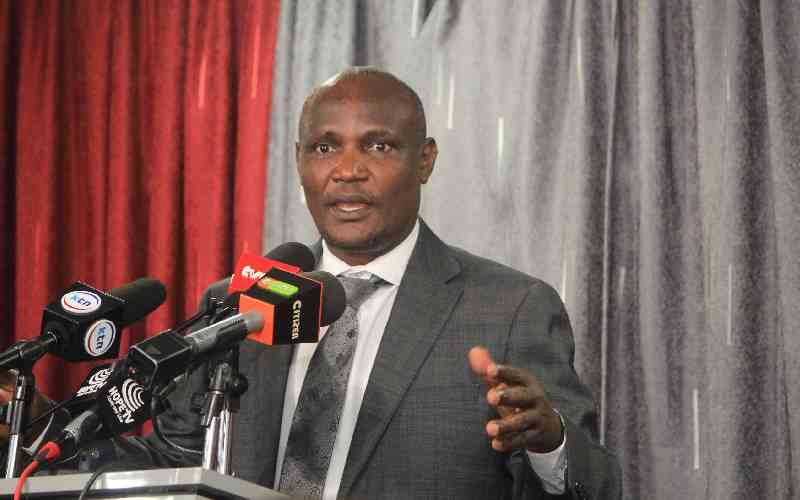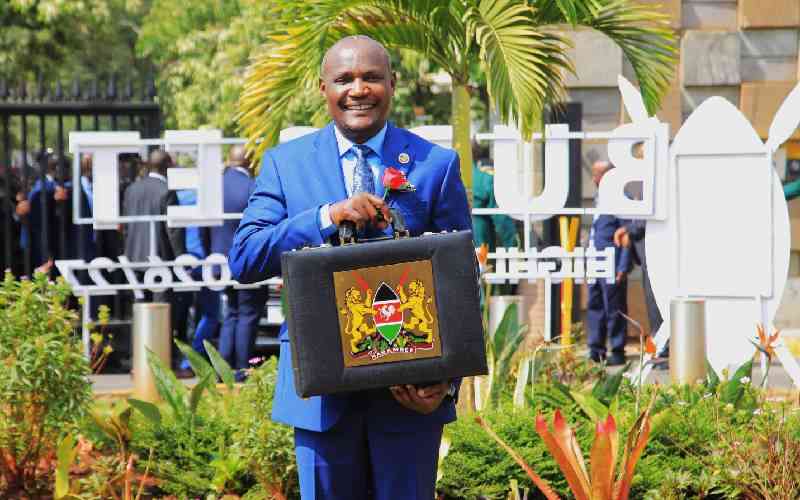
Finance and Planning Committee Chairman Kuria Kimani, National Treasury CS John Mbadi and National Assembly Budget and Appropriations Committee Chairman Samuel Atandi at Parliament Buildings, on June 11, 2026. [Boniface Okendo, Standard]The National Treasury Cabinet Secretary John Mbadi put on a brave face as he presented his Budget statement in Parliament on Thursday, painting a contradictory image of an economy that is on the mend but one that also faces seemingly insurmountable hurdles, both domestic and global. The CS, on the one hand, said the Kenya Kwanza administration was delivering on its promise of growing the economy from the bottom up and has restored macroeconomic stability and strengthened public finances, which have laid a firm foundation for growth. However, Mbadi elaborated on shocks unfolding from multiple directions that could have a crippling impact on the economy.The rising cost of fuel stood out as among the major risks for the economy this year and has already seen the Treasury revise its growth projection.“The outlook for 2026 has been revised down to five per cent from the earlier projection of 5.3 per cent, reflecting the adverse impact of the ongoing conflict in the Middle East on domestic economic activities,” Mbadi told Kenyans in the National Assembly, adding that the impact has already been seen in the inflation rate, which has gone up to 6.7 per cent in May from 5.6 per cent in April and 4.4 per cent. Mbadi also appeared to fall short on delivering what Kenyans had called for during public engagements with the Treasury during the budget-making process.The CS said in his public participation forums that he had wanted the government to lower the cost of essential goods, reduce wasteful spending within government and clamp down on corruption. He further warned the situation could worsen if the situation in the Middle East does not de-escalate. Thus, even as Mbadi maintained that “macroeconomic indicators remain broadly stable", he also acknowledged that “the emerging external pressures continue to impact domestic prices". Other than fuel, other shocks that the economy faces include climate change as well as the public health threat from Ebola. “Domestically, climate-related shocks could disrupt agricultural production and infrastructure, while externally, geopolitical tensions, commodity price volatility, weaker global growth, and tighter financial conditions continue to adversely affect inflation, exports and capital flows,” said Mbadi. Mbadi said over 11,000 health workers would be trained through the National Ebola Incident Management System and a reserve team of 241 experts in epidemiology, laboratory services and emergency response be put on standby. Early in his speech, Mbadi explained his engagements with Kenyans on the budget estimates and the Finance Bill, 2026.The CS said he got a feel of what Kenyans were going through and said he had factored these sentiments. “The message from Kenya across the country… is clear and consistent.
Mbadi admits Kenyans sought to lessen burden but offers little hope
Treasury CS John Mbadi put on a brave face as he presented his Budget statement in Parliament, painting a contradictory image of an economy that is on the mend.
TL;DRAI
Kenya's Finance Bill imposes 16% VAT on digital transactions and 20% withholding on SaaS; growth revised to 5% due to fuel/geopolitical shocks. Tech companies will pass costs to clients; high government borrowing crowds out private financing.
1,106 words~5 min read