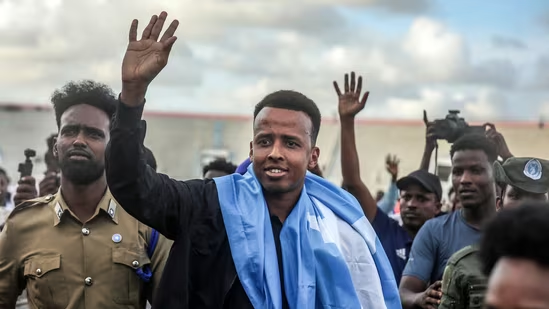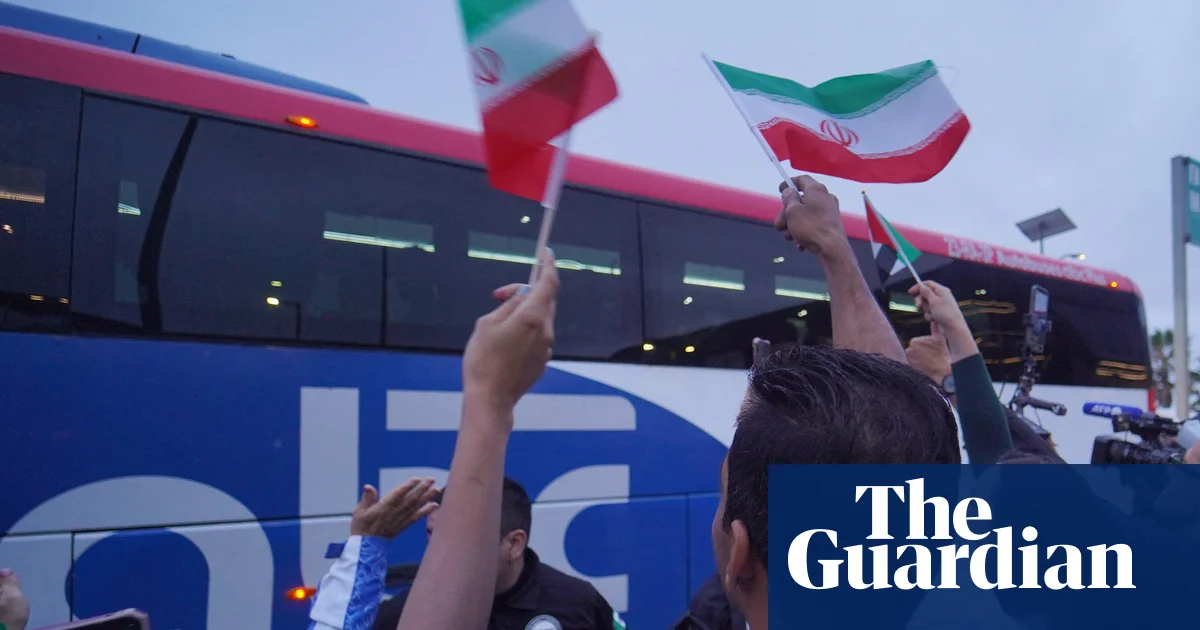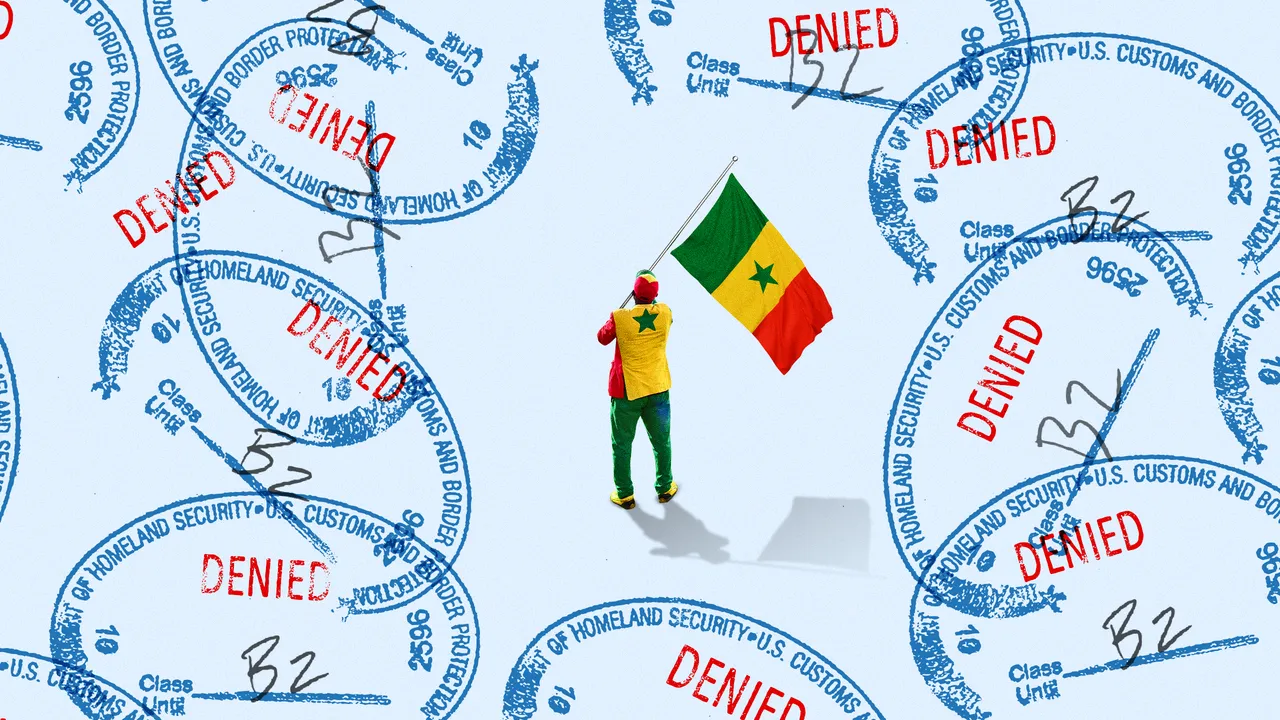
While a star-studded opening ceremony at the Azteca Stadium in Mexico City is the perfect way to start a World Cup across North America, much of the build-up to the tournament has been dominated by visa entry rules to the United States.There have been a series of incidents, including journalists and even a FIFA-backed referee from Somalia, being denied entry. Iran’s national team and “necessary support staff” were issued visas, though Iran’s football federation (FFIRI) said not all of its intended traveling party had been granted visas to travel to the U.S. from Mexico.Travel restrictions into the U.S. (which will host the vast majority of the World Cup’s 104 matches, alongside Mexico and Canada) have been a concern for some World Cup travelers, compounded by long wait times for visa appointments for visitors of certain countries.The FIFA Pass was introduced as an expedited way for fans with tickets to secure visa appointments, but those applicants are still subject to the same stringent vetting, questioning and security clearances required of all people seeking to enter the country.So, what exactly are visa rules?Somali referee Omar Artan’s entry to the U.S. was denied. (Kenzo Tribouillard / AFP via Getty Images)What are the rules around entry into the U.S. during the World Cup?All visitors entering the United States are required to possess certain travel documents, which vary depending on where the visitor is from. Passports must be valid for six months beyond the period of their intended stay, unless they are a citizen of an exempt country.Passport holders from Canada or Bermuda do not require additional authorization and any foreigners from one of the 42 countries that participate in the “Visa Exempt Waiver Program” can apply for Electronic System for Travel Authorization (ESTA). People from all other countries are required to have a valid visitor visa to travel to the U.S. for the World Cup.This is where FIFA Pass comes in. The system creates an expedited pathway for fans with tickets to World Cup matches to secure their visa appointments. U.S. Secretary of State Marco Rubio has stated: “A ticket is not a visa and it doesn’t guarantee admission to the U.S.,” but said those who apply with a ticket could get an interview within “six to eight weeks.” More on the FIFA Pass below.Has there been any loosening of the rules for the tournament?No. Unless you consider the FIFA Pass a “loosening of the rules,” but technically, it is not: While applicants will have access to expedited interviews, they will still be subject to the same vetting, questioning and security clearances as others seeking to enter the country.Although the U.S. government has said all visitors are welcome, they must abide by the same strict policies as anyone visiting the States. In May 2025, Vice President JD Vance said all World Cup visitors must go home after the tournament. “We want them to come. We want them to celebrate. We want them to watch the game. But when the time is up, they’ll have to go home.”What is the $15,000 visa bond — do visiting fans have to pay it?As The Athletic reported in March, fans from several countries participating in the summer’s World Cup are required to deposit up to $15,000 in bond payments to be granted a tourist visa to enter the United States, with FIFA privately pressing the Trump administration to exempt players. Last month, the U.S. State Department announced a policy change that waived visa bond requirements for some participants and ticket holders.The “Visa Bond Pilot Program” introduced by the Trump administration requires nationals from 50 countries to post a bond of $5,000, $10,000 or $15,000 to be granted a tourist visa to enter the country. These payments were per person, rather than per traveling party, which means a parent traveling with two children, for example, must make three separate bond payments. This threatened to impact several nations who have qualified for the World Cup — Algeria, Cape Verde, Senegal, Ivory Coast and Tunisia.Did that policy change help fans? Officials have since clarified the bonds are being waived for qualified fans who bought World Cup tickets and opted in to FIFA Pass by April 15. That cut-off date is pertinent because it appears to significantly limit the number of beneficiaries — before April 15, many fans may have been deterred from buying tickets or signing up for the FIFA Pass system if they were under the impression they would have to pay up to $15,000 in bonds.What happens if you are denied a visa for the U.S.?If you are denied a visa, in most cases you will be notified of which section of the law applies to your denial, as outlined by the Department of State website. Some denials can be overturned, but that takes time. In some cases, a person may reapply for a new visa in the future, though that would require submitting a new visa application.Which teams have been affected by the visa controls?There has been a string of high-profile visa-related incidents as teams started arriving in the United States for their training camps. The most visible case relates to the Iran national team, which recently relocated its base camp from the U.S. to Mexico.Iran’s soccer team and “necessary support” staff were issued visas before the World Cup, after facing months of uncertainty over travel and security arrangements for the tournament since war began on February 28, when the U.S. and Israel targeted Iran with military strikes. Some federation officials with alleged ties to the country’s Islamic Revolutionary Guard Corps were denied entry to the World Cup draw in Washington, D.C. in December. Visa issues also prevented Iranian soccer executives from attending an Asian Football Confederation (AFC) congress meeting in Canada in April, the body’s general secretary said at the time.Iran’s soccer team is set to play their games in the U.S., but will be based in Mexico. (Orhan Cicek / Anadolu via Getty Images)What was the impact of the travel bans imposed?Travel bans introduced by the Trump administration impact nationals from four World Cup-qualified countries who might want to attend the tournament in the U.S.In December, the U.S. government imposed partial travel bans, citing “screening and vetting deficiencies,” affecting fans from Senegal and Ivory Coast. Iranian and Haitian nationals already faced travel restrictions that the Trump administration introduced in June 2025, saying the policy was to “protect national security.”While it has been stressed players would be allowed entry for the World Cup, no similar exemptions exist for fans if the travel bans impact their potential arrivals to the U.S. There are certain exemptions unrelated to the World Cup that exist for certain countries, like, in Iran’s case, exemptions for dual citizens and those with a passport from a non-designated country.The December proclamation suspends entry into the U.S. for nationals of Ivory Coast and Senegal, both as immigrants and non-immigrants, including in the visitor category for business and tourism — the latter of which would be required to attend the World Cup.A U.S. State Department spokesperson previously told The Athletic: “We are implementing the president’s directive to secure U.S. borders and protect American communities and citizens.”Haiti and Iran’s three group-stage fixtures all take place in the U.S., while Senegal and Ivory Coast each have two games in the U.S. and one in Toronto, Canada.Is this just a U.S. issue, or does it also affect Mexico and Canada?This is largely an American issue, as the administration has overhauled the country’s immigration system since President Trump entered his second term. However, as mentioned, executives from Iran could not attend a meeting in Canada, indicating visa issues are not exclusive to any host nation.Were there issues around visas at Qatar 2022?The obvious differences between the 2022 World Cup and this summer are the tournament’s geographical footprint and affordability.There was also less demand for the Qatar edition compared to this summer’s spectacle. In Qatar, you got a Hayya card, which granted you entry, with a match ticket or accreditation.That has never been the case for the 2026 edition, especially with the complexities of the tournament being hosted between three nations — meaning three entirely independent visa processes.The 2022 World Cup was held in Qatar. (Catherine Ivill / Getty Images)What has FIFA said about visa issues for this World Cup?FIFA president Gianni Infantino has continually claimed that this summer will be the most diverse edition of the FIFA men’s World Cup. It certainly will be the largest.“It’s important to clarify this,” Infantino said last year. “There is a lot of misconception out there. Everyone will be welcome in Canada, Mexico and the United States for the World Cup. We are working exactly for that.”That public stance has, more or less, remained the same.In his news conference on the eve of the World Cup, Infantino said he had no regrets about the U.S. co-hosting the World Cup, despite the visa issues. Speaking about Somali referee Omar Artan being denied entry, Infantino said: “It is unfortunate what happened to Omar, the referee from Somalia. But again, we don’t control everything. We try, we’ll discuss, we’ll speak, we’ll see.”He also acknowledged in the same press conference that “you cannot organize an event of such magnitude in a perfect way.”
The World Cup and U.S. visas explained: Entry rules, travel bans and FIFA’s position
What are the rules? Which countries are affected most? What are travel bonds? Has the FIFA Pass helped?
1,534 words~7 min read