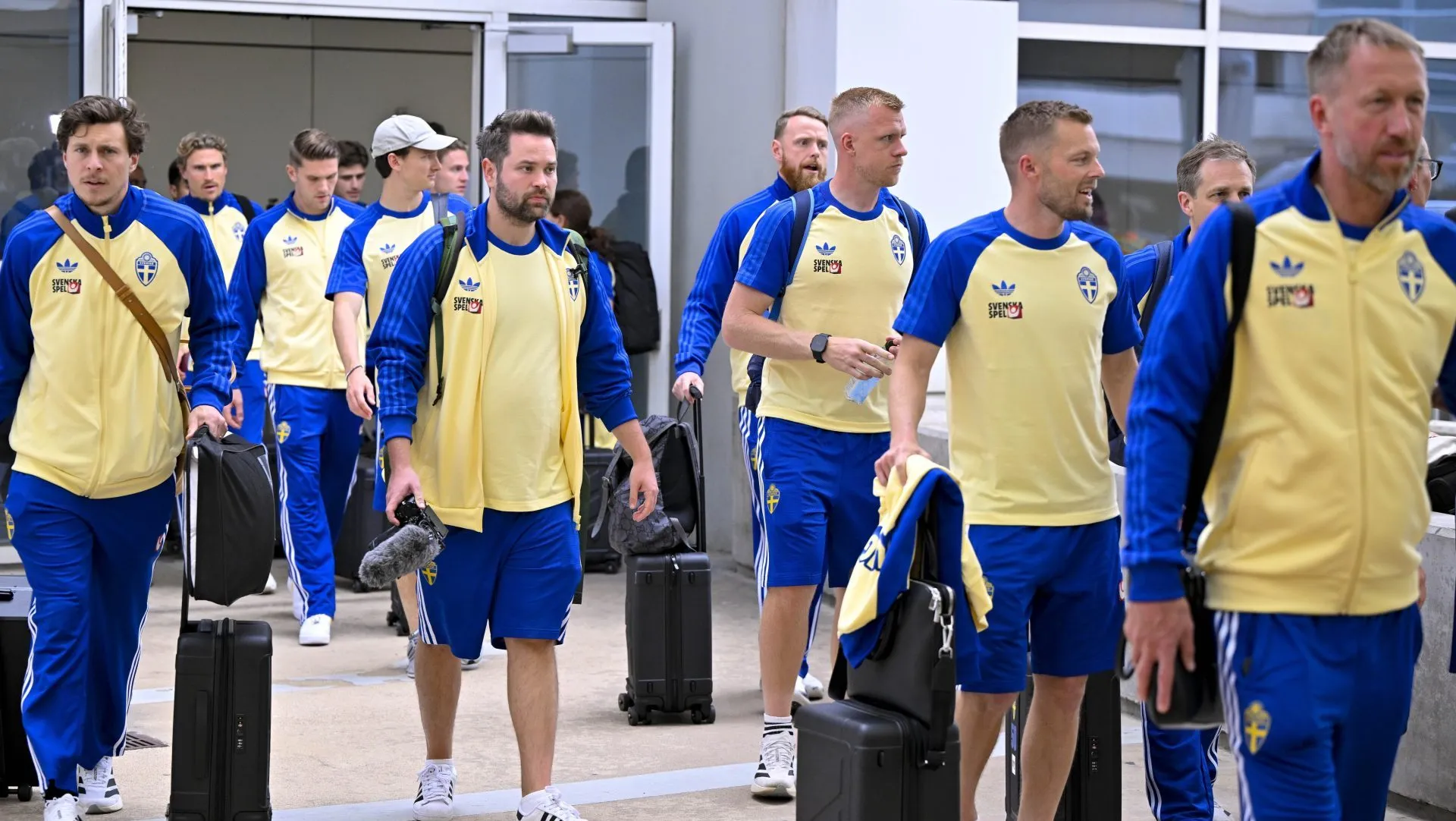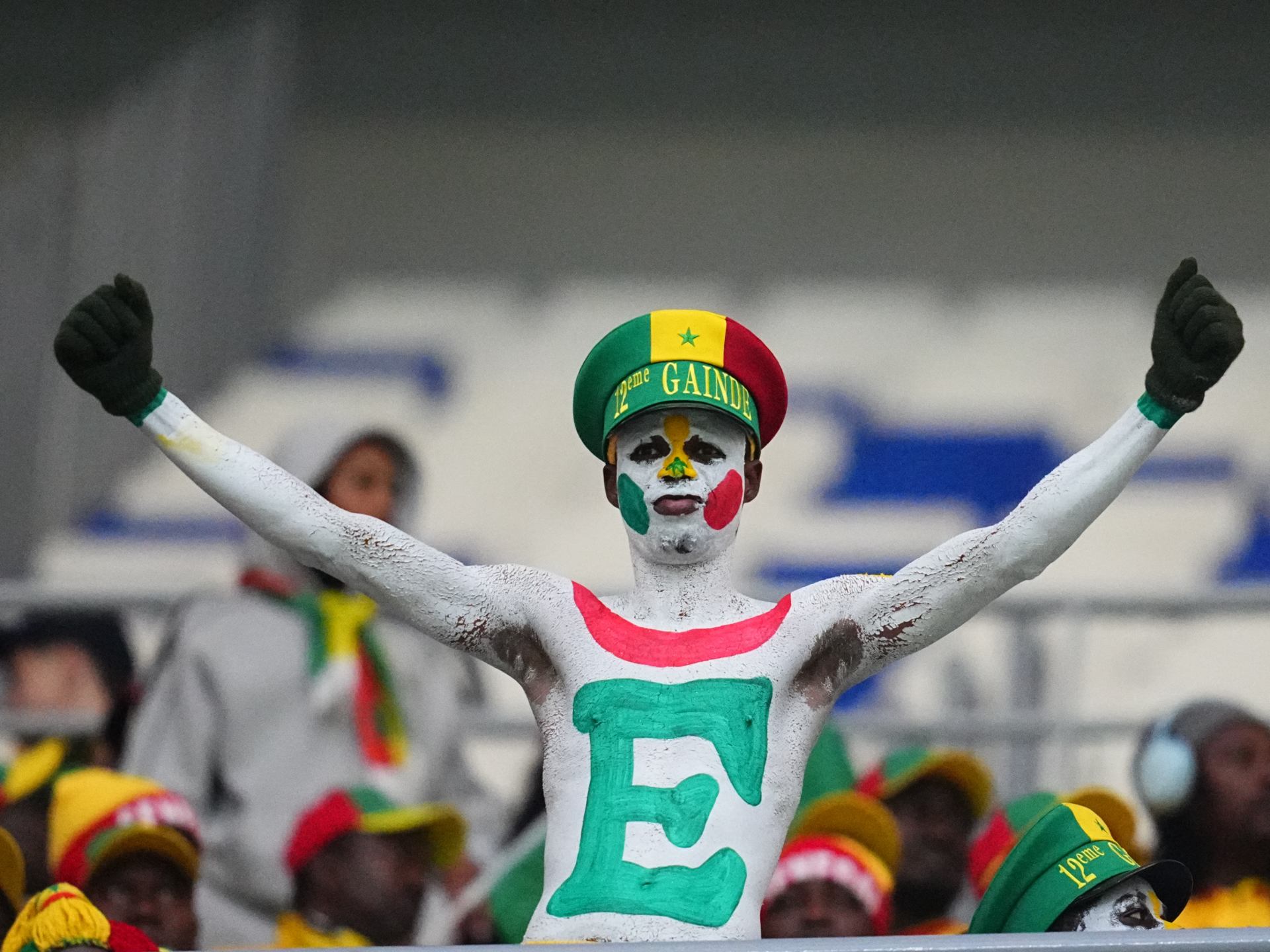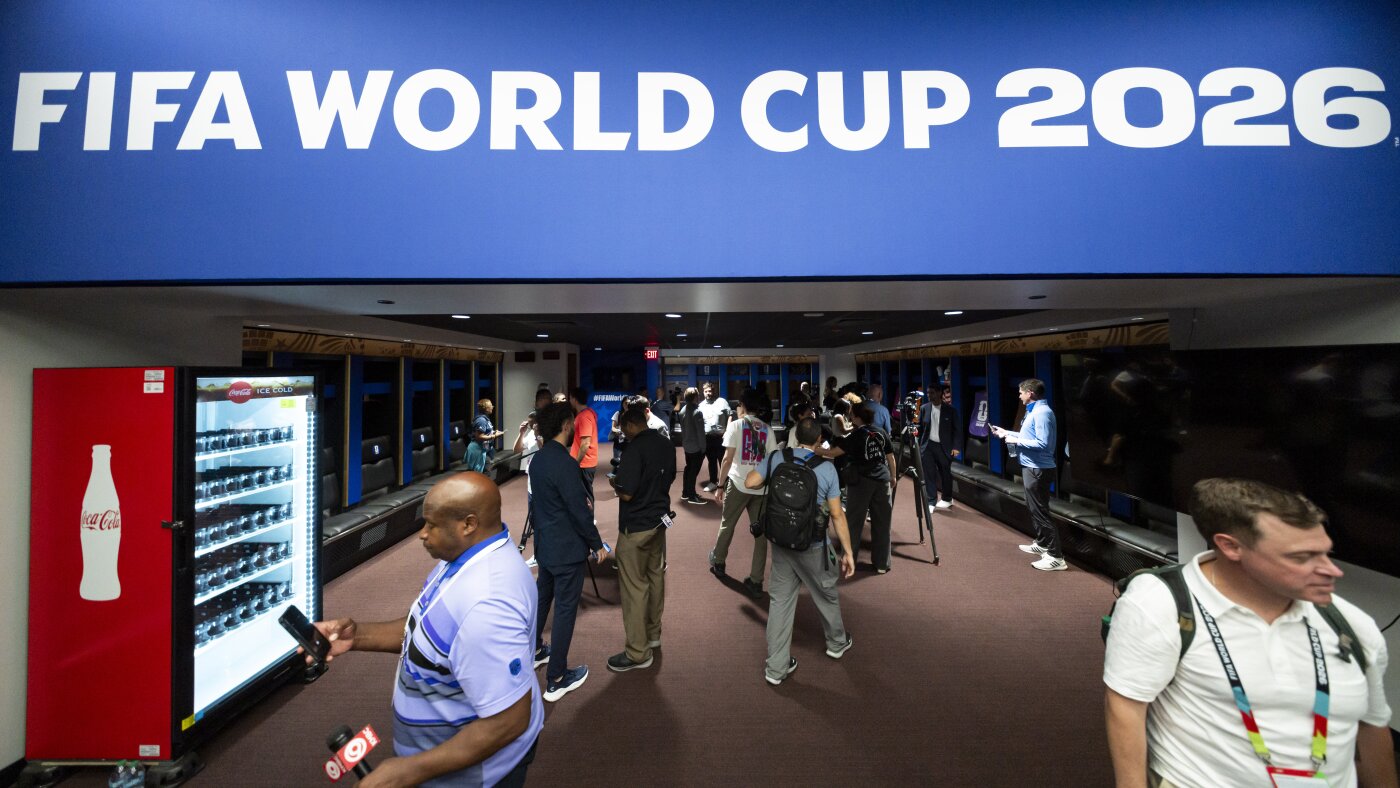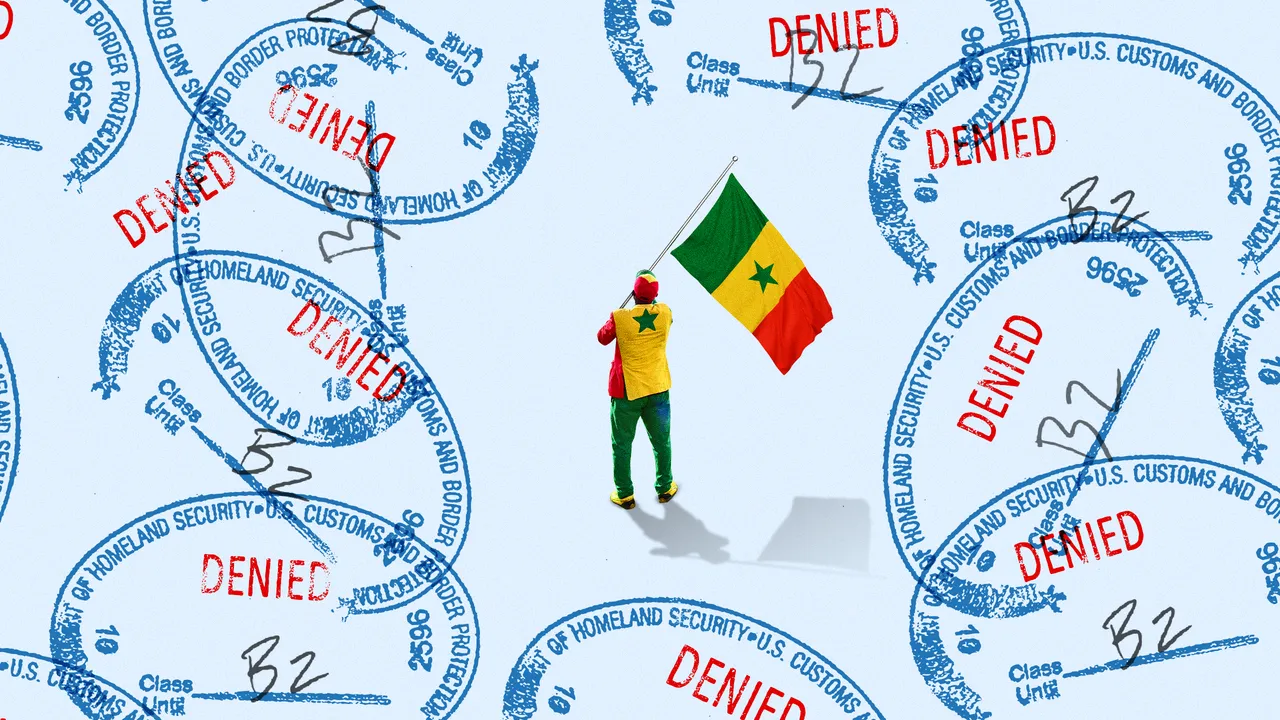
Bara Sow’s first time at the World Cup was in 2018, in Russia. He spent ten days watching his beloved Senegal fall short of advancing past the tournament’s group stage. He went again in 2022, watching games in Qatar for three weeks until Senegal was eliminated in the round of sixteen. He described his love for the World Cup with reverence. “The passion, the people, everything,” Sow, a thirty-nine-year-old civil servant from Dakar, told me. “This sport unites people.”After Senegal qualified for this year’s World Cup, Sow planned to attend. Led by the dazzling winger Sadio Mané and the steely goalkeeper Édouard Mendy, Les Lions de la Teranga had won the 2022 African Nations Championship and finished as runner-up to Morocco earlier this year in the bigger Africa Cup of Nations, when a controversial ruling overturned Senegal’s initial victory after the team briefly walked off in a protest late in the final. Just eight countries have won the World Cup, and none outside South America or Europe has ever reached the final, but some are getting close. Cameroon became the first African team to reach the quarterfinals in 1990, and Senegal beat France, the defending champion, en route to the quarterfinals in 2002, the same year South Korea became the first Asian team to reach the semifinals. During the last World Cup, Morocco became the first African team to make it that far. For Sow and other fans from Senegal, everything seemed to be aligning for an exciting 2026 World Cup. There was just one problem: the event’s primary host, the United States, has banned tourists from Senegal. Sow applied for a tourist visa, paying a hundred-and-eighty-five-dollar nonrefundable processing fee, and was rejected within a month, he said. “Qatar was very easy, Russia also not very difficult,” he said. “U.S.A. is very difficult.”It’s the first time a World Cup host has blocked visitors from participating countries en masse. Iran, Haiti, and Côte d’Ivoire are also on tourist travel bans. Though Canada and Mexico are co-hosting, seventy-eight of a hundred and four matches take place on American soil. Every team was guaranteed at least three World Cup matches in the group-stage round-robin that determined who advanced to the knockout rounds. FIFA booked every Iran and Haiti group-stage match in the U.S. In comparison, Senegal was lucky. Only its first two group-stage games were in the U.S. Its third was just over the border, in Toronto. Sow booked a ticket, a flight, and a hotel for a trip to the most expensive World Cup in history.In the months leading up to the World Cup, the Trump Administration has supplied plenty of reasons for fans to worry about visiting the U.S. The President has fully or partially barred tourists from nearly forty countries, disproportionately targeting visitors from Africa, Asia, and South America. Customs officers have searched through travellers’ phones and denied entry based on political expression (U.S. officials have denied that these searches are politically motivated). ICE agents have detained people seemingly at will, and sometimes killed them. The war with Iran has driven up the costs of nearly everything—and, on top of that, FIFA’s “dynamic pricing” model has made tickets more expensive than at any previous World Cup. It was only natural to wonder: Who would actually sign up for this?Millions of people, it turned out. Over the tournament’s first three weeks, I spoke with more than a hundred fans from more than a dozen countries, at matches in five cities across all three host nations: law clerks from Brazil, software developers from Ecuador, business executives from Ghana, engineers from Norway—soccer lovers with the means to buy into an experience that many described to me as “once in a lifetime.”Some fans planned their trip around a single game. Marwan Bardoukh, a twenty-three-year-old delivery driver from the Netherlands with Moroccan immigrant parents, paid a thousand dollars for a ticket to see Morocco take on Brazil in New Jersey, travelling with three childhood friends to New York City. “It’s just like the movies,” his friend Anwar Oubari told me, as we rode a New Jersey Transit train to the stadium. The Morocco match happened to fall just a few hours before Game 5 of the N.B.A. Finals, and the moment the final whistle sounded at the New Jersey stadium, sealing a 1–1 draw, the group rushed to make it back to Manhattan in time to catch the Knicks clinching the championship, and the citywide eruption that followed. Three days later, they flew home, with memories of the city that another friend, Ibrahim Quorsane, said “exceeded my expectations.”Other fans intend to stay as long as their team remains in the tournament. Olav Odegaard, a twenty-seven-year-old engineer from Norway, said that he told his boss, a fellow soccer fan, “I’m going to the World Cup. What are you gonna do?” He arrived in New York for Norway’s second group-stage game with just three nights booked at his hotel, ready to make a beeline for Boston for the third game, then head wherever the team landed in the next round. Gideon Obeng, a thirty-three-year-old Ghana fan who works remotely in sales, said he had “put everything in place to be here as long as I can.” He booked a three-week trip to Toronto, Boston, and Philadelphia for Ghana’s group-stage games, and, when the Black Stars stunned England in a 0–0 draw, securing a spot in the knockout stage, he extended his trip for another week, with hopes of staying even longer.Others I spoke with, despite being high earners in their home countries, struggled to afford the trip. Cédric Higel, a thirty-two-year-old data scientist from France, said that he’d been saving up for three years, expecting tickets to cost maybe five hundred dollars, not the thirteen hundred that he ultimately paid to see his team’s first game. The luckiest travellers have relatives who live in the cities hosting their team’s matches. The tri-state area has the highest concentration of Ecuadorians in the United States, and Edwin Hernandez, a twenty-seven-year-old software developer from Quito, stayed with relatives in Connecticut, commuting to Ecuador’s matches in Philadelphia and New Jersey. He opted to take a bus to those cities instead of a train, used public transit, and frequented fast-food restaurants. “Keep this as cheap as possible,” he told me, explaining that he was the first in his family with enough money to afford the luxury of attending an international event like the World Cup. “I don’t have any other responsibilities. No kids,” Hernandez said. “This is the right time to spend money on this.”Hernandez travelled alone, but the moment he arrived in Philadelphia for Ecuador’s opening match, he saw yellow jerseys everywhere, filling bars, lining up for restaurants, taking selfies beside the Rocky Balboa statue. One fan draped Rocky in an Ecuador jersey. After the game, a disappointing loss to Côte d’Ivoire, some Ecuador fans asked their Ivorian counterparts to swap jerseys, mimicking a post-match tradition among players. But, because of the U.S. visa ban, Ecuador fans far outnumbered those from the opposing side. Outside the stadium after the match, as a parade of yellow streamed out to the parking lots, a group of teen-agers hoping to trade their Ecuador jerseys waited near the gates, scanning for orange.The visa issue loomed over the tournament’s early weeks. A FIFA referee from Somalia was denied entry at the Miami airport; in a statement, the U.S. government cited “association with suspected members of terror organizations.” Iran’s team, whose base camp was in Tijuana, had to fly into Los Angeles the day before matches and out again right afterward, because the U.S. had limited their visa eligibility; eleven staff members were denied visas entirely. Michel Kuka Mboladinga, a Congolese fan famous for dressing as Patrice Lumumba and posing, motionless, like Lumumba’s Kinshasa statue throughout D.R. Congo’s matches, was given a visa to travel to Mexico for one of his team’s games after meeting the country’s quarantine requirements amid the Ebola outbreaks in his homeland, but was denied a U.S. visa for the next match. After holding mighty Spain scoreless in Atlanta, Josimar José Évora Dias, better known as Vozinha, Cabo Verde’s forty-year-old goalkeeper, revealed that his mother couldn’t attend because of “the money we had to pay” for a visa; Cabo Verde is one of five African countries in the World Cup whose citizens must submit a bond of as much as fifteen thousand dollars in order to receive a visa, and though the U.S. waived it for ticket-holding fans a month before the tournament, that was too late for those who had decided not to apply because of the cost. After Vozinha drew attention to his mother’s plight, U.S. officials intervened to ensure she made it to the next matches.But other anxieties Americans held about this World Cup haven’t come to fruition. Public transportation has mostly been smooth. Spectators have, according to FIFA, filled the stands at every match. Immigration agents haven’t stormed into host cities. Paola Mendoza, an organizer for No ICE in the Cup, an advocacy group that campaigned against the presence of immigration agents at the event, had worried that the World Cup would be marred by fear and violence. Instead, she told me, “what we’ve seen since is that the people haven’t allowed that to happen. We’re seeing moments of kindness, community relief, safety and joy and connection, and that’s what this world desperately needs.”Cultural exchanges have gone viral: Brazilian children dancing to Scottish bagpipes, Mexico fans serenading a young Japanese birthday girl with “Las Mañanitas,” a D.R. Congo fan singing his country’s national anthem while surrounded by Colombia fans who cheered him on. Outside stadiums before games, fans from competing nations often pose for photos together, holding up their respective flags.That made Siahou Soumahoro, a fifty-year-old Ivorian immigrant living in Philadelphia, a hot commodity when she arrived at the stadium for the match between Côte d’Ivoire and Ecuador. Amid the growing mass of yellow shirts outside the entrance gates, she was the first in Côte d’Ivoire colors to arrive. Within minutes, a line of Ecuador fans formed around her to request a picture. Other Côte d’Ivoire fans found the same as they trickled in. Youssouf Bam, fifty, the vice-consul at the Ivorian Embassy in Dublin, quickly drew a crowd, exchanging playful trash talk as he shook hands and smiled for cameras, loudly predicting that his team would come out on top. When a pack of Ecuador fans gathered to cheer in front of a television camera, Bam slipped into the crowd, waving his flag and chanting for his team. He told me that he feels a duty to make up for all the Ivorians who aren’t able to get to the U.S. “We have to chant twice as loud,” he said. “That’s why I’m shouting.” Bam said that five thousand people from Côte d’Ivoire had applied for U.S. tourist visas, and all had been rejected. “But what can we do?” he said. “We make as much noise as we can.”At three matches in the U.S. that featured either Côte d’Ivoire or Senegal, I spoke with dozens of those teams’ fans, and couldn’t find a single person visiting from those countries. Instead, I spoke with first- and second-generation immigrants who had travelled in from across the United States. Mamoune Mbaye, a thirty-year-old UPS driver who grew up in Senegal and now lives in Atlanta, said he flew up to New Jersey for two separate day trips to avoid missing work. A group of college students, who had emigrated from Côte d’Ivoire as children, drove to Philadelphia from the Bronx neighborhood where they grew up. A pair of twenty-three-year-old women from Senegal, who now live in Boston, took a 2 A.M. train to arrive in Manhattan in time to catch the New Jersey Transit express to the stadium.I also attended that game, with Senegal taking on a star-studded French side. The team’s supporters filled a few compact sections, islands of green drowned out in a sea of blue Kylian Mbappé jerseys. It was a stark contrast from Senegal’s showing four years ago in Qatar, when the team’s supporter group, Le 12ème Gaïndé, marched into the stadiums with painted chests, a drumline, and non-stop singing and dancing.Though a pair of goals by Mbappé ultimately sealed France’s victory, Mohamed Ndaw, a thirty-three-year-old from Jersey City whose father had emigrated from Senegal, told me that the game was still “one of the best experiences I’ve ever had.” He described the small but fervent supporter section as a welcoming community. “Everybody was starting up a conversation with you. I was hugging strangers during the game,” he said.Ndaw had paid six hundred dollars for the ticket, and didn’t regret it. But he decided against attending the next match, against Norway, preferring not to be surrounded by people cheering his team’s misfortunes. “Since there weren’t many Senegalese at the game,” he told me, he wanted to watch it with others who shared his allegiance. And there were plenty of options for Ndaw to connect with Senegal’s New York diaspora. Block parties shut down streets in Harlem. At a pre-match face-off in Times Square, hundreds of Senegal and Norway fans, including Odegaard, danced to one another’s music; “both Norwegian and Senegalese people, we love to party,” Odegaard said. Ndaw eventually opted to attend a “fan zone” in Newark with big outdoor screens, certain he’d find more Senegal green than Norway red.Every sports fan faces the same question: How much are you willing to pay for a priceless experience, when there’s a chance you will face heartbreak instead of bliss? After Ecuador’s disappointing draw against Curaçao, against which it had been heavily favored, Hernandez reëvaluated his plans. Ecuador played Germany next, and it needed to beat the four-time World Cup champions to have any chance of advancing to the knockout stage. He had paid a thousand and thirty-five dollars for a ticket to the game. In the gloomy late-night hours after the Curaçao draw, Hernandez “acted on impulse,” as he described it, and put his Germany ticket up for sale. When he woke up “with a clear head,” he said, he rushed to cancel the listing, but it was too late. Someone had already snagged the seat, for fifteen hundred dollars. “And now I’m regretting it,” he texted me, the morning of the match.Filled with seller’s remorse, Hernandez searched for a ticket to the game, but he couldn’t find anything on the resale market for the initial price that he’d paid. Then he spotted a Facebook post offering a ticket for seven hundred dollars. He paid half up front as a deposit, but the seller didn’t transfer the ticket and, later, blocked him on social media. “Now that I lost that money, I’m trying to get a ticket a little bit cheaper,” he told me the morning of the match.That evening, as the game began, I hadn’t heard from Hernandez. When Germany scored two minutes in, Ecuador’s hopes seemed lost. At this point, the team hadn’t scored a single goal all tournament. But La Tri equalized seven minutes later, and then, in the seventy-seventh minute, Gonzalo Plata delivered salvation with a score that Ecuador fans will talk about forever. It was a magical scene in the stands—group hugs, tears of joy, faces to the heavens, utter rapture. My heart sank at the possibility that Hernandez had missed the party.Minutes after the game, Hernandez texted: a photo of him in the stands, holding up a banner bearing the face of his favorite player, Enner Valencia. “So despite everything, I lived it,” he said. “The money is something you can recover, but the experience is unforgettable.”The same might be said by the fans who saw Congo stymie Portugal, Cabo Verde deadlock with Spain, or Haiti blast in two goals against Morocco. Any concerns that expanding the tournament to forty-eight teams would bring lopsided outcomes evaporated as underdog nations defied betting odds again and again. Of the thirty-two teams that qualified for the knockout stage, nine are from Africa, more than the number of teams from Asia and South America combined, and just four fewer than Europe.As the World Cup’s group stage reached its crescendo, Sow arrived in Toronto, eager to join the festivities. On the afternoon of Senegal’s final group-stage match, against Iraq, he joined other Senegal fans at a park, for a march to the stadium. Sow felt nervous. Les Lions had underperformed in the group stage, teetering on the verge of elimination. To reach the knockout round, the team needed to win by a wide enough margin to exceed the goal difference of other teams competing for the few remaining spots. At the park, Sow paced with his hands behind his back. Anticipating that he wouldn’t have the stomach to eat during the match, he swung by a pizza joint for a slice and a milkshake. But, once the singing started, he seemed to loosen up, walking at the front of the pack and raising his phone to capture the moment. A crowd of Iraq fans, staging their own rally, greeted them outside the stadium. The sides went back and forth, trading songs in their native tongues, and friendly taunts in English.The match was everything Senegal fans could have wished for: an early score, an Iraq player disqualified, and then a second-half explosion of spectacular goals to secure a 5–0 victory and passage to the knockout stage. A showdown with Belgium awaited. But Sow had a flight back to Dakar before then. Senegal’s next match, and any that followed, would be in the U.S. ♦
How Tourists Are Experiencing Trump’s World Cup
Ahead of its co-hosting duties, the U.S. imposed strict travel restrictions on dozens of countries, including four participating in the tournament. Here’s what millions of visiting soccer fans encountered on their American vacation.
2,926 words~13 min read