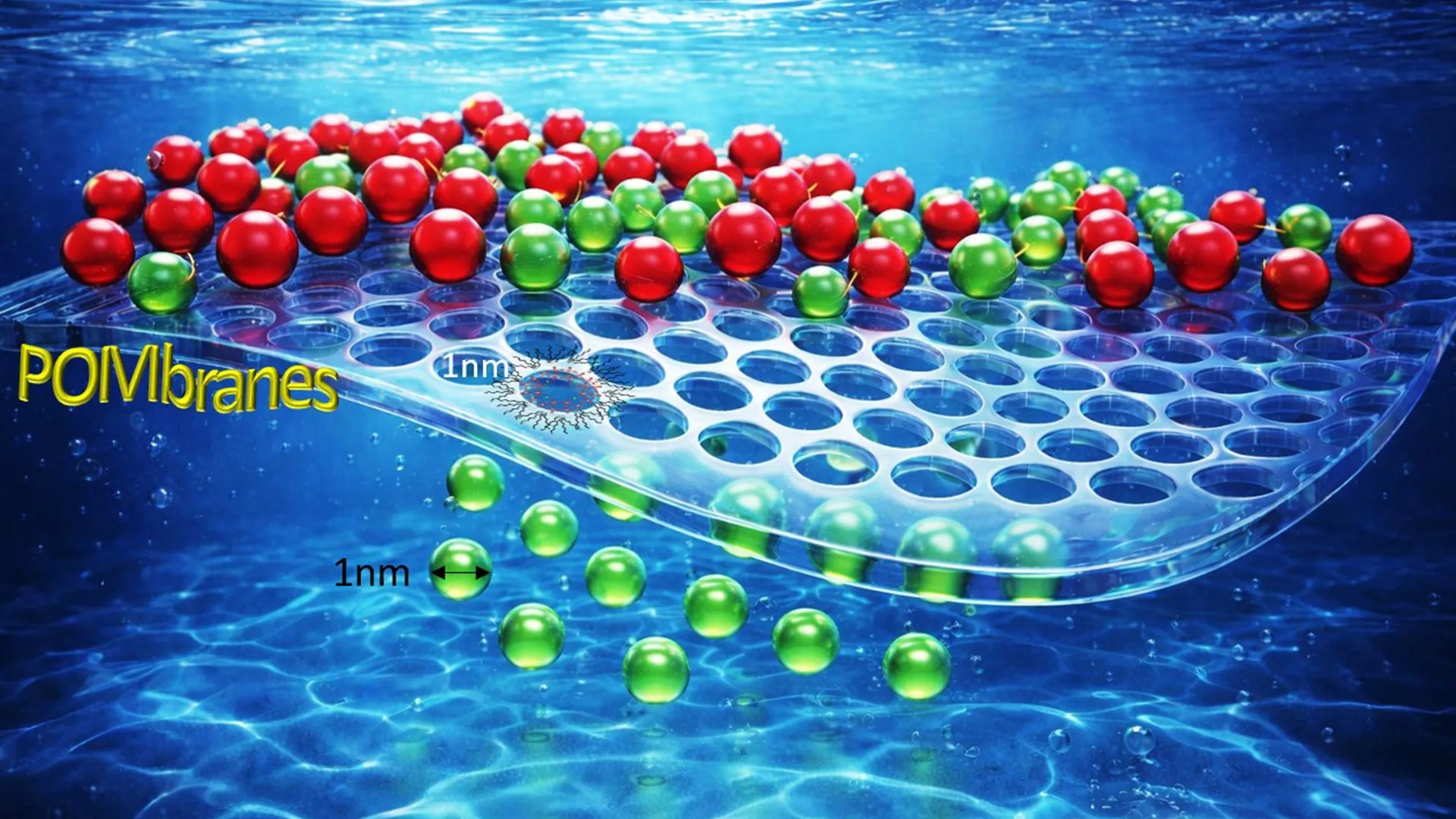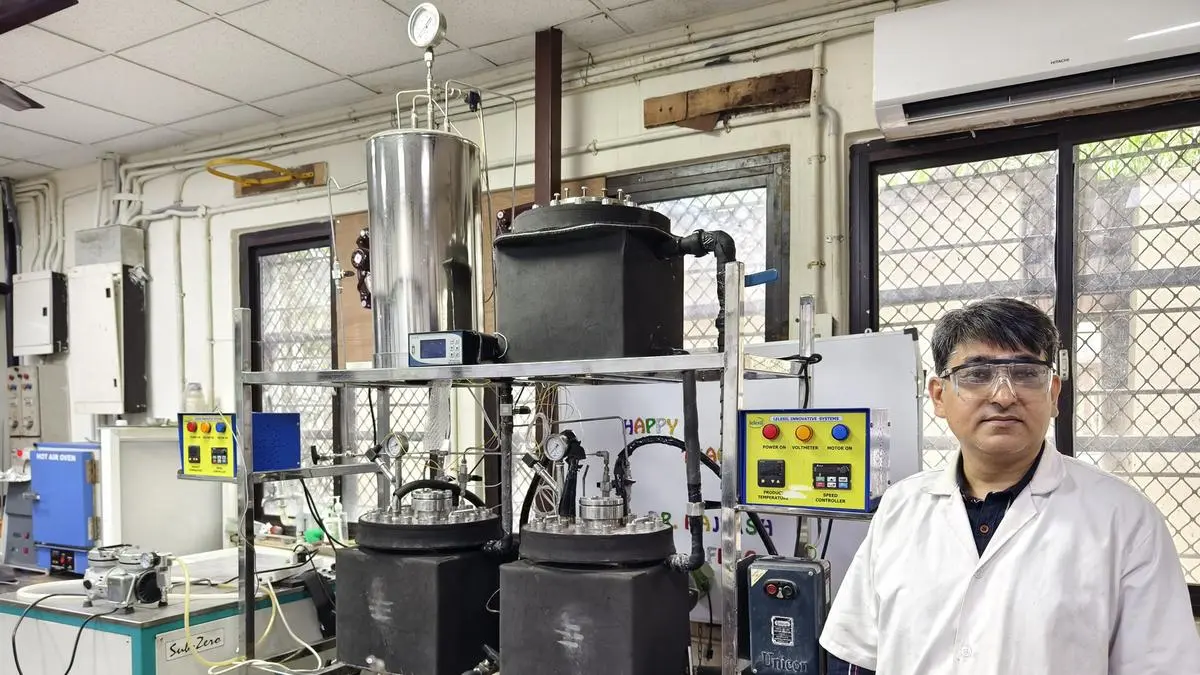
Scientists at the Hyderabad-based CSIR–Indian Institute of Chemical Technology (CSIR-IICT) have achieved a significant breakthrough in sustainable water purification with the development of an advanced electrospun nanofiber membrane for textile wastewater treatment.Their latest research focuses on removing crystal violet dye—a hazardous pollutant widely discharged by the textile industry. The team, led by Chief Scientist S. Sridhar, has spent the past few years developing a next-generation mixed-matrix nanofiber membrane based on a blend of polyvinylidene fluoride and polyethersulfone, engineered for improved performance.The membrane is fabricated using electrospinning and enhanced with advanced nanomaterials such as metal-organic frameworks (MOFs), graphene oxide, and graphene nanoplatelets. According to Dr. Sridhar, the optimized membrane demonstrates exceptional filtration performance, achieving nearly 99.1% dye rejection efficiency—significantly outperforming conventional membrane systems.Nanofiber technology has gained prominence due to its high surface area, interconnected porous structure, superior permeability, and strong adsorption properties. These features enable efficient removal of dyes and toxic contaminants while reducing energy consumption during filtration. The addition of nanomaterials further enhances hydrophilicity, antifouling characteristics, mechanical stability, and overall separation efficiency, he said.The team is now working towards scaling up the membrane for industrial applications. As chair of the Chemical Engineering and Process Development Department at CSIR-IICT, Dr. Sridhar has led multiple initiatives addressing effluent treatment challenges across industries developing novel membrane-based solutions integrated into processes aimed at achieving zero liquid discharge.Over the years, several large-scale projects have demonstrated the practical impact of this work. These include a 6,000-litre-per-batch nanofiltration plant in West Bengal (2006) for acrylic fiber processing, and an integrated electrodialysis-distillation system in Medak (2010) that treated pharmaceutical effluent and enabled the recycling of 30 metric tonnes per day of dimethyl sulfoxide.Further innovations include membrane distillation for the chlor-alkali industry (2014), nanofiltration for coke oven wastewater recovery in West Bengal (2017), and sewage water reclamation under a DST-sponsored project (2021). A high-pressure reverse osmosis system installed in Maharashtra (2021–22) enabled 80% water recovery in an aromatic chemicals unit.Institute Director D. Srinivas Reddy highlighted the broad potential of electrospun nanofiber membranes in environmental applications, including desalination, air purification, gas separation, and biomedical filtration. While the technology promises cleaner and energy-efficient industrial processes, scaling up production remains the key challenge ahead, added Dr. Sridhar. Published - June 11, 2026 07:06 pm IST
CSIR-IICT develops advanced nanofiber membranes for efficient textile wastewater treatment
CSIR-IICT develops advanced nanofiber membranes for efficient textile wastewater treatment, achieving 99.1% dye rejection and promoting sustainability.
373 words~2 min read