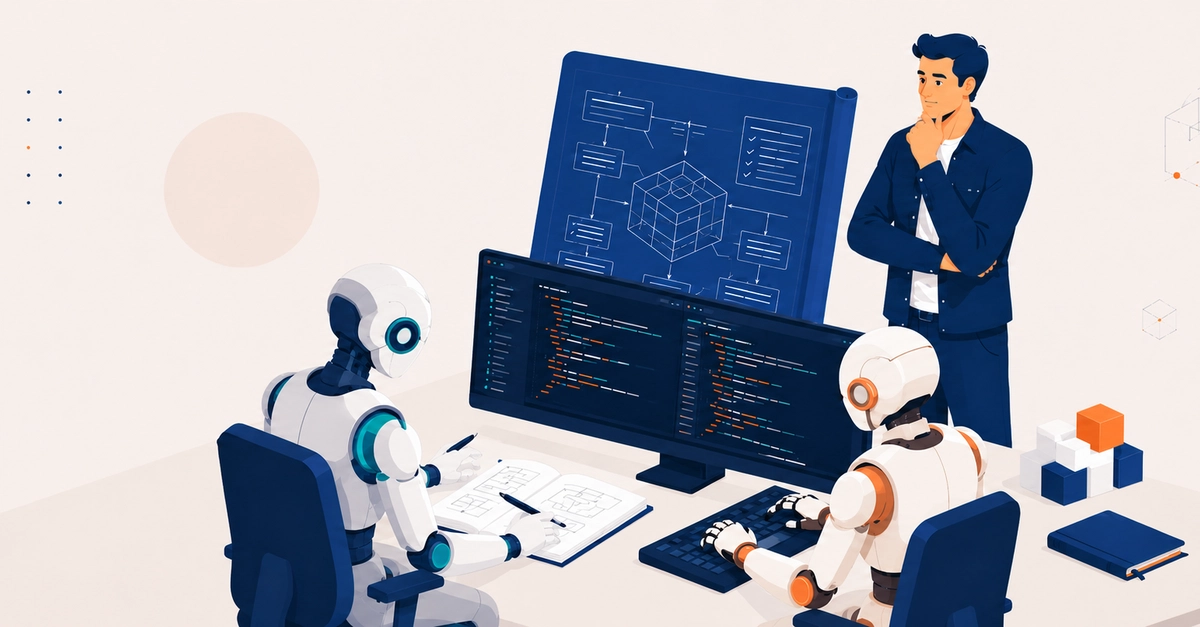
TL;DR. Vibe coding is fine for prototypes. For complex production work I write a spec first, then run two agents in tandem: Claude Code as the builder, Codex as the independent reviewer, with every artifact - plan, code, tests - reviewed by both. The human developer owns the context, the tradeoffs, and the final validation.
A quick confession to open with: I really dislike the term "vibe coding." Getting good results out of AI coding tools - results that are fast and hold up in production - is a skill, not a vibe. And it's a skill that has to be earned. I've heard "AI writes bad code and makes too many mistakes" from skeptics since the very first days of ChatGPT, and I've disagreed just as consistently. Sit down at a piano for the first time and nothing good comes out either - that says more about practice than about the instrument. Put in the practice, stay sharp while the ground keeps shifting, and these tools multiply both your speed and the quality of what you ship.
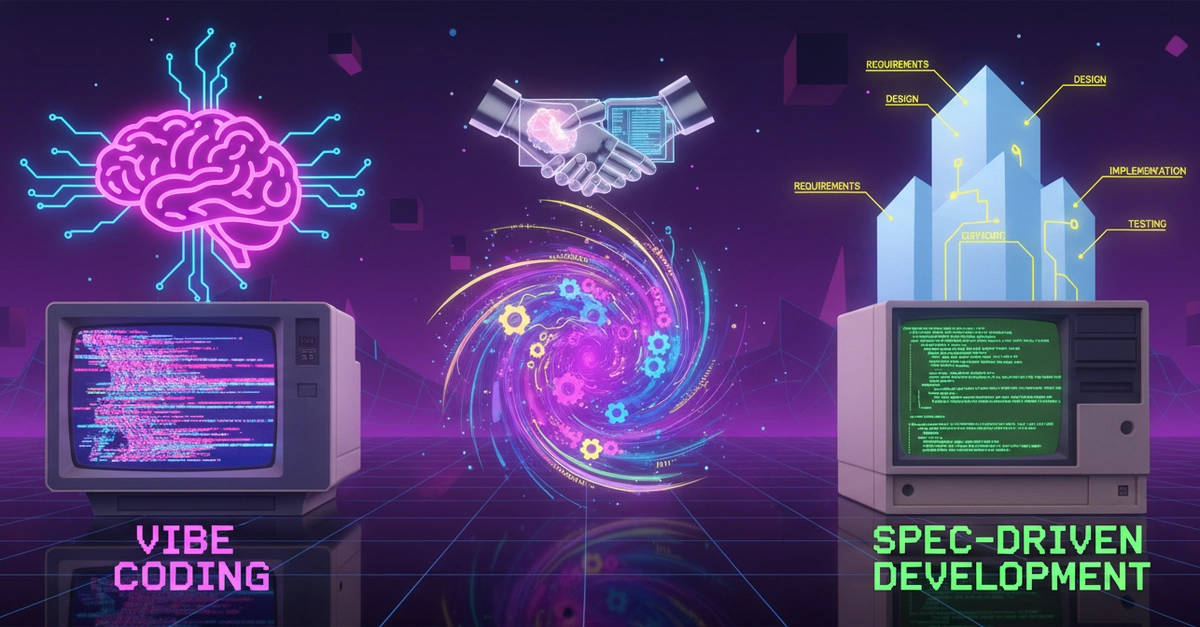
A growing part of the industry is converging on a name for the disciplined version of this: spec-driven development (SDD) - write the spec first, derive a plan, break it into tasks, and only then let the agent write code. GitHub's Spec Kit, AWS Kiro, and a growing zoo of similar tools all push in this direction (the exact definition of SDD is still in flux, but the direction is clear). What follows is my own hand-rolled version of the same philosophy: two agents instead of one framework, shaped by a couple of years of actually doing it.