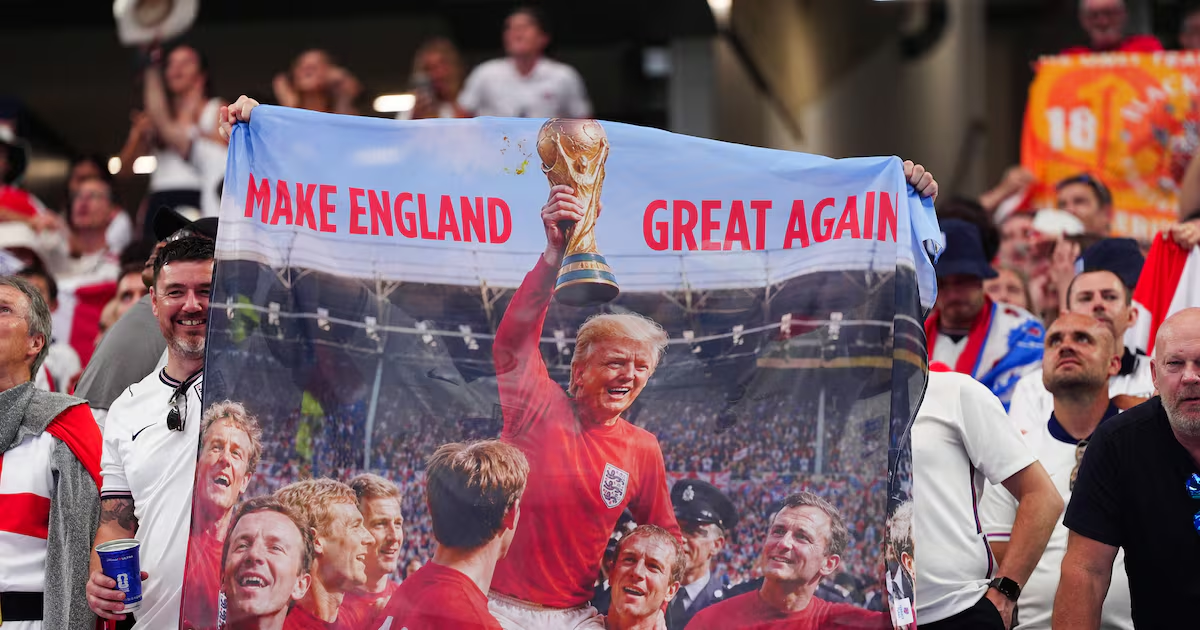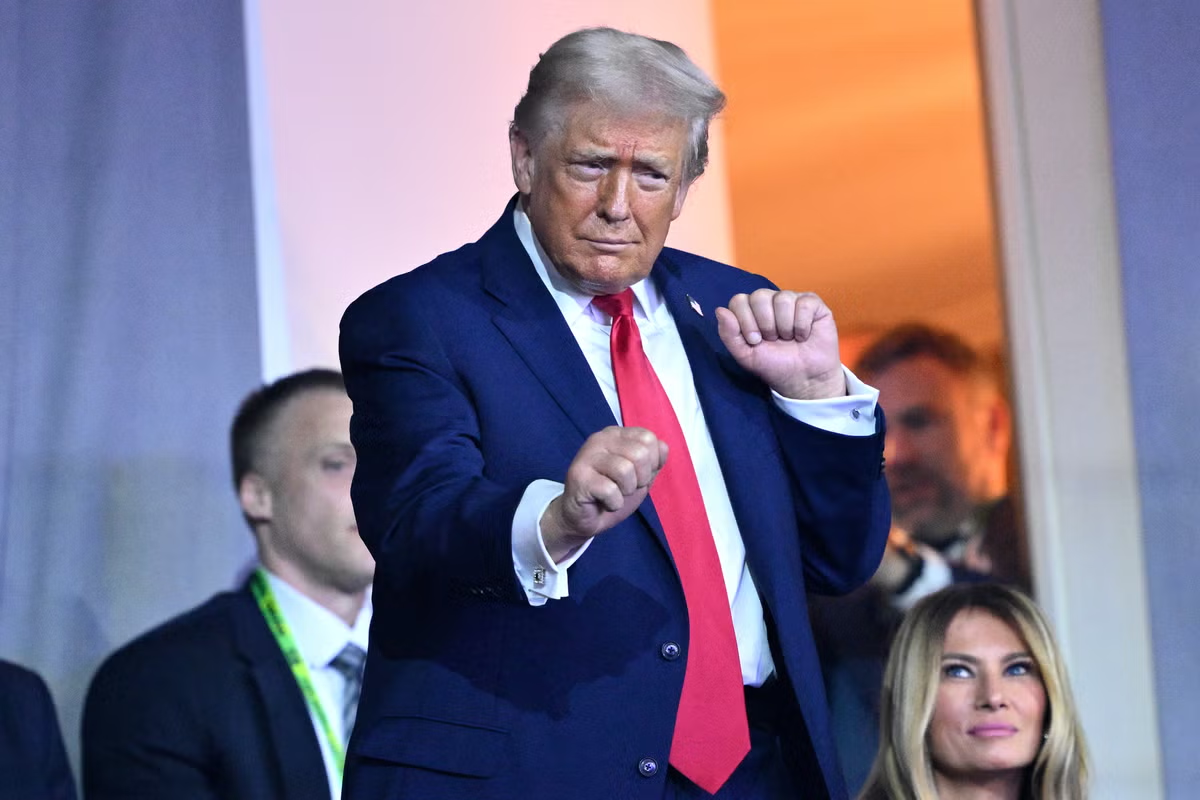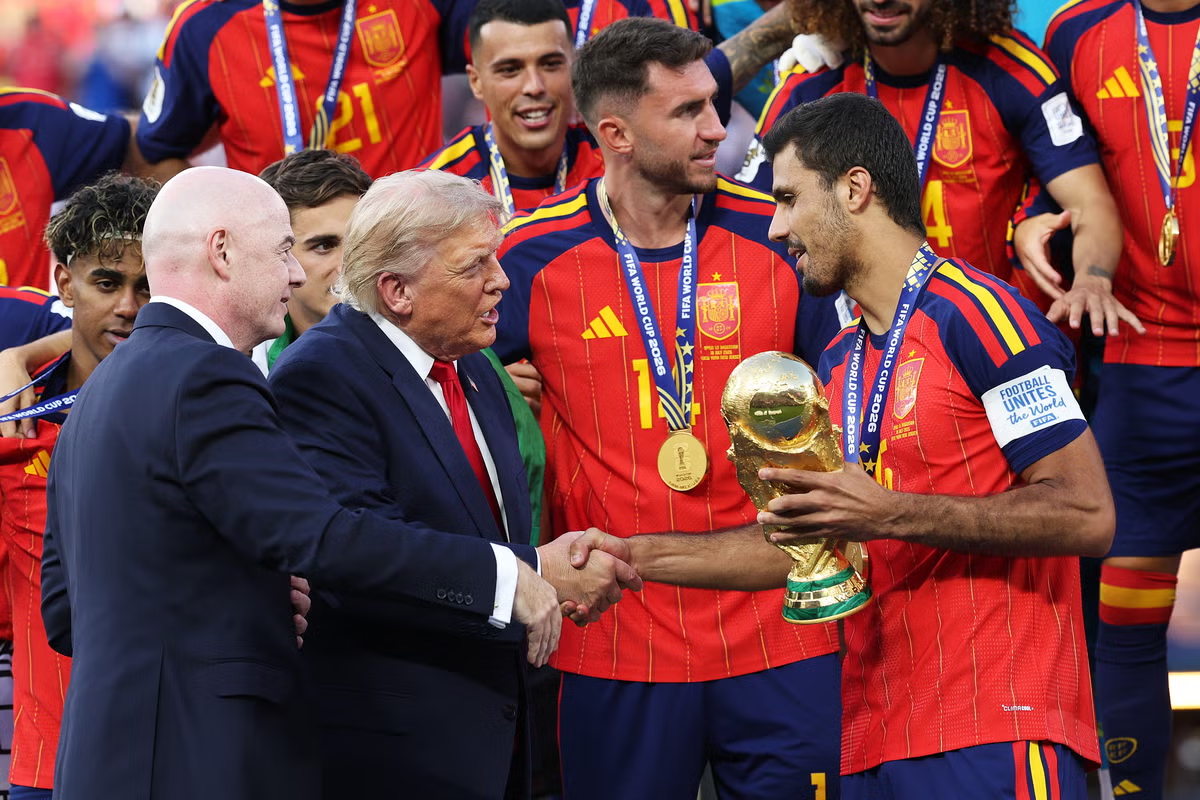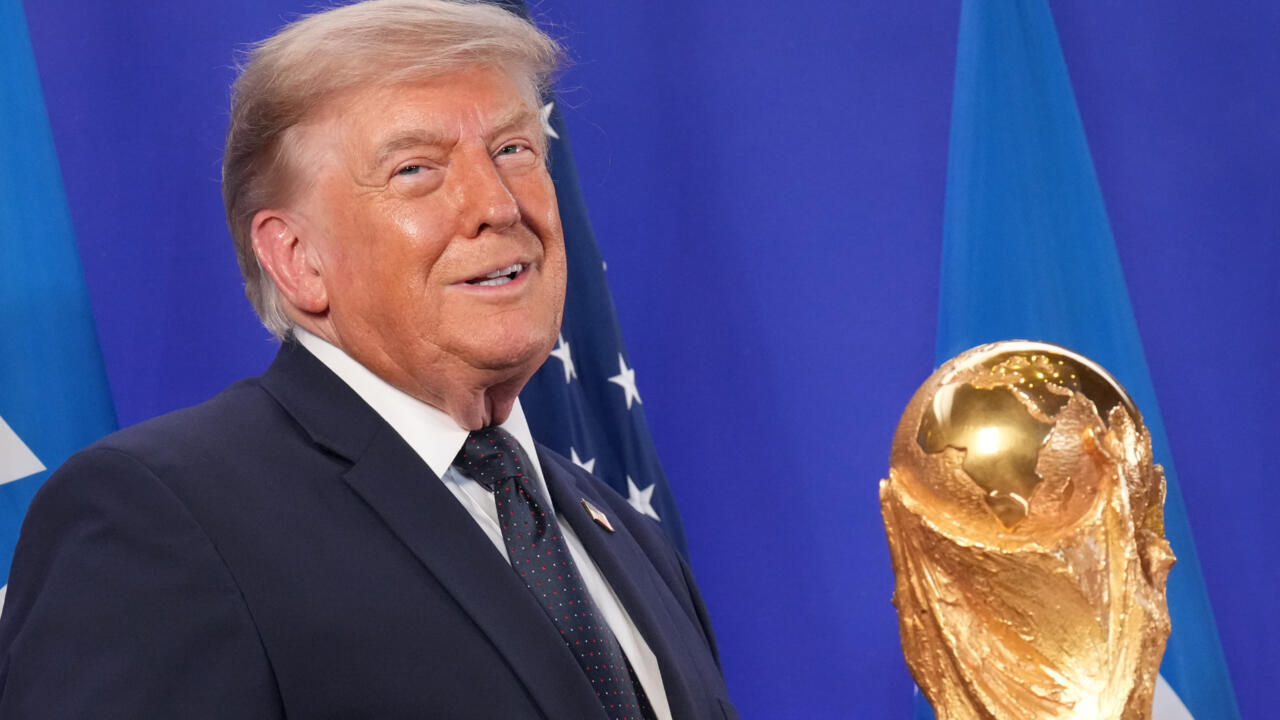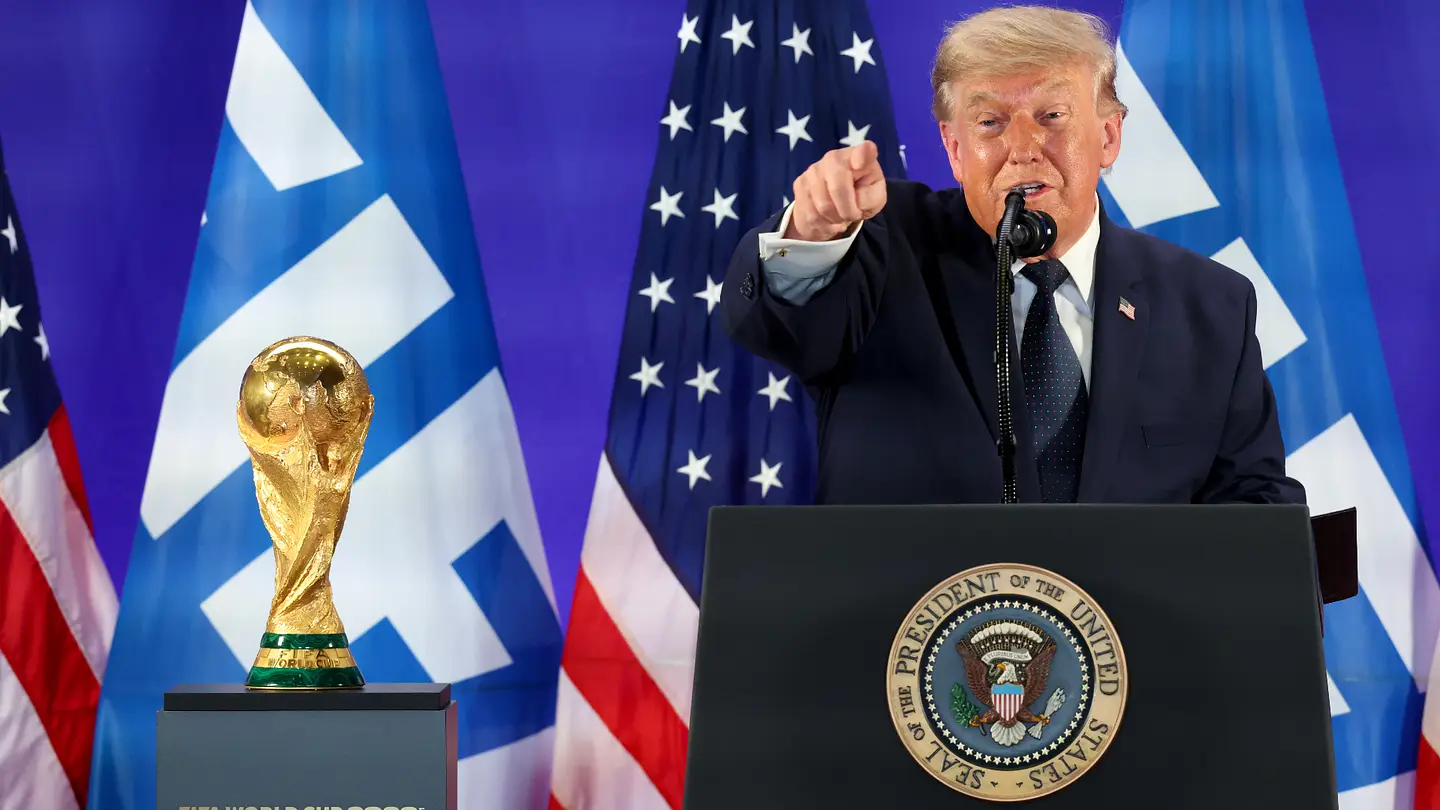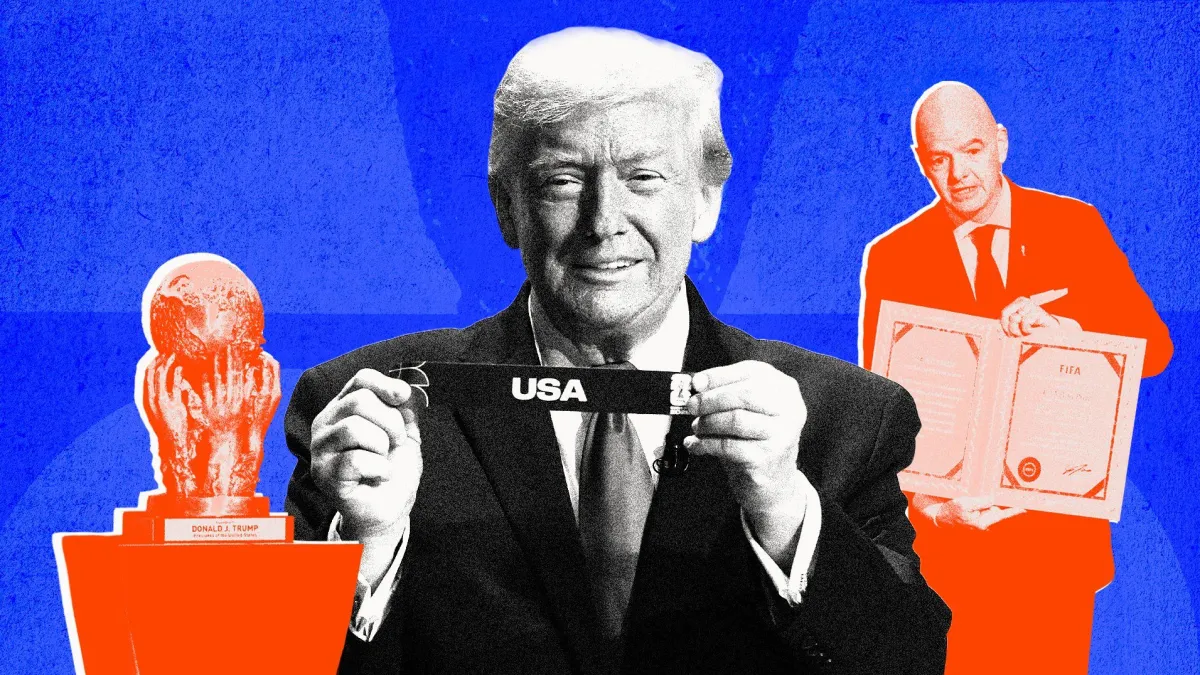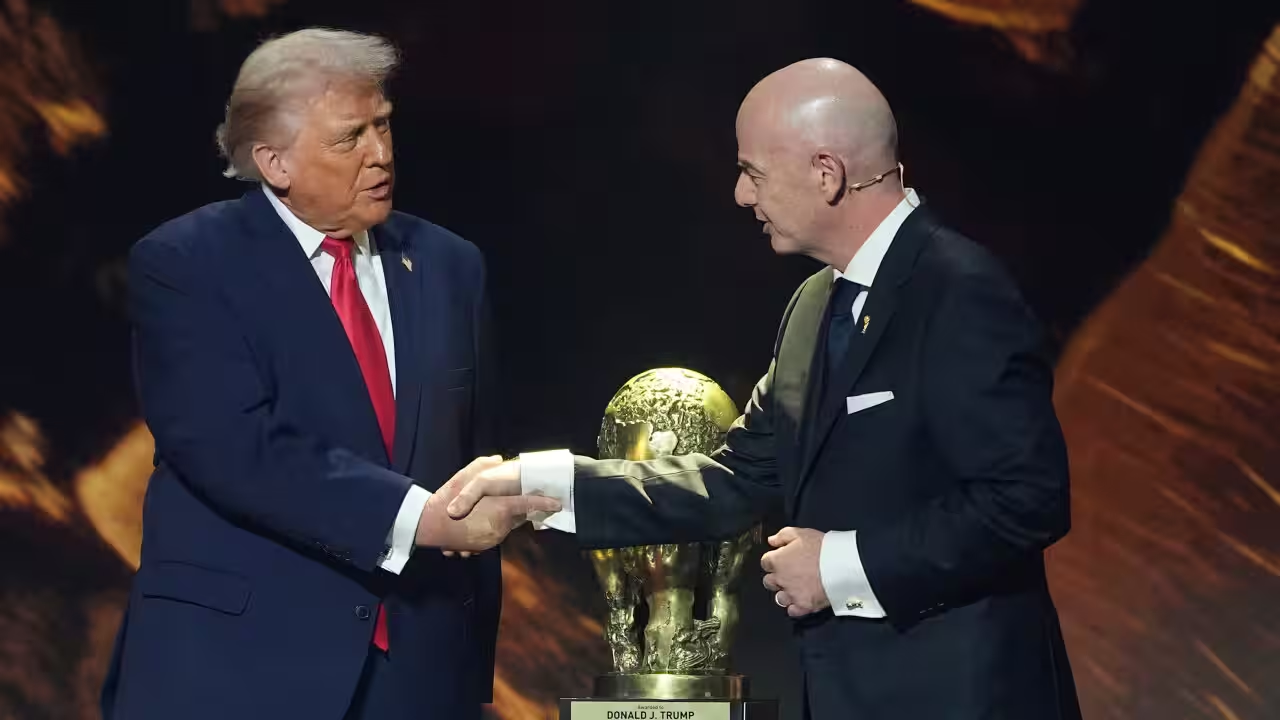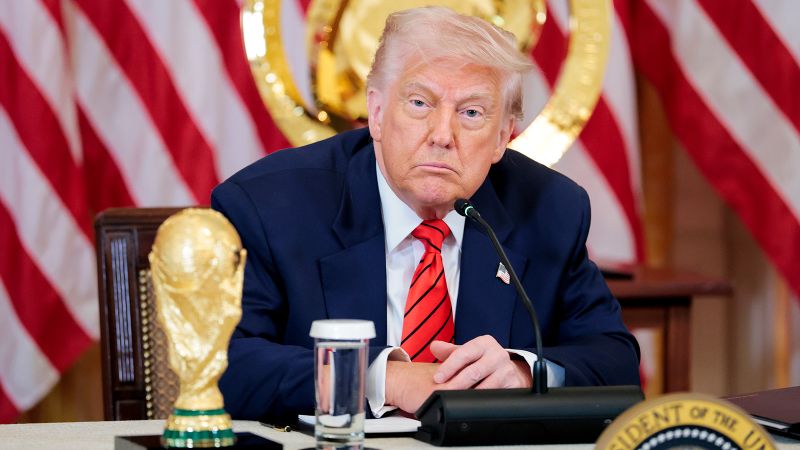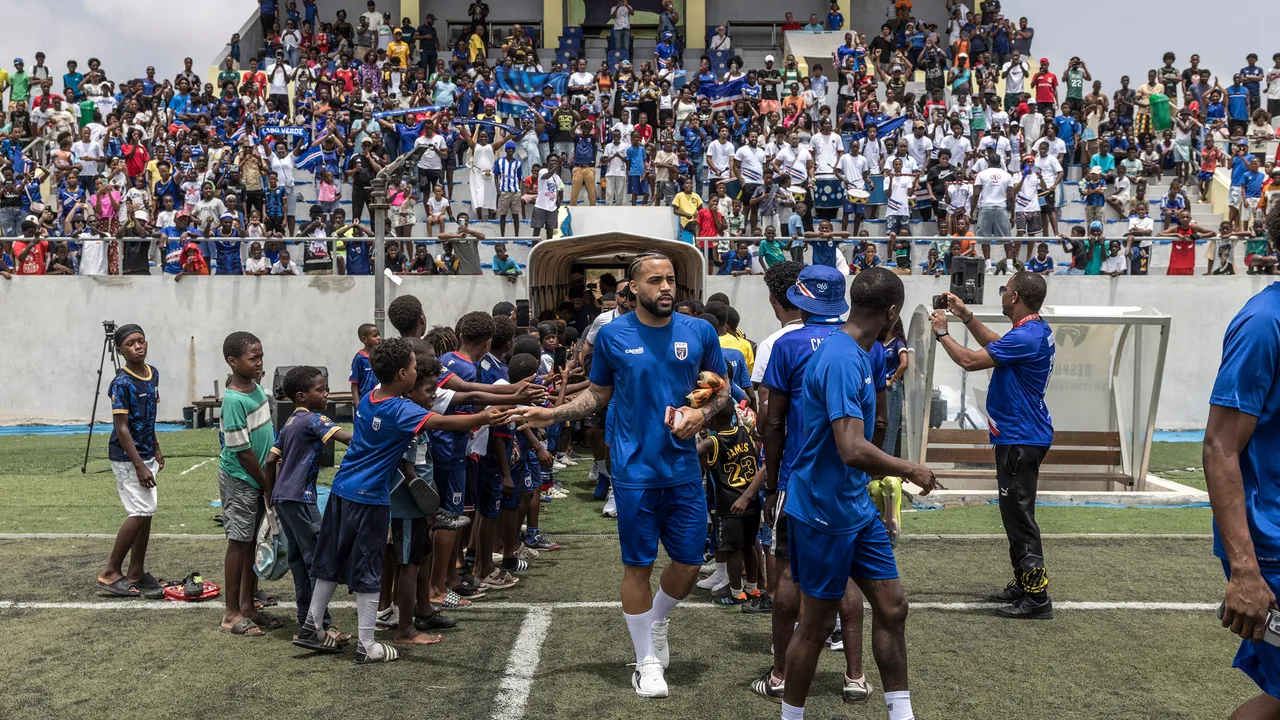
For most onlookers, the defining moment of the previous World Cup, held in Qatar, four years ago, came at the very end. Argentina had defeated the defending champion, France, via penalties in the tournament’s final match. That victory marked the crowning triumph in the career of Lionel Messi, Argentina’s talismanic captain and, arguably, the greatest soccer player of all time, who could, at last, claim the one prize that had eluded him for nearly two decades. But, before Messi took center stage to receive the World Cup trophy from Gianni Infantino, the president of the Fédération Internationale de Football Association, the powerful entity that governs global soccer, another eminence wanted to play his part. The emir of Qatar, Sheikh Tamim bin Hamad al-Thani, strode forward and cloaked Messi in a ceremonial Arab bisht, a garment of sheer black fabric trimmed with gold that obscured his blue-and-white Argentina jersey. The emir’s gesture was explained as an act of respect, but angry TV pundits saw it as detracting from Argentina’s success. “Just why? There’s no reason to do that,” Pablo Zabaleta, a former player for Argentina, lamented on the BBC.But the reason was obvious. Argentina won the World Cup, yet the prestige also belonged to Qatar—particularly to the royal family, which holds complete sway over the wealthy petro-state. Qatar had endured weeks of bad press ahead of the start of the tournament, including criticism of alleged human-rights abuses against migrant workers brought in to build stadiums and help construct other megaprojects for the World Cup, concerns for the reception of L.G.B.T.Q. tourists in the country, and renewed scrutiny of FIFA’s decision to grant the World Cup to the tiny Gulf state in the first place, despite its having only one major city and an inhospitably hot summer. But the story lines shifted once the games got under way. Western grumbling subsided, calls for boycotts were forgotten, and the fans in Qatar found themselves gripped by a tournament bursting with drama. Visitors praised the gleaming new facilities and purpose-built infrastructure, including a metro system that was free for all World Cup attendees. “We had incredible matches, we had excitement, we had passion, we had heartbeat, we had joy, we had tears, we had emotion; we had everything,” Infantino declared a year later, describing the tournament in Qatar as “simply the best World Cup ever.” By the time Messi had his moment of destiny—cheered on by more than a billion people around the world—it seemed almost natural that Qatar’s absolute monarch would share in the glory.If Infantino appeared to do too much to ingratiate himself with Qatar’s rulers, he has reached new levels of flattery with Donald Trump, who clearly sees the imminent 2026 iteration of the tournament—a sprawling continental affair jointly hosted by the United States, Canada, and Mexico—as a source of prestige to boost his flagging Presidency. It will be the largest World Cup in history, with forty-eight national teams playing in a hundred and four matches across sixteen host cities, eleven of which are in the U.S. In 2018, during Trump’s first term, he took personal credit for the U.S. and its neighbors winning the bid to host the 2026 Cup, although some soccer officials suggested that his divisive politics had put that selection in jeopardy. In the years since, Infantino, seemingly eager to curry favor ahead of the commercial bonanza that the tournament represents for FIFA, has been trailing Trump on the geopolitical circuit, joining him at summits in Sharm el-Sheikh and Davos, and extolling his diplomacy. In December, Infantino bestowed the made-up and farcical FIFA Peace Prize on Trump, who gladly accepted it at a ceremony in Washington, D.C. Last summer, for the trophy presentation following FIFA’s Club World Cup final, at MetLife Stadium, in New Jersey, Infantino ushered Trump onto the stage—and the President refused to leave, clapping amid a bemused gaggle of players from London’s Chelsea F.C., which had just won the competition. A similar, Trump-centric scene can be expected in the same stadium on July 19th, when the World Cup final will be played.So far, Trump is dominating the buildup to the World Cup for all the wrong reasons. This is the first World Cup in which the host nation is at war with one of the tournament’s participants (Iran), and the U.S. also has sweeping travel bans or visa restrictions on a number of the participating countries. (This is despite Infantino’s repeated assertions that there would be no problem with travel to the United States for players, sporting officials, and ticketed fans.) Although the players on Iran’s national team have received visas to participate in U.S.-based games, more than a dozen members of the technical and administrative staff associated with the team have not. So the Iranian squad had to relocate its training to Tijuana, Mexico, in order to prepare for its first game next Monday in Los Angeles. On Tuesday, Iran’s football federation said that the official ticket allocation for Iranian fans had been revoked, even though many had already bought tickets and made travel plans. Other national teams have experienced difficulties and indignities, too; a Haitian player based in Port-au-Prince is still waiting to receive a visa. Meanwhile, foreign fans—even from countries as dear to Trump as Scotland—are reportedly being denied entry for a range of bureaucratic vagaries, after spending enormous, unrecoverable sums on accommodations and stadium tickets, which are the most expensive in World Cup history.Most egregious yet is the story of Omar Abdulkadir Artan, an up-and-coming referee from Somalia who was tapped by FIFA to officiate in this tournament. He was barred from entry after landing in Miami last week where he was detained and questioned for eleven hours, and was then put on a flight to Istanbul. Artan told the Times, “I had the right papers and everything. I had the right visa,” but, he added, “I think that they have a problem with my country.” A FIFA statement later confirmed that Artan will be unable to officiate. In a press conference on Wednesday, Infantino told critics to “chill.” “We are not the kings of the world who can rule over governments and police forces. We are a sports organization,” he said, sounding an uncharacteristic note of humility. Artan, meanwhile, was paraded as a hero and cheered by thousands at a stadium in Mogadishu, Somalia’s capital. Maher Mezahi, an Algeria-based journalist who is a veteran chronicler of African soccer, wrote that “Artan’s story is particularly sad, because it shows how a decade of hard work can be arbitrarily undone, and because his participation represented a rare opportunity for Somalis to feel genuinely present at the World Cup.” He added, “For the billions cheering on from a distance, one question is becoming increasingly unavoidable: How long will FIFA let Trump’s United States of America spoil a celebration that is not theirs to spoil? How long will we let one man ruin the world’s game?”Ian Wright, an English former soccer player who is now a popular broadcaster on British television, posted a video on Tuesday calling out the hypocrisy of many in the West who wanted to boycott the Qatar World Cup—not to mention those who wanted to boycott the 2018 Cup, which was hosted by Russia—but have shown less moral outrage over what’s perceived as Trump’s World Cup. “Is this how the hosts behave . . . for the greatest tournament in the world?” he asked. “I feel for the American soccer fans who are desperate for this, how embarrassed they must be. This is a World Cup of chaos.” The irony is that, for all the anti-democratic practices of the regimes in Qatar and in Russia, these host countries were more welcoming to the rest of the world than the Trump Administration has been. In 2022, outside a stadium in Qatar, I interviewed fans from Ghana who specifically anticipated that they would not be able to follow their team to the Cup in the U.S. this year, and praised the ease with which Qatari authorities had enabled them and other fans from the Global South to enter the country. During the 2018 Cup, I stood on one of the busier streets in central Moscow, as hundreds of jubilant Latin American and African partygoers mingled with carousing Muscovites.Since the inception of the tournament, almost a century ago, people have talked about the World Cup’s “spirit.” In Italy in 1934, for example, a Belgian referee recalled how “a certain spirit brooded over the whole championship,” referring to the intense, domineering involvement of the host nation’s Fascist regime. In 2018, by contrast, much was written about the spirit of “openness” seizing Russia, as the World Cup seemed to offer Russians a glimpse of a different, perhaps more liberal or liberated world. But that spirit proved fleeting, and it is nowhere in evidence in the country in the wake of its full-fledged invasion of Ukraine and hard turn away from Europe. For now, it’s difficult to look beyond the gloom surrounding this World Cup, whether because of the cringe-inducing bonhomie between Trump and Infantino, the disenchantment of foreign fans, or the frustrations of domestic supporters who are angry about exorbitant ticket prices.But glimmers of a happier World Cup are already there to see. They can be found in the dance of a police officer who became an internet celebrity for pumping up Egyptian fans outside a Cleveland hotel hosting their national team. And in the joy of locals in Lawrence, Kansas, encountering Algerian fans who had arrived to support their national team’s training camp. And in the fervor of America’s immigrant diasporas—huge crowds of Haitians in Miami, or of Bosnians in St. Louis—who see an occasion to support their home countries not as an act of betrayal of the United States but as an affirmation of their communities’ American journey.The defining moment of the Qatar World Cup for me took place not at the end of the tournament but halfway through it. Morocco had just upset Spain in the round of sixteen, a victory that was embraced by seemingly every non-Spanish person in Qatar as their own. After leaving the stadium, I found myself in a packed Doha metro car with Moroccans, Egyptians, Indians, Filipinos, Palestinians, Americans, and others. There were tears of disbelief—Morocco would later advance further than any Arab or African nation had in the history of the World Cup—and laughter exulting in the bravado of the underdog. It didn’t matter that Morocco would get knocked out in the semifinals. It didn’t matter how Infantino, or the élites he pandered to, presided over the games. That solidarity among strangers is the best thing that any World Cup has to offer, and even the President of the United States can’t ruin it. ♦
Can the World Cup Transcend Donald Trump?
Donald Trump is dominating the buildup to the World Cup—but for all the wrong reasons.
1,790 words~8 min read