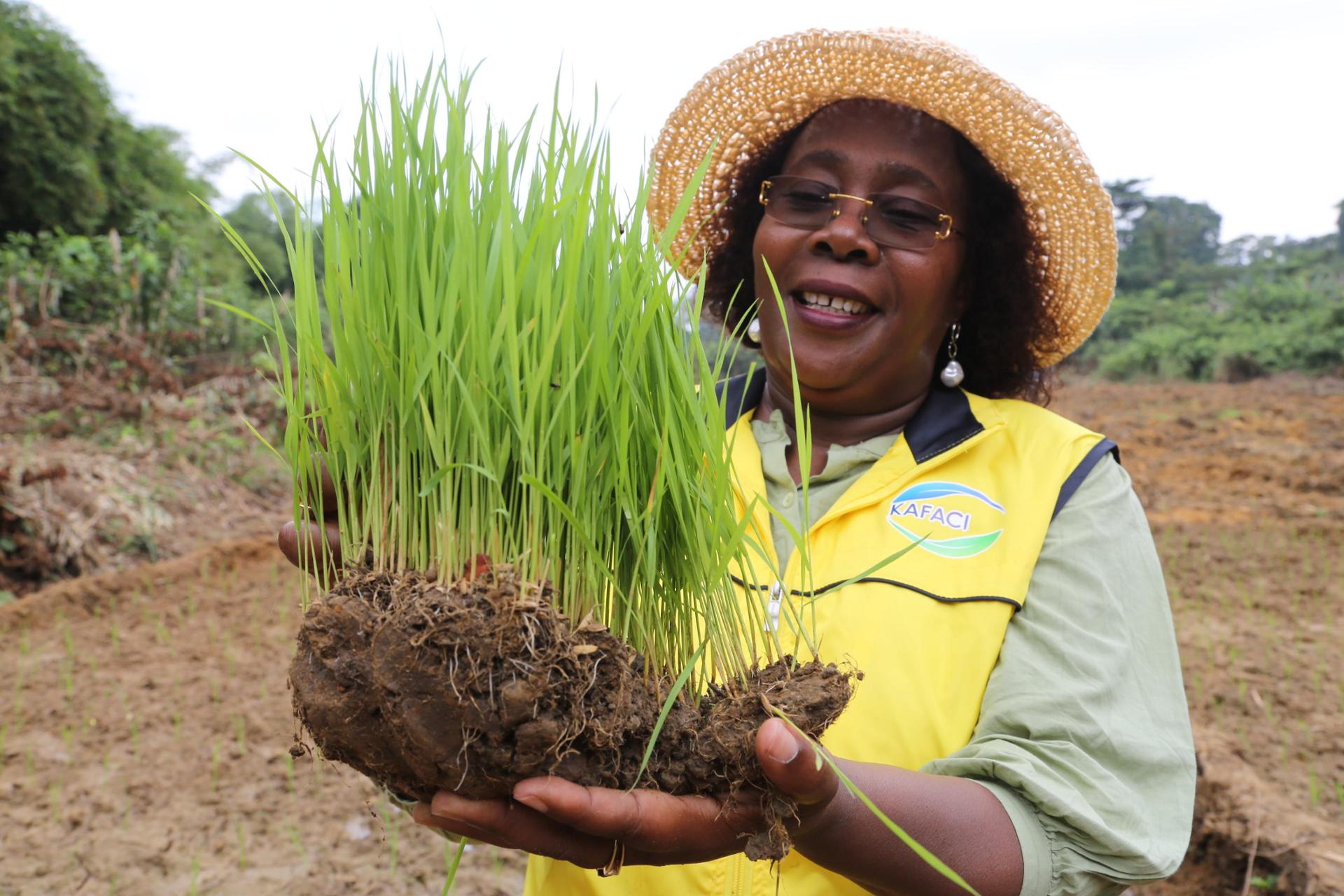
An official of the Korea-Africa Food & Agriculture Cooperation Initiative (KAFACI) office in Gabon displays a batch of Cheyi rice seeds, a new variety developed by KAFACI using Korean Tongil-type rice cultivars Miryang and Hanareum, May 30. Courtesy of the Ministry of Agriculture, Food and Rural Affairs
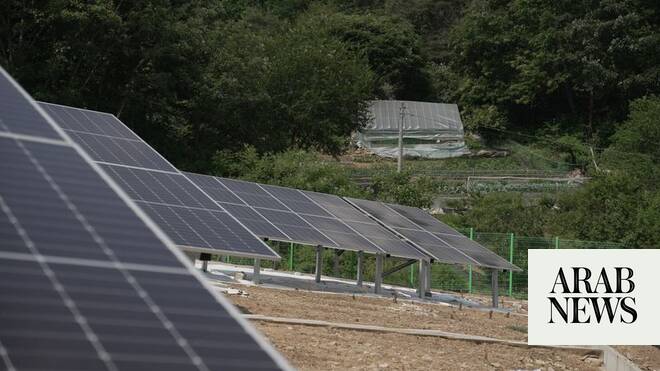
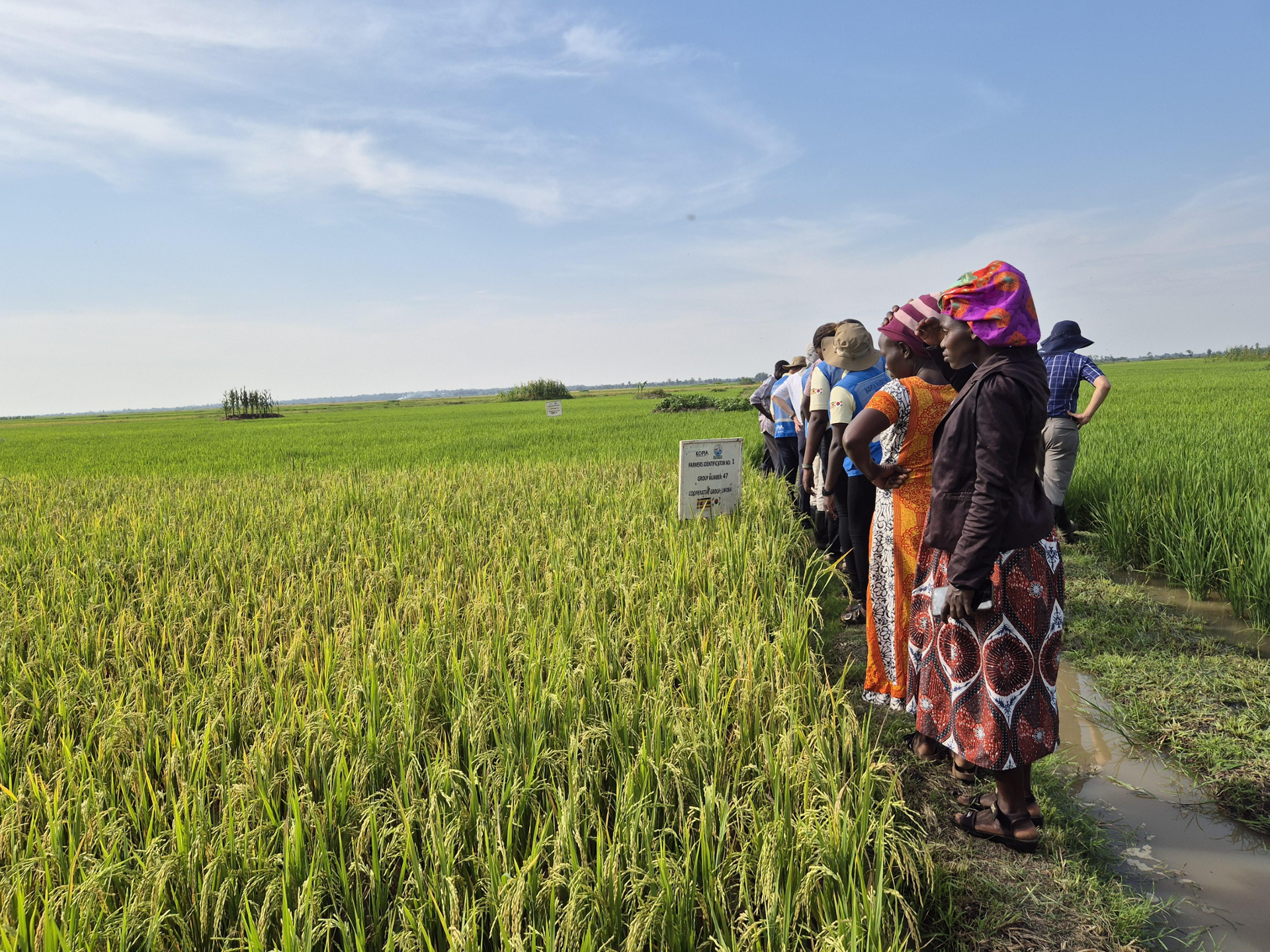
The Korean government’s rice assistance program for African nations, aimed at improving local food security, has entered its second phase, targeting more challenging terrain where rice cultivation depends on rainfall rather than irrigation.
So far, the Korea-Africa Food & Agriculture Cooperation Initiative (KAFACI) project under the Korean Ministry of Agriculture, Food and Rural Affairs has concentrated on irrigated paddy fields, which have demonstrated high yields and improved grain quality.
The second phase, according to the ministry on Thursday, will begin developing new rice seeds that can withstand drought, low-temperature stress and salinity stress, which are chronic problems with rain-fed paddy fields.
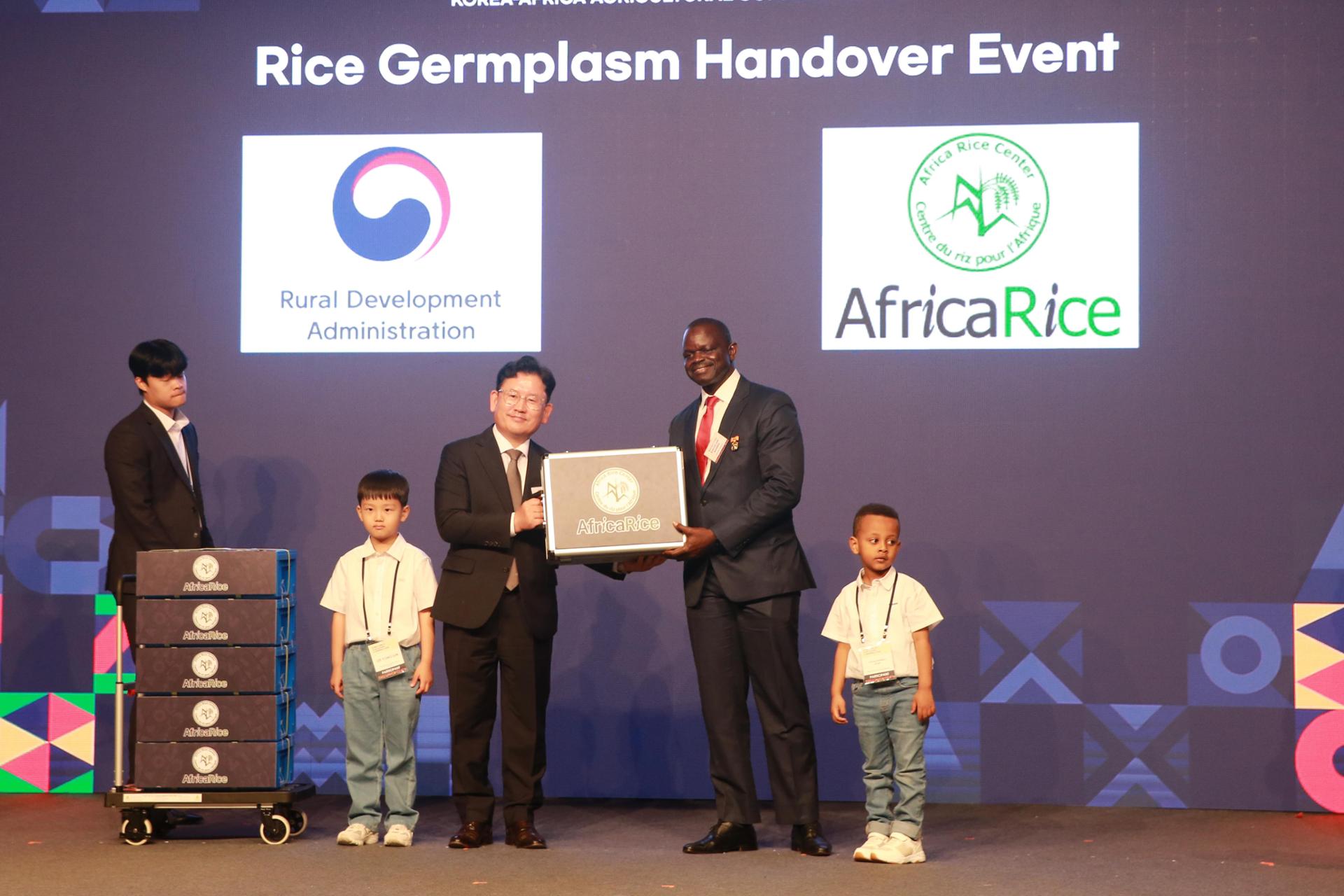
Working with AfricaRice, a nonprofit research and training center headquartered in Ivory Coast, the Korean ministry will also accelerate efforts to harvest the seeds faster by employing techniques like anther (pollen) culture or single seed descent for faster breeding and germination. Transferring rice seed and rice farming techniques to new member states of KAFACI is another objective for the second phase.