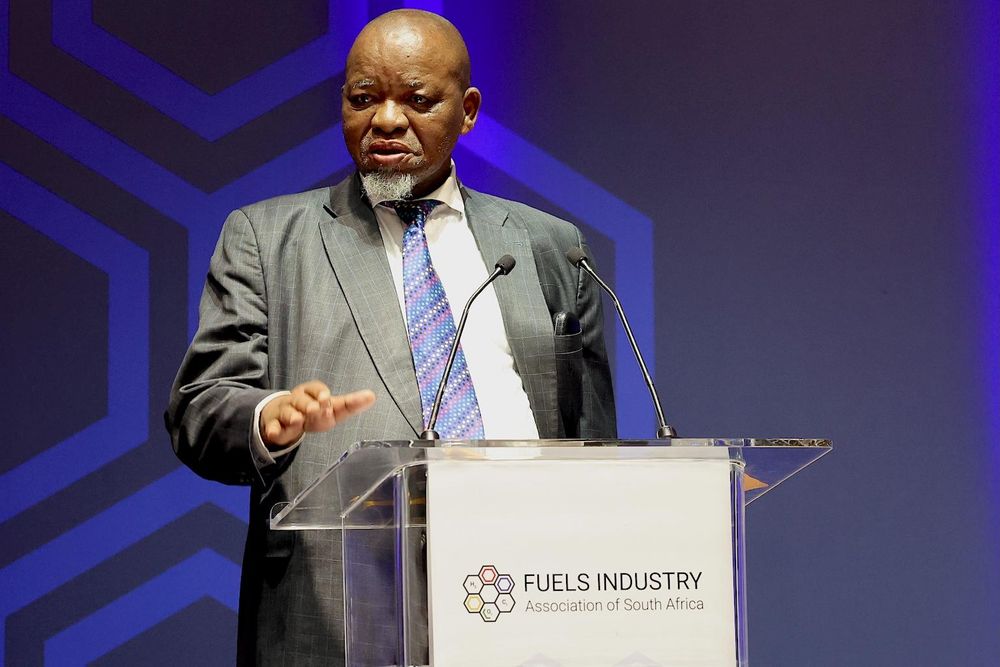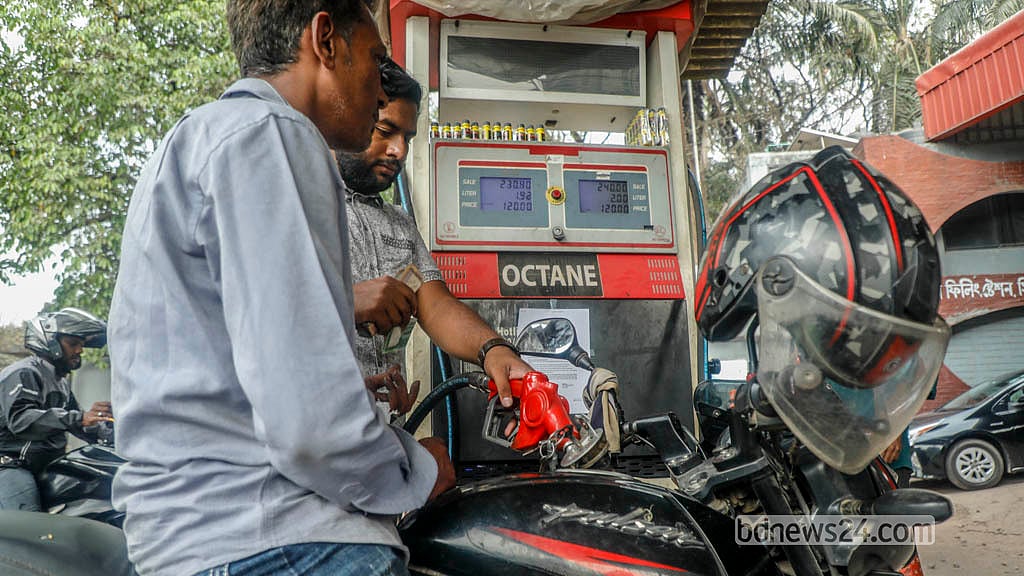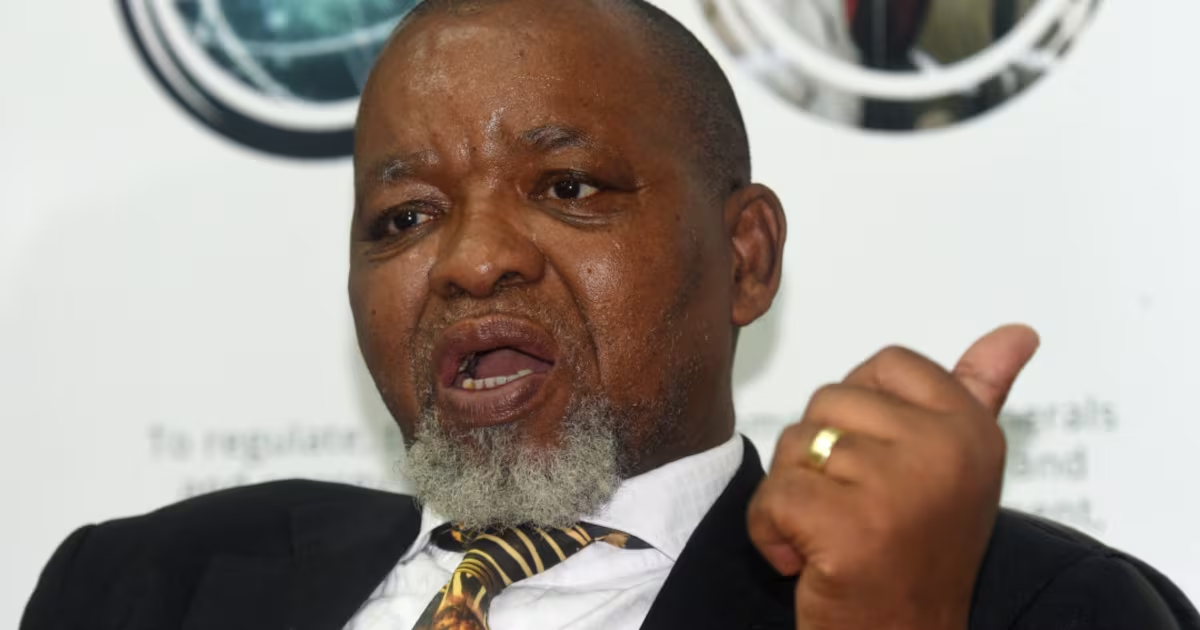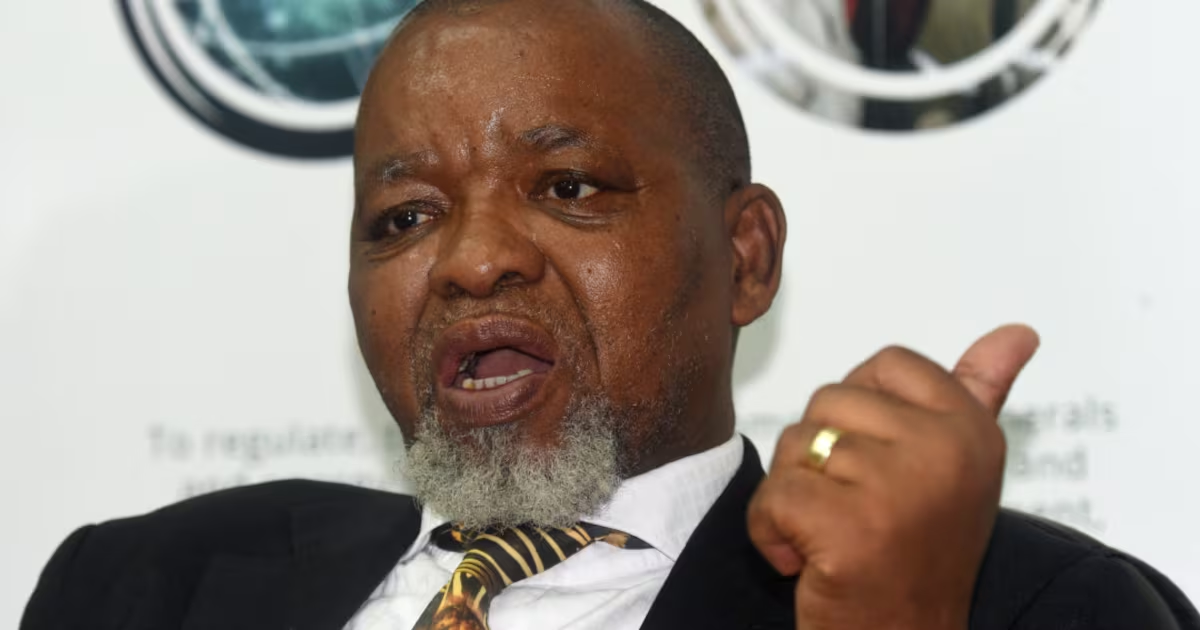
The government plans to increase South Africa’s strategic petroleum reserves to the equivalent of 60 days of net imports, mineral & petroleum resources minister Gwede Mantashe said on Wednesday.The proposal forms part of a draft policy aimed at protecting the economy from global supply disruptions.Current law requires the country to maintain about 10.3-million barrels of crude oil in reserve, equivalent to 21 days of supply during a shortage. In practice, this amounts to only about two weeks of consumption, leaving South Africa exposed to global supply disruptions.The International Energy Agency (IEA) requires its members to maintain emergency stockpiles equal to at least 90 days of net oil imports. South Africa is not a full member country of the agency, but it has been an official association country since 2018.The strategic petroleum stocks policy is due to be discussed in cabinet before publication for public comment. The move follows a government-commissioned assessment of South Africa’s strategic fuel stock arrangements, which identified vulnerabilities in the country’s energy security framework.Global conflicts in key oil-producing countries have seen many of them beefing up their reserves.“The policy proposes a mixed stockholding model under which the South African National Petroleum Company (SANPC) will maintain strategic reserves equivalent to 60 days of net imports in both crude oil and refined products,” Mantashe said at the fuels industry imbizo. “The geopolitical disruptions we continue to witness have exposed the risks associated with excessive dependence on imported refined petroleum products,” he said.“If we are serious about improving our energy security, reducing our vulnerability to external shocks and strengthening our economic sovereignty, then we must accelerate exploration and development of our own oil and gas resources.” Mantashe said the SANPC, whose enabling legislation is before parliament, is already operational and will play an important role in supporting exploration activities and the development of local refining capacity.“South Africa cannot indefinitely remain a price taker in global energy markets. We must position ourselves to become producers where commercially viable resources exist. The SANPC will play an important role in this regard.“While the SANPC Bill is currently before parliament, the company is already operational and actively participating in the sector.”A wave of domestic refinery closures in recent years has left South Africa vulnerable to fuel imports and supply disruptions. The announcement comes little more than a week after motorists were hit by a R1.43-a-litre petrol price increase as the government began withdrawing emergency fuel levy relief. Introduced to cushion households and businesses from the surge in global oil prices caused by the conflict in the Middle East, the temporary relief package has cost the fiscus about R17.2bn.“We remain troubled by incidents where some operators increased fuel prices ahead of official price adjustments. While these actions were limited to a minority of participants, they undermined public confidence and tarnished the reputation of the broader industry,” said Mantashe. “Compliance with regulatory requirements is not optional. It is fundamental to maintaining public trust and ensuring a level playing field for all participants.”Equally concerning, the minister said, is the continued “adulteration of fuel products”, particularly the illegal blending of diesel with illuminating paraffin. The issue of the country’s fuel reserves has been in the spotlight for a long time.At the height of state capture in December 2015, the country’s strategic fuel reserves were sold for a fraction of their value by the then SFF chief executive Sibusiso Gamede, with the approval of former energy minister Tina Joemat-Pettersson.
Mantashe aims for 60-day strategic fuel reserve buffer against shocks
Government seeks larger petroleum stockpile as geopolitical risks intensify
570 words~3 min read