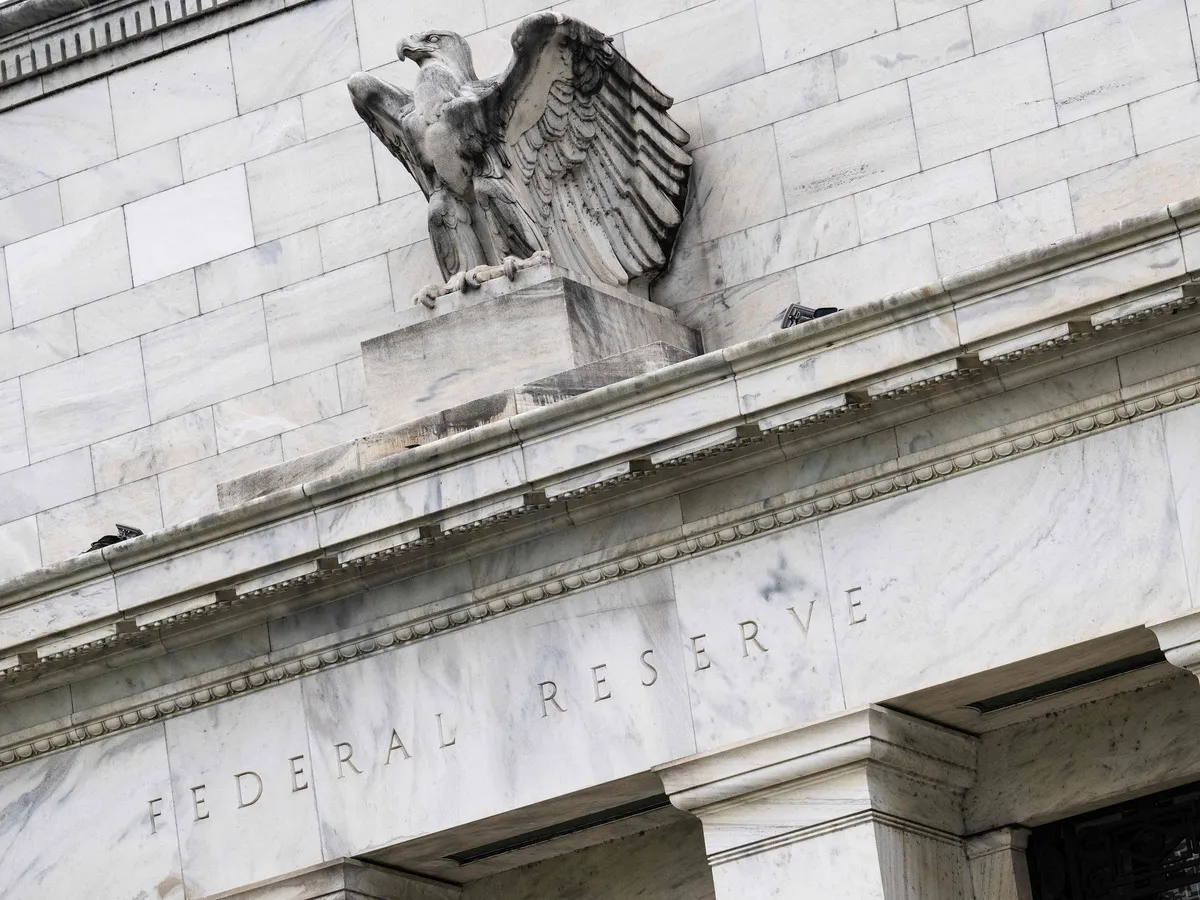
Skip to Content News Archives Economy Energy Oil & Gas Renewables Electric Vehicles Mining Commodities Agriculture Real Estate Mortgages Mortgage Rates Finance Banking Insurance Fintech Cryptocurrency Work Wealth Smart Money Wealth Management Investor Personal Finance Family Finance Retirement Taxes High Net Worth FP Comment Executive Women Puzzmo Newsletters Financial Times Business Essentials More Innovation Information Technology FP500 Podcasts Small Business Lives Told Tails Told Shopping Financial Post Store Obituaries Place a Notice Advertising Advertising With Us Advertising Solutions Postmedia Ad Manager Sponsorship Requests Classifieds Place a Classifieds ad Working Profile Settings My Subscriptions Saved Articles My Offers Newsletters Customer Service FAQ News Economy Energy Mining Real Estate Finance Work Wealth Investor FP Comment Executive Women Puzzmo Newsletters Financial Times Business Essentials HomeNewsEconomy'Red hot' U.S. inflation rises at fastest pace in more than three yearsHere's what economists had to say about the latest U.S. inflation numbers You can save this article by registering for free here. Or sign-in if you have an account.The Marriner S. Eccles Federal Reserve building in Washington, DC, on May 04, 2022. Photo by JIM WATSON/AFP via Getty ImagesU.S. inflation accelerated in May, in line with consensus as the consumer price index (CPI) rose 0.5 per cent from April and 4.2 per cent from a year earlier — the fastest pace since early 2023, according to data from the U.S. Bureau of Labor Statistics. Here’s what economists had to say about the latest numbers. Subscribe now to read the latest news in your city and across Canada.Exclusive articles from Barbara Shecter, Joe O'Connor, Gabriel Friedman, and others.Daily content from Financial Times, the world's leading global business publication.Unlimited online access to read articles from Financial Post, National Post and 15 news sites across Canada with one account.National Post ePaper, an electronic replica of the print edition to view on any device, share and comment on.Daily puzzles, including the New York Times Crossword.Subscribe now to read the latest news in your city and across Canada.Exclusive articles from Barbara Shecter, Joe O'Connor, Gabriel Friedman and others.Daily content from Financial Times, the world's leading global business publication.Unlimited online access to read articles from Financial Post, National Post and 15 news sites across Canada with one account.National Post ePaper, an electronic replica of the print edition to view on any device, share and comment on.Daily puzzles, including the New York Times Crossword.Create an account or sign in to continue with your reading experience.Access articles from across Canada with one account.Share your thoughts and join the conversation in the comments.Enjoy additional articles per month.Get email updates from your favourite authors.Create an account or sign in to continue with your reading experience.Access articles from across Canada with one accountShare your thoughts and join the conversation in the commentsEnjoy additional articles per monthGet email updates from your favourite authorsSign In or Create an AccountorDesjardins lead economist Francis Généreux said the U.S. inflation dynamics remain closely tied to geopolitical events in the Middle East, as energy prices made a significant contribution to the increase in total CPI. While tensions with Iran over the Strait of Hormuz remain highly volatile, recent developments suggest a slight easing, he said, and barring a renewed surge in oil and gasoline prices, total inflation may have reached its peak in May, although upside risks remain.“For now, our forecasts suggest that year-over-year total CPI inflation will fall back below four per cent as early as June,” he said, adding that if core inflation remains relatively stable as expected, the Federal Reserve and its new chair Kevin Warsh are likely to keep policy rates unchanged at next week’s meeting.Get the latest headlines, breaking news and columns.By signing up you consent to receive the above newsletter from Postmedia Network Inc.A welcome email is on its way. If you don't see it, please check your junk folder.The next issue of Top Stories will soon be in your inbox.We encountered an issue signing you up. Please try againCanadian Imperial Bank of Commerce economist Helen Lao said May’s “red-hot inflation print” being above four per cent on an annual basis will keep the Fed on the sidelines in the near-term. With the stable labour market, policymakers will be focused on containing inflation expectations and will need to see oil prices head sustainably lower in order to cut, she said, adding that bond yields eased after the release, as the monthly growth of core prices was a touch weaker than consensus expectation.With the core CPI coming in light and core goods prices slipping, “this was the inflation report that Chair Warsh was dreaming about,” said Derek Holt, vice president and head of capital markets economics at the Bank of Nova Scotia. Holt said core CPI inflation climbing down from a gain of about double the prior month, indicates little to no sustained pass-through of the energy shock into underlying inflation.He said the soft underlying inflation and details motivated a slightly lower U.S. two-year Treasury yield, adding that markets may be holding back in their reaction because escalating tensions in the Middle East are overshadowing data, with conflict and supply chain challenges likely to persist.Thomas Feltmate, director and senior economist at Toronto-Dominion Bank, said they expect core measures of inflation to remain elevated through year-end before drifting lower in the first half of 2027, which would support the case for an extended pause by the Fed.Feltmate said the effects of the Iran war continued to surface in May, with headline inflation climbing to a three-year high, as cost pressures started to be felt beyond higher prices at the pump, though were still relatively contained. Airfares, for example, were up over eight per cent since the start of the war, which is atop lingering tariff effects on prices and still elevated services.“The FOMC is very likely to telegraph a ‘higher for longer’ monetary policy stance at next week’s interest rate announcement, by dropping its easing bias and perhaps showing some upward drift in the median Fed funds forecast, which currently shows 25 basis points of easing this year and next,” he said.Capital Economics’ chief North America economist, Stephen Brown, said that while headline inflation was above four per cent, the Fed will be reassured by the details of May’s report.Brown said the moderate 0.21 per cent month-over-month rise in core CPI in May was “not as bad as we feared” and the move was relatively narrow in nature. This should reassure the FOMC that price pressures are not broadening, he said.Brown’s preliminary estimates ahead of the PPI data tomorrow point to another consistent slightly-above-target 0.26 per cent m/m gain in the core PCE deflator, which he said would keep the annual rate at 3.2 per cent.“But it is not large enough to provide any ammo for the FOMC hawks ahead of Kevin Warsh’s first meeting as Chair next week,” he said. Join the Conversation This website uses cookies to personalize your content (including ads), and allows us to analyze our traffic. Read more about cookies here. By continuing to use our site, you agree to our Terms of Use and Privacy Policy.
'Red hot' U.S. inflation rises at fastest pace in more than three years
U.S. inflation accelerated in May to the fastest pace since early 2023, according to data from the U.S. Bureau of Labor Statistics. Read now
1,172 words~5 min read