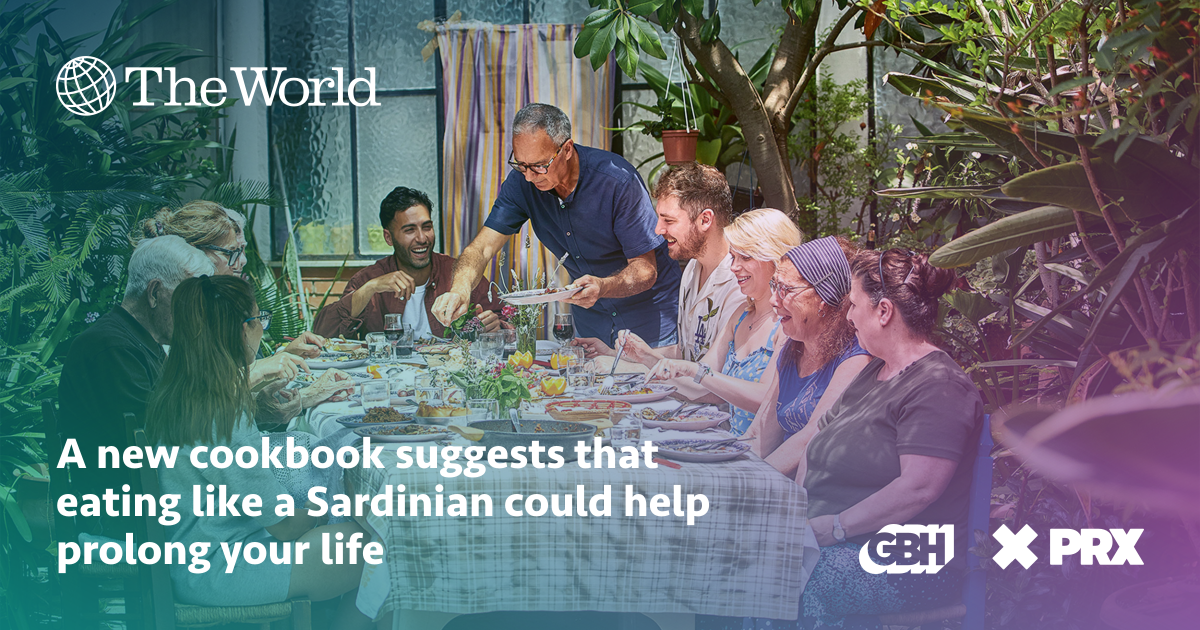
Public radio’s longest-running daily global news program.AboutContactDonateMeet the TeamPrivacyTerms of use©2026 The World from PRXPRX is a 501(c)(3) organization recognized by the IRS: #263347402.A new cookbook suggests that eating like a Sardinian could help prolong your lifeIt’s not uncommon for people on the Italian island of Sardinia to live to be 100 years old. Medical researchers believe some of their longevity comes down to the foods they eat. Italian chef Francesco Mattana has published a cookbook, “Eat Live a Sardinian: Live to 100,” and shares his insights with Host Marco Werman.It’s an Italian island in the Mediterranean Sea with plenty of sun, beaches and great local food.Sardinia is a famous tourist destination. It’s an Italian island in the Mediterranean Sea with plenty of sun, beaches and great local food.The cover of Francesco Mattana’s “Eat Like A Sardinian: Live to 100.”Courtesy of Murdoch BooksBut there’s something else Sardinia is known for: its residents live a long time.Italian chef Francesco Mattana has just published a cookbook, “Eat Like a Sardinian: Live to 100.”Mattana believes that diet plays a major role in why so many Sardinians reach that age.Click on the player above to hear his interview with The World’s Host Marco Werman.Mattana also shared one of the recipes and an excerpt from his book.Sardinian gnocchi with sweet sausage raguMalloreddus alla CampidaneseThis dish originally comes from the Campidano area of Sardinia but is now eaten all over the island and is one of our signature dishes. Often prepared for special occasions or for a Sunday meal to share with all the family, this is Sardinian comfort food at its very best and a dish that transports me straight straight back home. The sausage meat is seasoned with fennel seeds and white wine and left to marinate overnight — I have included the method for this below, but if you’re in Sardinia, you can ask for this in any butcher shop around the island. This ragu is unique in that it gives you the comfort of a slow-cooked sauce without having to wait 3-4 hours. The combination of homemade gnocchetti, sweet sausage and saffron is incredibly tasty! If you don’t have time to make fresh pasta, don’t worry — just buy dried malloreddus, or use another small, short pasta shape like orecchiette or cavatelli.Serves 4–6Ingredients1 white onion, finely chopped2 tablespoons extra virgin olive oil500g (1lb 2oz) marinated sausage meat (see below) or fennel sausages100ml (scant 1/2 cup) Vermentino or a dry white wine like Sauvignon Blanc2 x 400g (14oz) tins of peeled plum tomatoes15g (1/2oz) basilpinch of saffron threads (Optional – if not using saffron pasta)200ml (scant 1 cup) water400g (14oz) malloreddus (gnocchetti sardi; see page 80)grated pecorino, to serveFrancesco Mattana, who wrote the book, “Eat Like A Sardinian: Live to 100,” carries a basket of food.Courtesy of Dave Brown/Murdoch BooksFor the marinated sausage meat2 garlic cloves, halved500g (1lb 2oz) coarsely minced (ground) pork (10–15% fat) or good-quality pork sausages, removed from their casings2 teaspoons fennel seeds70ml (1/3 cup) Vermentino or a dry white wine like Sauvignon Blanc1 teaspoon fine sea salt1/2 teaspoon freshly ground black pepperDirectionsFirst, make the marinated sausage meat. This needs to be prepared the night before, or at least 6 hours before cooking the ragu. Combine all the ingredients in a bowl and use your hands to squeeze the mixture together until everything is well incorporated. Cover and leave to marinate in the refrigerator.The next day, remove the sausage meat from the refrigerator 1 hour before you start cooking and discard the garlic and any liquid in the bowl. Now, heat a large saucepan or casserole dish (Dutch oven) over medium heat. Add the onion and oil and cook, stirring frequently, for 5 minutes. Next, increase the heat to medium-high and add the sausage meat. Use a wooden spoon to break down the meat into small pieces, then cook for 10-15 minutes until the meat and onion start to brown.Once the meat is nicely browned, deglaze the pan with the wine and simmer for 3-5 minutes to cook off the alcohol. Crush the tomatoes with your hands, then add them to the pan. Tear in the basil and add, along with the saffron (if using), a pinch of salt and pepper and the water. Cook over medium heat for 30-40 minutes, stirring occasionally, until the sauce has reduced and is thick and juicy. If it is too thin, continue cooking it for longer until it has reduced. Taste and adjust the seasoning if needed.Meanwhile, bring a saucepan of salted water to boil and cook the pasta, then drain, reserving half a cup of the starchy pasta water.Transfer the pasta to the sauce, remove the pan from the heat and toss and stir well until the sauce coats the pasta. If the sauce is too thick, add a few tablespoons of the pasta water at a time until it is velvety. Serve sprinkled with pecorino.TOP TIPYou can also use this sausage meat recipe to make Pane con Purpuzza e Cipolla (page 137) or Spizzulus con Cardoncelli e Salsiccia (page 141).References p. 80Author Francesco Mattana, who lives in Sardinia, known for its population’s longevity, tries some homemade pasta.Courtesy of Dave Brown/Murdoch BooksMALLOREDDUS (GNOCCHETTI SARDI)Using the saffron variation of the Pasta di Semola (page 79), cut the dough into four equal pieces and roll each one into a rope about 1cm (1/2 inch) thick.Sprinkle a generous pinch of semolina flour over the dough, then use a knife or dough scraper to cut each rope into 1.5cm (2/3 inch) pieces. Take a piece of dough and place it on a gnocchi board or the back of a fork and use your thumb to press and roll the dough downward along the ridges. As you do this, the dough will pick up the pattern and curl slightly, forming the signature ridged and cupped gnocchetti shape. Repeat with the remaining dough.p.79Pasta di Semola Semolina Pasta DoughServes 2200g (7oz) semolina flour (semola rimacinata), plus extra for dusting90ml (1/3 cup) lukewarm waterPut the semolina into a bowl, then slowly add the lukewarm water, using a fork to stir the mixture until you are left with a crumbly dough. Now, hold the bowl with one hand and use the other to squeeze the mixture a few times until it comes together to form a rough dough and there is no more dry flour left. Semolina flour takes longer to absorb water and come together, so keep working the dough until the dough absorbs all the semolina. Even if the dough feels a little dry to the touch, do not be tempted to add more water at this stageTransfer the dough to a clean work surface, then use the palms of your hands to knead the dough, stretching it and folding it back. You shouldn’t need to, but if the dough feels a little too sticky, add a pinch of semolina and carry on kneading it.Knead for 2-3 minutes until you have a rough dough, then shape it into a ball, cover with a cloth or cling film (plastic wrap) and leave it to rest for 10 minutes at room temperature. During this first resting, the gluten will begin to develop naturally as the flour absorbs the water. This will make the second kneading much easier.After 10 minutes, unwrap the dough and knead it again for 2-3 minutes, or until the dough reaches an elastic consistency and bounces back if you gently poke it. Cover the dough again and transfer to the refrigerator to rest for 30 minutes.Your pasta dough is now ready, and you can roll it out or turn it into whichever shape you like.VARIATIONSTo make red wine pasta dough, replace the water with 100ml (scant 1/2 cup) red wine.To make saffron pasta dough, grind a pinch of saffron threads to a fine powder in a pestle and mortar, then mix with the lukewarm water and leave to infuse for a few minutes before following the method above.
A new cookbook suggests that eating like a Sardinian could help prolong your life - The World from PRX
It's not uncommon for people on the Italian island of Sardinia to live to be 100 years old. Medical researchers believe some of their longevity comes down to the foods they eat. Italian chef Francesco Mattana has published a cookbook, “Eat Live a Sardinian: Live to 100,” and shares his insights with Host Marco Werman.
1,320 words~6 min read