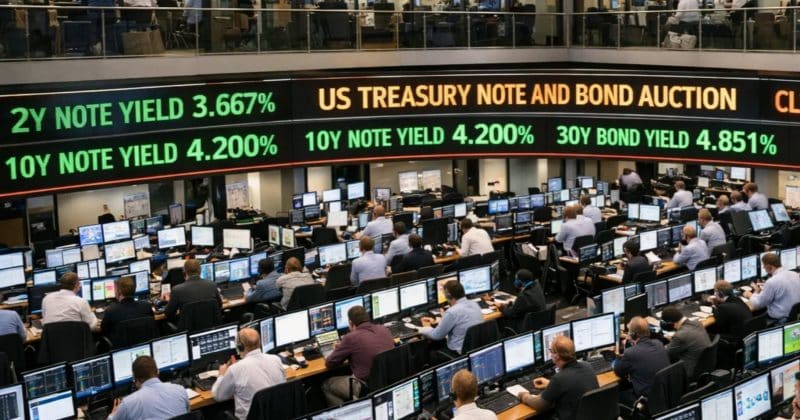
The US government just paid more to borrow money for four months than it has in a while. And fewer people showed up to lend it.
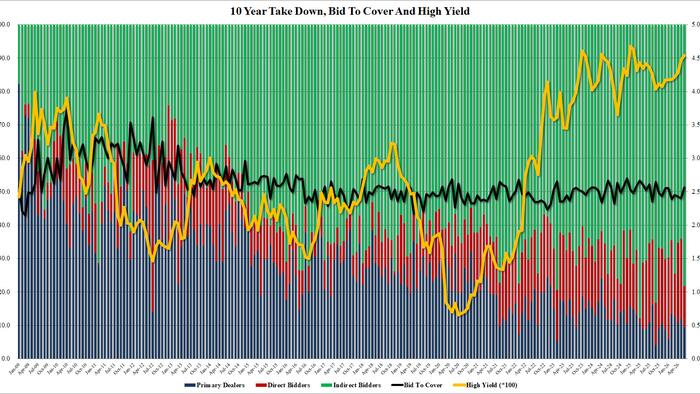
The 17-week Treasury bill auction on June 10 produced a high stop-out yield of 4% on $69 billion in offerings, with a bid-to-cover ratio of 2.88. Both numbers moved in a direction that suggests investors are getting pickier about parking cash in short-term government debt.
What the numbers actually mean
A Treasury bill auction is how the US government borrows money from investors for short periods. The “high yield” is the maximum interest rate the government agrees to pay. The “bid-to-cover ratio” measures how many dollars of bids came in for every dollar of bills on offer. Higher ratios mean more demand. Lower ratios mean investors are less enthusiastic.
Prior auctions in recent months recorded bid-to-cover ratios between 3.01 and 3.15, with yields ranging from 3.63% to 3.76%. So this auction saw yields jump roughly 25 to 37 basis points higher while demand simultaneously dropped.