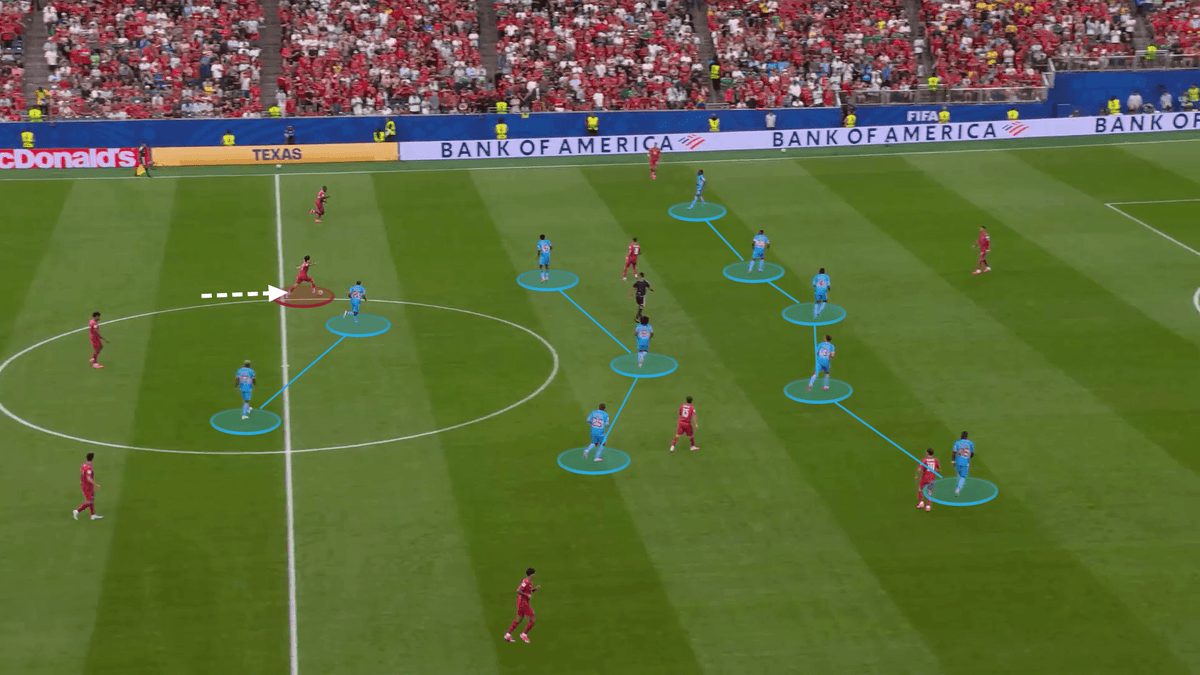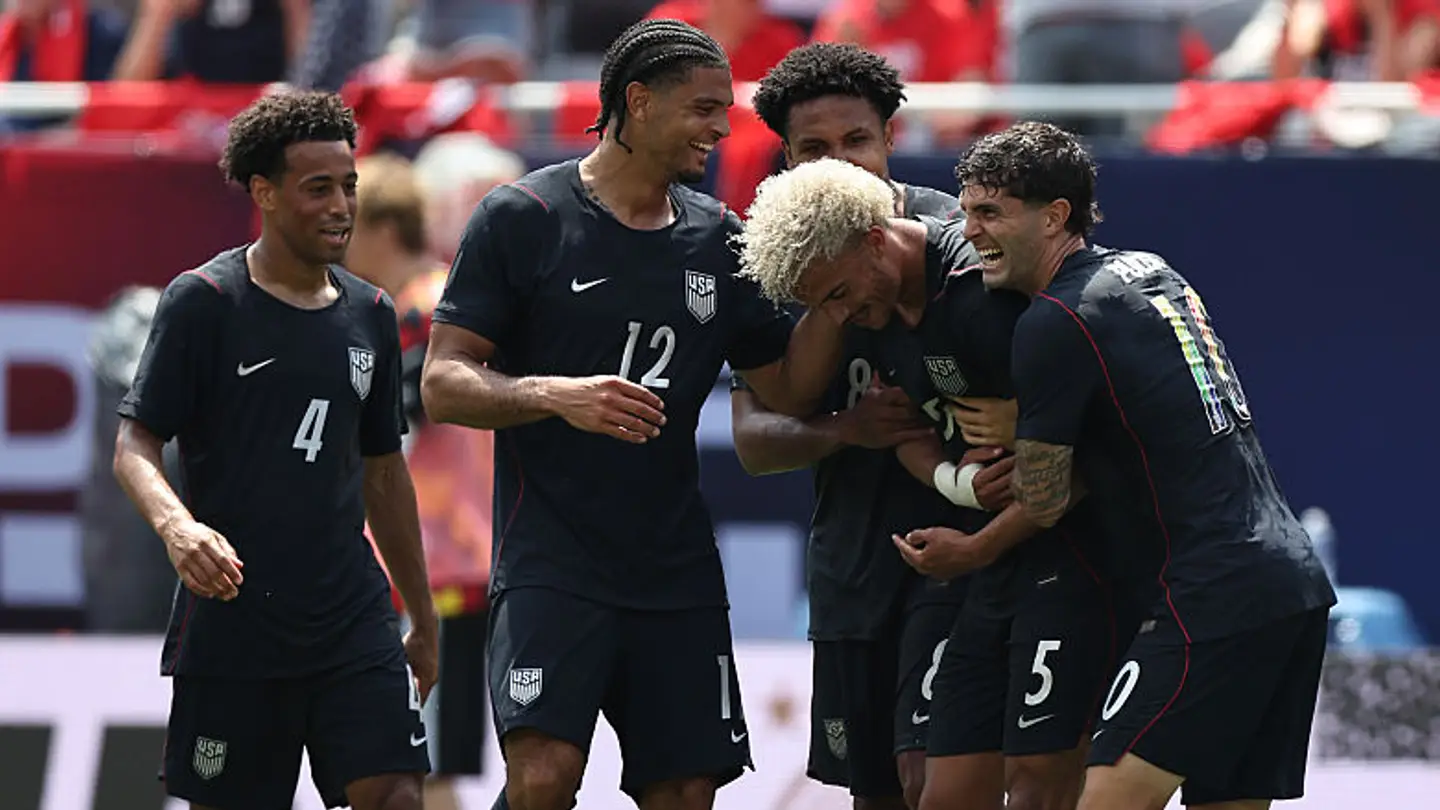
Soccer is a game of constantly moving parts — keeping track of it can be disorienting. Thankfully, starting formations provide a useful initial reference point, helping us make sense of the unfolding chaos.In theory, there are thousands of possible configurations of defenders, midfielders and forwards. In reality, most are captured by six broad shapes: 4-2-3-1, 4-3-3, 3-5-2, 4-4-2, 3-4-2-1 and 4-5-1.Since 2019-20, these six have accounted for 88 per cent of all formations used in club matches played in Europe’s top five leagues, and they will be the dominant shapes at the 2026 World Cup.So buckle up for a primer — a formations 1-0-1, if you will — as The Athletic sweeps through each shape, adding a sprinkle of history and the tactical pros and cons of each.4-2-3-1There is no all-powerful formation that stands above the rest, but 4-2-3-1 has emerged as the sport’s most prominent setup. Its rise began at the turn of the century, with Mauricio Pochettino among its adopters, and he has used it throughout his career, including in his current role as USMNT head coach.The system uses three central midfielders, with two sitting deeper at the base of midfield, collectively known as the “double pivot”. The other — say, Christian Pulisic for the USMNT, or Jude Bellingham for England — is generally given licence to roam further upfield.One advantage of the system is its flexibility. As the example below shows, overlapping full-backs can transform it into a more attacking 3-2-5.A drawback is that the double pivot, while offering central stability and protection in front of the defence, can sometimes make a team more cautious in possession.4-3-3Pioneered by the Dutch in the 1970s, 4-3-3 is synonymous with some of the most aesthetically pleasing teams in football history. For the Netherlands, it helped facilitate their fluid, short-passing style known as “Total Football”, a style later refined by Pep Guardiola at Barcelona.
Soccer formations explainer: Breaking down the 4-2-3-1, the 4-3-3, the 4-4-2 and more
The strengths and weaknesses of some of the most common formations on show at the 2026 World Cup
879 words~4 min read