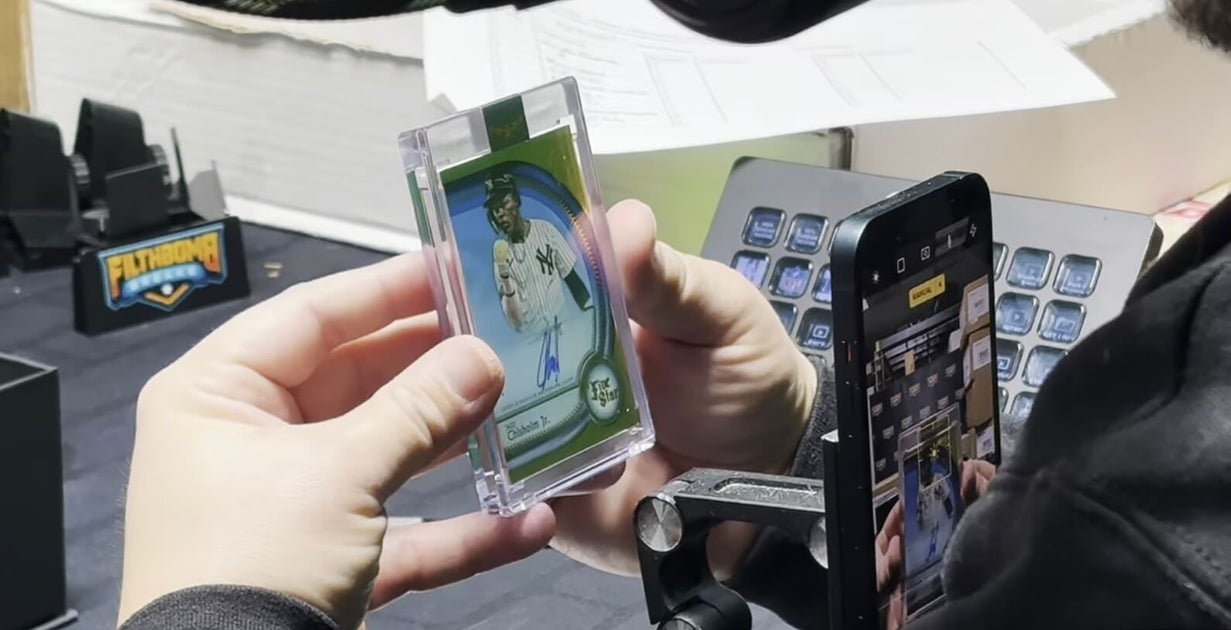
Today, more hobbyists than ever are building their collections from the couch with millions of sports cards instantly accessible through their phone. This has made live selling the latest frontier in the sports card industry. It’s where live auctions meet the modern version of the home shopping channels that found success in the 1980s and ‘90s, but the sellers are using platforms like Whatnot, Fanatics Live and eBay Live to build their own proprietary businesses while those larger entities jockey for position in a rapidly growing market.Social commerce in the United States grew an estimated 21.5 percent year-over-year to more than $87 billion in 2025, according to research firm eMarketer, and trading cards and other collectibles comprise a significant piece of that total. But unlike the typical online marketplace where the best deal almost always wins, social commerce is more nuanced and controversial. For better or worse, the relationship between the buyer and the seller can be imperative. Popular sellers often play a mix of salesman, companion, educator and entertainer during shows — an act many in the hobby consider divisive as it can drive buyers to pay more than fair-market value for items. The best of the best maintain tight knit communities willing to pay for the experience as much as the card.“When (customers) come into streams, it’s very much a talent- and personality-driven business,” Geoff Wilson, Sports Card Investor founder and co-owner of Atlanta’s CardsHQ, told The Athletic. “When you see these companies that have hundreds of people in their streams and they’re doing really big sales, they built that up by creating connections with their audience and putting their talent first.”When asked by The Athletic, multiple popular live sellers estimated the biggest live-selling businesses in the trading card category are generating $100 million or more per year in revenue from social commerce through live selling and box breaks. Social commerce in the United States is expected to cross $100 billion for the first time in 2026, and as the industry tries to determine where customer loyalties are, Whatnot, eBay Live and Fanatics Live are now trying to secure the most successful sellers and their followers in an increasingly vital category.So far, winning over the best sellers has often involved offering exclusive perks or other benefits to make the experience better or more lucrative. According to Wilson, reaching the largest potential audience has been among the most important variables for CardsHQ’s live-selling and breaking business, which he estimates will top $30 million in 2026 after hitting $15 million last year, largely on Whatnot and Fanatics Live. Of the three major live-selling platforms most associated with trading cards, Whatnot is believed to have the largest user base. Whatnot, which is now valued at $11.5 billion following a $225 million investment raise in October, reported more than $8 billion in gross merchandise value and more than 20 million created accounts in 2025.“Right now Whatnot has the most traffic from a live-selling standpoint,” Wilson said. “If you can become a large seller on Whatnot, you’re going to benefit from the fact that there are the most people on there looking to buy or enter into breaks.”Though Whatnot’s current number of customers and sellers presents many benefits to the platform, others in the trading card category believe that scale has made it too difficult to moderate effectively. Several popular live sellers, who spoke to The Athletic under the condition of anonymity to protect their relationship with Whatnot, believe the company has been too lenient when regulating sellers for rules violations on the platform.Common issues found on live selling platforms can range from simple mistakes by inexperienced sellers, including customers being sent the wrong items, to more intentional violations, including the use of sleight-of-hand to swap high-value cards in a pack for less desirable ones. The hobby’s most significant live-selling controversy came in January 2025 when Grant Telford, a co-founder of Backyard Breaks, one of the most popular live sellers on any platform, made a series of sexually explicit remarks about a minor during a Whatnot live stream. Telford’s personal Whatnot channel was temporarily suspended, but eventually reinstated after a rebrand. Telford apologized for his comments and stepped away from live selling temporarily before returning that April.
$100 million revenues for sports card sellers? Inside the race to own the live-selling market
Today, more hobbyists than ever are building their collections from the couch with millions of sports cards instantly accessible through their phone. This has made live selling the latest frontier in the sports card industry. It’s where live auctions meet the modern version of the home shopping channels that found success in the 1980s and ‘90s, but the sellers are using platforms like Whatnot, Fanatics Live and eBay Live to build their own proprietary businesses while those larger entities jockey for position in a rapidly growing market. Social commerce in the United States grew an...
2,103 words~10 min read