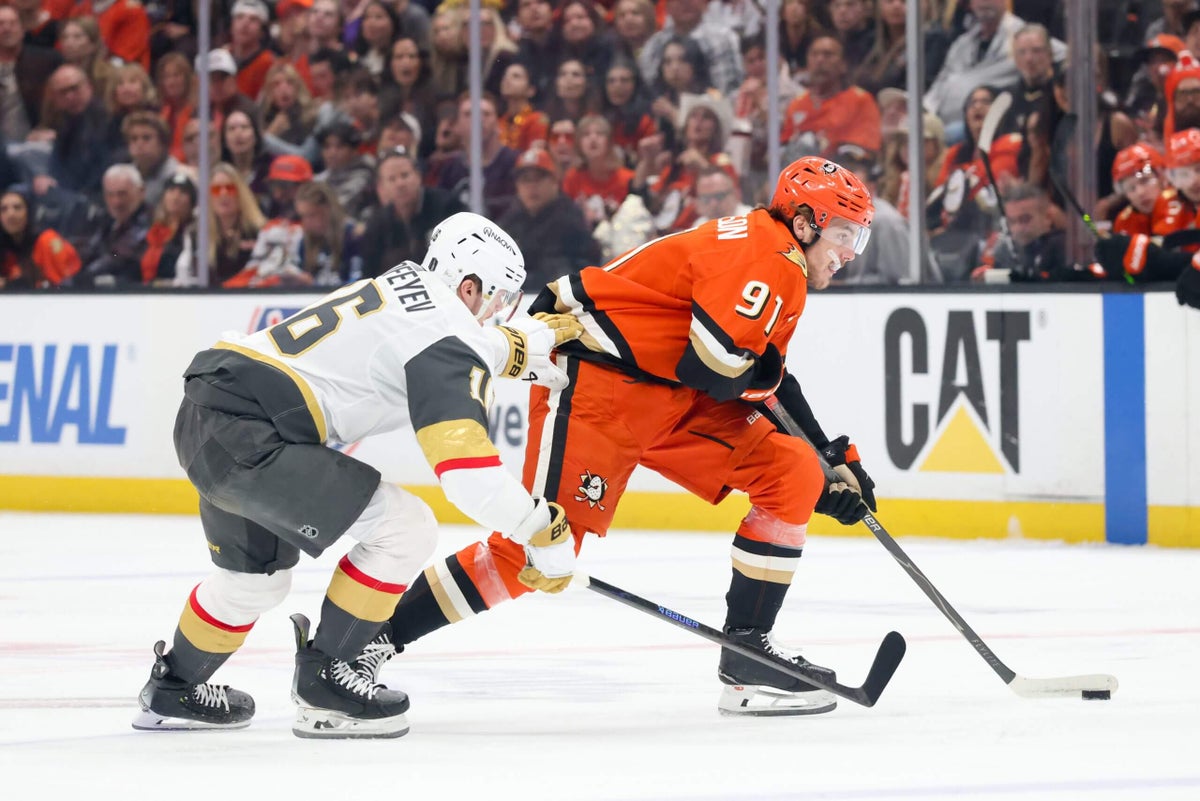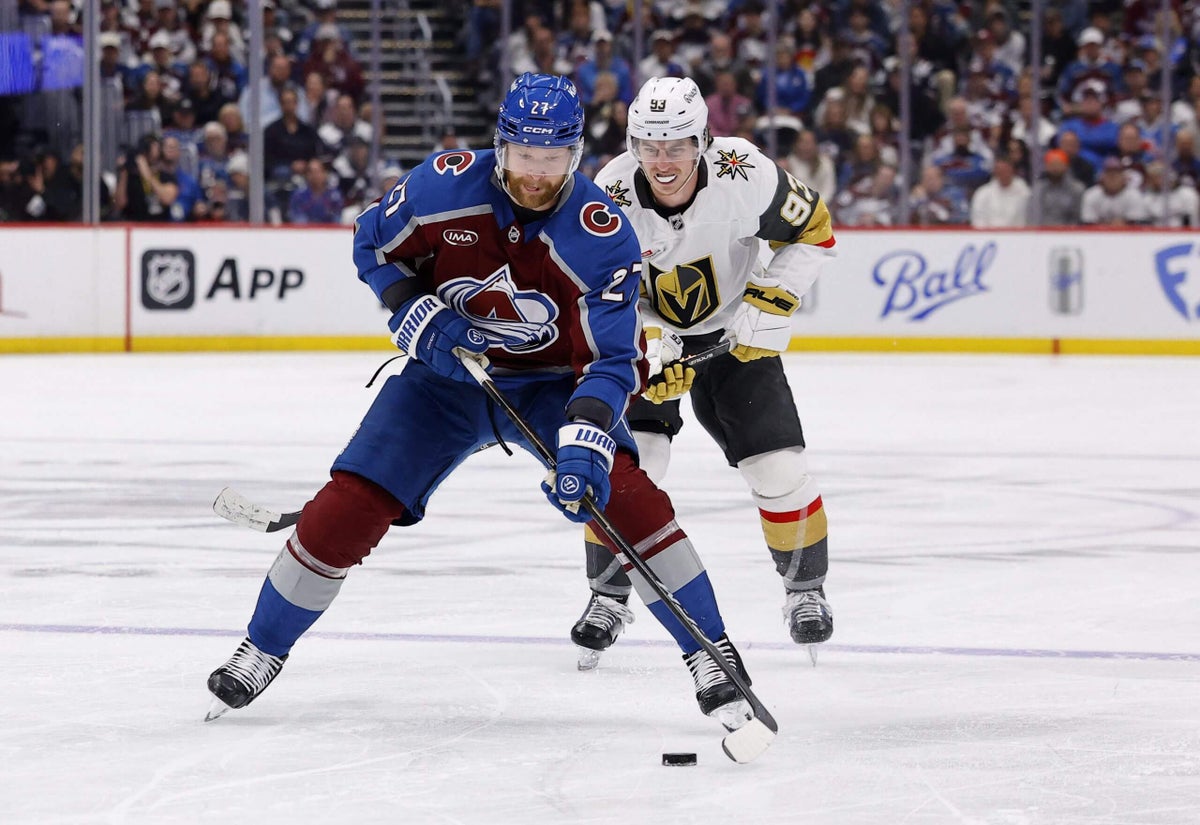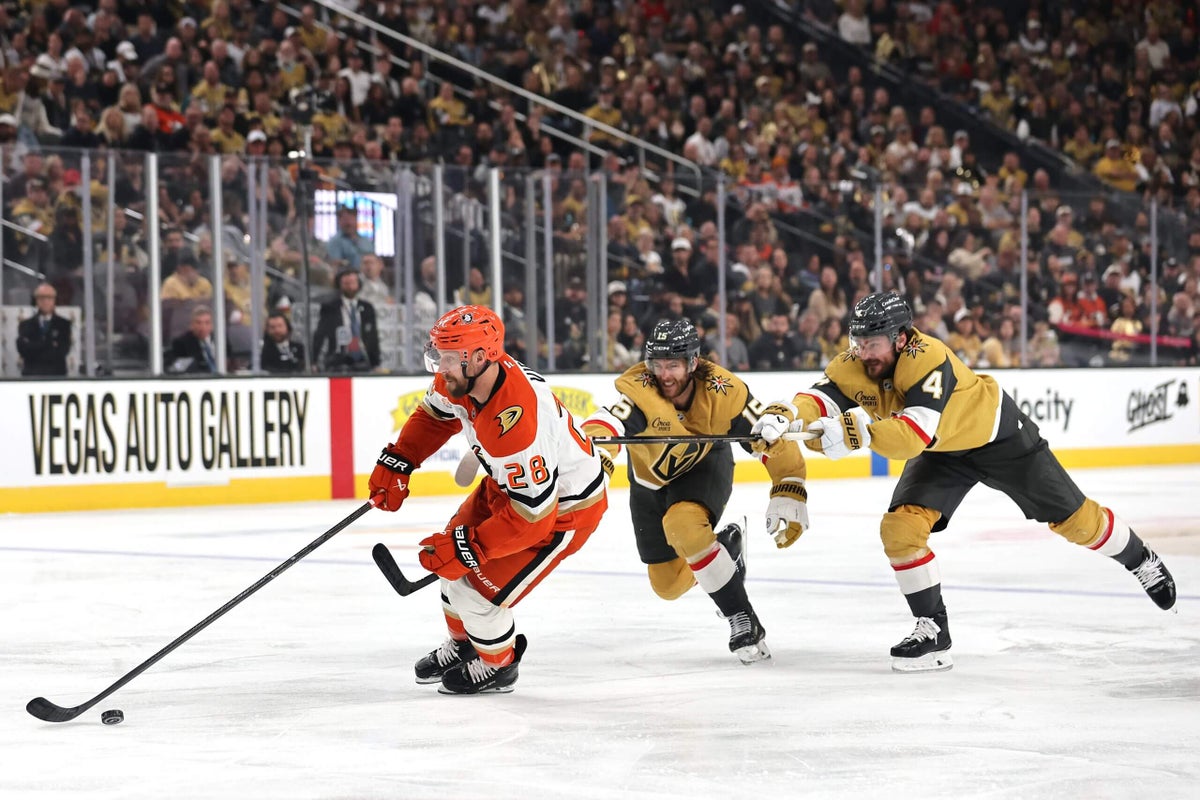
Right or wrong, recency bias tends to creep into contract negotiations – especially after the Stanley Cup playoffs.As much as player values soar or get crushed in the regular season, the playoffs are a different animal. General managers race to open their checkbooks when players thrive in the intense, high-pressure environment that is the NHL postseason. And the reverse can be true, too: Those who fade or outright struggle under the bright lights can see their potential earnings tick down with each and every mistake.So with the postseason winding down and the offseason nearing, let’s look at 10 pending unrestricted free agents who have seen their stock change in the playoffs.Alex Tuch: DownTuch’s postseason started strong, with four goals and seven points in six games against the Boston Bruins. He had a plus-7.9 projected Net Rating heading into a second-round series, which was second among Buffalo Sabres forwards to Tage Thompson.And then his production completely dried up. It wasn’t for a lack of trying; he led the team in all situations with 49 shot attempts, 26 on goal, and an expected goals rate of 3.31. But the Sabres needed their best players to be their best, and it wasn’t until Thompson and Tuch were split that Thompson at least started producing. Before that, Buffalo got outscored 7-0 in their shared five-on-five minutes.So Tuch’s stock was understandably hurt by a scoreless second round and overall underwhelming series. But it actually may not matter that much in this market.Every top 2026 free agent already extended — even below the MVP-caliber tier, the likes of Martin Necas, Adrian Kempe and Kyle Connor, among others, came off the board early. Add in the fact that so many teams have extra money to spend and he is poised to cash in this summer — and maybe for a lot more than he should.The number for Tuch will likely be steep outside of Buffalo. If anything, with the market in mind, his playoff run just hurt his stock with the Sabres. Now, priority No. 1 in Buffalo should be locking up Zach Benson long-term, and looking to add one more difference-maker from the outside instead of overpaying for what they currently have.Rasmus Andersson: Down Like Tuch, Andersson is probably in a much better position than he should be after this postseason.Andersson’s start with the Vegas Golden Knights was shaky, but after getting some reps in, he started to hit his stride while reunited with Noah Hanifin on the second pair. He earned a 62 percent xG rate in the last month of action, thanks to some really strong two-way play and puck-moving.The playoffs haven’t been as smooth. The Hanifin-Andersson pairing struggled through the first two rounds, with a 45 percent xG rate despite a pretty favorable workload in terms of quality of competition. And despite dominating the Colorado Avalanche in the Western Conference Final, Andersson only earned a 40 percent xG rate and broke even in five-on-five scoring at 1-1.He’s had some slip-ups through three games against the Carolina Hurricanes, too. A turnover led to Logan Stankoven’s goal in Game 2, which sparked Carolina’s comeback, and he had enough lapses in Game 3 to be demoted to the third pair. Andersson was primarily back with Hanifin in Game 4, but he still hasn’t done enough to move the needle.On paper, that should cost him some salary this summer, even if he ends up extending in Vegas. But right-handed defensemen, especially those with a reputation for being able to absorb tough minutes and contribute a bit of everything, are coveted in this league. Andersson will get paid regardless of what’s happened this postseason.Frederik Andersen: Up One of the big questions heading into this postseason was who would be the Hurricanes’ starter. Andersen surprisingly ran with the opportunity all the way through three rounds.He wasn’t tested a ton through the early goings of the playoffs, due to his team’s total dominance in front of the blue paint and his opponents through three rounds. Still, playing goal for the Hurricanes can be tricky, especially when facing long stretches without a shot against. Andersen had to be ready to make key saves at key times, which hasn’t always been a strength in these situations — especially not in the Eastern Conference final.Andersen stood tall with a .925 save percentage and 10 goals saved above expected headed into the Stanley Cup Final. Getting past those playoff demons should boost his stock, which was pretty low at the end of the regular season.The only question now is whether his play through three games against Vegas will tank any of that momentum — especially after he was scratched for Game 4. The Hurricanes’ defense has been far from perfect, but Andersen hasn’t looked as steady to open this series either — which contributed to him getting the hook in Game 3. Bussi’s ability to jump right back into action could be the end of Andersen’s postseason at this rate, which won’t exactly help the 36-year-old’s stock. But the fact that he played so well to this point could count for something.Brett Kulak: UpKulak generally isn’t super involved in the Big Moments of a game. He’s quiet, dependable and extremely battle-tested, which are all characteristics Stanley Cup contenders look to have in their bottom four. And all of that was on display through two rounds. Kulak hovered just above break-even in xG and helped Colorado outscore opponents 6-5 at five-on-five.But unlike years past, he also got involved in one of the most pivotal moments of the Avs’ playoff run, on both ends of the ice. In overtime of Game 5 against the Minnesota Wild, he got his stick in the way to disrupt a Kirill Kaprizov cross-seam pass to Matt Boldy that likely would have set up a one-timer. As play streaked the other way and some Avs tied up Wild defenders, Kulak got himself in position to score the series-clinching goal.Those two rounds should be enough to boost his stock, even though things went so far south in Round 3. Kulak had his mistakes against Vegas, like getting walked by Nic Dowd in Game 4 to set up the 2-0 goal. But he also played above his depth when the Avalanche needed him to with Cale Makar sidelined.Playoff teams looking for some depth on the back end should be interested in Kulak. Even with rising costs in the middle-class tier, he still shouldn’t break the bank. AFP Analytics’ model suggests a three-year deal carrying a $4.05 million cap hit, which would be a raise from his current contract.Jacob Trouba: UpTrouba’s play was declining hard when the New York Rangers traded him to the Anaheim Ducks as a cap dump in December 2024. New York’s former captain had become a whipping boy for his mediocre play relative to his steep $8 million cap hit — he struggled on zone exits, his offensive production slowed down and his defensive errors were increasing. It was fair to wonder if the hard-hitting right-shot defenseman had much left in the tank as a serviceable top-four contributor when he arrived in Anaheim.Trouba proved his doubters wrong and has revitalized his career with the Ducks. The 32-year-old bounced back in the regular season with a steady impact on Anaheim’s top pair, including 35 points. He carried that over the playoffs, where he averaged a monstrous 25:30 per game, with Anaheim controlling 60 percent of expected goals during his five-on-five shifts.Jackson LaCombe is undoubtedly the main catalyst for the top pair’s success, but Trouba has been a reliable caddy. He’s still prone to making some glaring mistakes here and there, but the overall trajectory of his game is in a much better spot than it was a year and a half ago. Anaheim will probably have interest in bringing Trouba back, but if that doesn’t work out, there will always be significant demand in free agency for a gritty, physical right-shot defender who can eat massive minutes.Anthony Mantha: DownMantha was one of the best bargain signings of free agency last year, scoring 33 goals at an inexpensive $2.5 million cap hit. It was a dream bounce-back after he missed all but 13 games of the 2024-25 campaign due to a torn ACL. If he followed this highly productive regular season up with an effective postseason, it would have meaningfully boosted his stock in a weak free-agent class, especially because his 6-foot-5 frame and top-level speed are a rare combination.Instead, Mantha was a playoff ghost, registering just a lone assist in the Pittsburgh Penguins’ disappointing six-game defeat to the Philadelphia Flyers. Mantha drove just a 40.9 percent share of expected goals and the Penguins were outscored 4-1 with him on the ice at five-on-five.This only cemented Mantha’s reputation as a frustrating, inconsistent winger. The poor playoff showing probably jeopardizes the chances that Pittsburgh will bring him back for next season, and it must make win-now teams more hesitant about his potential fit, considering he now has zero goals in 20 career postseason games.Jamie Benn: DownBenn’s postseason ended as miserably as possible. Down 3-2 with less than two minutes to go, with the season on the line, the Dallas Stars decided to deploy Benn in a six-on-five situation. Under pressure near the blue line, Benn turned the puck over to Matt Boldy, who scored an empty-netter. That effectively ended Dallas’ season.One bad moment shouldn’t define Benn’s postseason or tank his stock alone — especially in a moment he shouldn’t have been on the ice to begin with. But that one moment does contribute to the downturn in his game for the second straight postseason.The Stars did have their looks in Benn’s moments against the Wild, with a 57 percent xG share against Minnesota. But the team still got outscored 4-0 in his five-on-five minutes. Go back to last postseason and it was a similar story, when Dallas got outscored 13-4 with him on the ice.While no one could expect peak-Benn levels at this point in his career, he did have a recent resurgence as a third-liner over the last few seasons. But between his lack of discipline and poor puck management, his value has cratered when it mattered most once again.Kasperi Kapanen: UpIt was only a year and a half ago that Kapanen landed on the waiver wire for the second time in his career. He was running out of opportunities to re-establish himself as an everyday NHL forward when the Edmonton Oilers rolled the dice on him with a waiver claim. Since then, Kapanen has become a solid depth contributor with his speed and energy, but he took it to a new level in the postseason.The 29-year-old Finn was flat-out one of Edmonton’s best players in Round 1, scoring four goals and two assists in six games. The Oilers outscored the Ducks 8-1 during his five-on-five shifts, which is impressive, especially given his team lost the series.Kapanen isn’t going to break the bank by any means — AFPAnalytics projects a three-year deal in the $3.1 million AAV range — but even that type of multi-year contract is something that seemed improbable for him to secure a year ago. He’s proven that he can add value as a complementary top-nine winger at a cost that should still be relatively economical. This strong playoff performance was especially important for Kapanen, as injuries limited him to just 41 regular-season games.Jack Roslovic: DownRoslovic had to settle for back-to-back one-year deals in free agency despite consistently producing in the 20-goal, 40-point range. He even had to take a significant pay cut when he signed at a cheap $1.5 million cap hit with the Oilers for this season. Roslovic was surely hoping that a strong year on a contending team would boost his stock to earn a multi-year deal for his next spin on the July 1 market, but another underwhelming postseason only solidifies the red flags surrounding his game.The skilled, enigmatic forward excelled in the regular season, scoring 21 goals in 69 games, which established him as one of the Oilers’ critical secondary scorers. Unfortunately, that production vanished in the playoffs as Roslovic mustered just one point in six games. This only reinforces the doubts about his ability to perform in the playoffs, as he’s scored just three goals and 15 assists in 51 career playoff games.What makes matters worse is that he’s a one-dimensional player who doesn’t contribute much when he isn’t scoring; he doesn’t kill penalties, is fairly perimeter-oriented and isn’t particularly useful defensively or as a puck retriever.Roslovic’s poor playoff showing severely damages his chances of earning an extension with the Oilers for next season and of a sizable deal elsewhere.Jeffrey Viel: UpMost hockey fans were puzzled when the Ducks traded a fourth-round pick to acquire Viel from the Bruins. Sure, a fourth-round pick is only a modest price to pay, but it seemed a bit strange to give up any asset for Viel because he had spent the majority of his professional career in the AHL. He was up with the Bruins’ big-league team this season but he was mostly sitting in the press box as a healthy scratch, appearing in just 10 games for Boston in 2025-26.Viel proved why the Ducks gave up a pick for him with an extremely impressive showing in the playoffs.The 29-year-old winger played his bottom-six role to perfection: He was a wrecking ball physically, chipped in with four points in 12 games, and most surprisingly, Anaheim’s fourth line found success in a shutdown role against Connor McDavid’s line. Viel played 27:19 against McDavid at five-on-five, in which the Ducks outshot the Oilers 11-10 and tied 1-1 in goals. It wasn’t just the numbers that stood out; he was very noticeable by the eye test with his energy, heaviness and pace.Viel is a journeyman, so his next contract should still be cheap, but a postseason like that should earn him a one-way deal and a clear path to a full-time NHL lineup spot next season.Data via NaturalStatTrick, HockeyStats, Evolving-Hockey and AFP Analytics.
UFA stock watch 2026: How the NHL playoffs helped or hurt 10 free agents
When players make a name for themselves in the postseason, it can boost their next contract in free agency. A poor showing can drop it, too.
2,334 words~11 min read